
The End-of-Life Option Act, originally co-authored by State Sen. Bill Monning, D-Carmel, took effect June 9. It gives Californians who have six months or less to live the option to obtain a legal prescription for a lethal drug to end their lives painlessly.
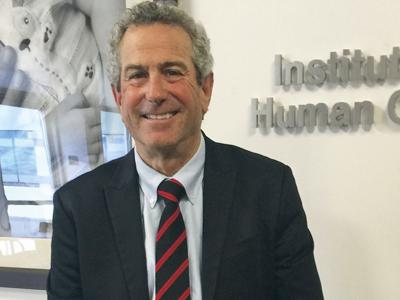
Dr. Ira Byock of Torrance, California, is done talking about the law – and deeply frustrated that anyone is still talking about it at all. “I don’t think this bill changes the reasons people are dying badly,” Byock says. “I want to focus on the reasons people are dying badly, and how we can help people die well.” He blames journalists and policymakers for succumbing to groupthink around the aid-in-dying law, framing a with-us-or-against-us narrative, when he says it’s well past time we had a more nuanced cultural conversation about what a good death is.
Byock, who’s written three books about end-of-life care and runs the Institute for Human Caring, spoke with the Weekly in advance of his June 16 talk at at the Steinbeck Center, where he’ll lead a six-hour workshop for medical staff, residents and clergy members.
Weekly: What does “dying well” mean?
Byock: People should have the confidence of knowing that they will get excellent care, that their symptoms will be as well-controlled as modern science can accomplish, that they will feel wanted and worthy through the end of their lives, that their inherent dignity will be respected. And that not just their pain will be managed – that their values and preferences will be acknowledged and incorporated into a highly individualized plan of care.
What’s different now that aid-in-dying is legal in California?
This is now settled. We don’t have to talk about it anymore, we don’t have to fight about it anymore. When are we going to move on?
So let’s move on. Talk to me more about dying well.
One thing that may sound a little odd, but is part of healthy human development, is a sense of celebration. It’s a statement that we matter to one another, that being together is intrinsically important. That we are on this planet together is something to lift a glass about. That’s a very healthy response to the very difficult and sad parts of life that illness and grieving and dying represent.
All of this is achievable, all of this is affordable. We just don’t do it in mainstream American healthcare.
Have you changed your ideas about how you hope your own death goes, based on your work?
As a male growing up in the United States, I thought the best thing that could happen would be to die quickly and suddenly – struck by lightning, or die in my sleep. But I have a different impression of that now. I think it would be important – for me, and I realize not for everybody – to say the things that would be left unsaid, to reach out to people I may not have seen for years and let them know how important they’ve been, to spend time with my wife and daughters and grandchildren, to reminisce a little bit.
Do you believe in God?
I believe that there is more than physics of electrons and photons and neutrons bouncing around. I think there is an aesthetic intelligence within the very stuff of nature. I’m not sure everybody would call that God.
Does that influence your opposition to the End-of-Life Option Act?
I oppose the law out of basic high school civics. I think this is really a retreat from our basic social obligations to one another; it is a very miserly, ungenerous way to approach human suffering.
I’ll practice within it, we’ll all practice within those bounds of the law. Now, I want to turn attention to addressing the issues of why people are dying badly. It will be easier now in Monterey County to qualify for physician-assisted suicide than hospice care.
Is anyone working on that issue?
Not many people. It’s really hard. I’m working with anybody who’ll listen; trying to craft some alternative state-based legislation that would dramatically improve medical education, and would dissolve the terrible choice people have to make these days between giving up ongoing cancer care to get hospice, which is ridiculous. I’m trying to work on standards for palliative care in hospitals.
Describe what better care looks like.
Before we ask, “What’s the matter with you, what brings you to the office today?” we ask, “Now that you’re in the office today, what matters most to you?” Start treating based on what people’s priorities are, not based on billing and coding, which is what diagnoses require us to do.
Editor's note: This story has been updated to reflect the following correction. Dr. Ira Byock's talk takes place at the Steinbeck Center, not Natividad Medical Center, as previously state. Co-sponsors are NMC and the Hospice Giving Foundation.


(0) comments
Welcome to the discussion.
Log In
Keep it Clean. Please avoid obscene, vulgar, lewd, racist or sexually-oriented language.
PLEASE TURN OFF YOUR CAPS LOCK.
Don't Threaten. Threats of harming another person will not be tolerated.
Be Truthful. Don't knowingly lie about anyone or anything.
Be Nice. No racism, sexism or any sort of -ism that is degrading to another person.
Be Proactive. Use the 'Report' link on each comment to let us know of abusive posts.
Share with Us. We'd love to hear eyewitness accounts, the history behind an article.