

THE EXISTENTIAL THREATS to medical care of House Resolution 1, also known as the “One Big Beautiful Bill,” combined with cuts to Medi-Cal in last year’s California budget negotiations, are now real. A small wave of changes over the past year have taken a toll but on Jan. 1, a large wave is expected to come crashing down as 35,000 Monterey County Medi-Cal recipients considered to have “unsatisfactory immigration status” are shifted off of Medi-Cal to a less expensive state program.
That program, fee-for-service, reimburses providers, clinics and hospitals substantially less than Medi-Cal does, saving the state money but creating a financial burden for health providers.
“This will have an impact on local safety net providers in Monterey County and it will have an impact on access for these individuals [with UIS status],” Michael Schrader, CEO of the Central California Alliance for Health, told the Monterey County Board of Supervisors on Oct. 20. The Alliance serves as the Medi-Cal insurance program in Monterey, Santa Cruz, San Benito, Merced and Mariposa counties. Nearly 178,000 people in Monterey County are on Medi-Cal, about 41 percent of the population.
The Alliance will see 19 percent of its membership vanish, triggering a layoff of 25 percent of its 700-member workforce in early 2027, Schrader said.
County clinics will see the shift of individuals with UIS to fee-for-service begin on July 1, with losses estimated at $12.7 million the first year and $13.4 million the year after, Health Department Director Elsa Jimenez said.
The total of state and federal cuts could mean 44,000 Alliance members losing Medi-Cal and becoming uninsured by Dec. 31, 2028, a 23-percent decline, Schrader said. Nearly 11,000 Monterey County residents have lost Medi-Cal coverage since the end of 2024, a 6-percent decline, less than what was originally projected, which he called a “positive trend.”
Under H.R. 1, hospitals and federally qualified health centers – the County operates 12 such centers – will see significant payment reductions beginning in 2027, with hospitals taking the biggest hit. The County’s hospital, Natividad Medical Center, expects to lose $12.7 million annually for six to seven years starting in 2028, totaling $76.3 million, according to Natividad Interim CEO Nancy Buscher.
Just this month, all hospital reimbursements for emergency room care for childless adults with UIS were reduced from 90 percent to 50 percent, which could cost Natividad $3.5 million annually.
In total, the fee-for-service shift and the reduction in Medi-Cal members could cost the County $28.5 million over two years.
County Supervisor Wendy Root Askew acknowledged the “severity and the seriousness” of the conversation, calling the cuts “truly a disaster that this county – all counties, California – has to respond to.”
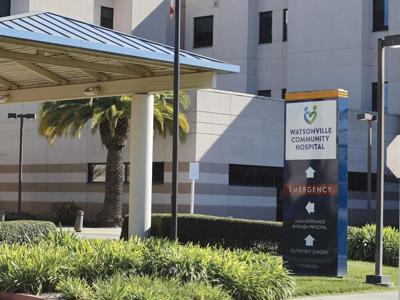
A HOSPITAL SERVING NORTH MONTEREY COUNTY RESIDENTS, Watsonville Community Hospital in Santa Cruz County, was already sitting on the precipice of closure before H.R. 1 cuts further threatened hospitals, after once seeming as if it might be successful.
In 2022, the hospital was saved from closure through the work of state and local leaders and for the first two years after, the hospital had momentum swinging in its favor.
The Pajaro Valley Health Care District brought it under local ownership, leading to equipment upgrades and improvements in independent safety ratings. Measure N, a $116 million bond measure, was approved by voters in 2024, allowing the district to purchase the hospital and the grounds.
But in the last two years, “we ran into a really big rut,” according to Tony Nuñez, chair of the PVHCD board of directors. In late 2024, the hospital was the victim of a cyberattack, possibly compromising patient data. Then H.R. 1 was approved in 2025, along with state budget cuts, resulting in diminished patient reimbursement costs that are expected to worsen next year.
As a result, Watsonville Community Hospital lost $23 million in 2025, and is currently losing $86,000 a day, leading to a possible closure in the next six to 12 months unless “something changes drastically,” according to Nuñez.
“I don’t say this lightly,” he told a crowd of about 100 people at a Watsonville meeting on Oct. 22. “I would not try to have this conversation in public just for shock value or to be an alarmist. The community, as owners of this hospital, deserve to know this.”
The closure of the Watsonville hospital would have ripple effects in Monterey County. It is the closest hospital for roughly 6,500 North County residents, about 15 or so minutes closer to the next facilities in Salinas.
Watsonville Community Hospital Interim CEO Tim Moran said the hospital has about six days of cash on hand, and is about $13 million “in the hole” with vendors, making it difficult to buy equipment because vendors are requesting cash up front.
Hospital officials are contemplating closing the labor and delivery and neonatal intensive care units, which lose about $10 million annually. It’s a move Director Joe Gallagher called an “unacceptable risk” and echoed by many in attendance at the meeting.
The board planned on applying for a state distressed hospital grant on Oct. 28, after the Weekly went to print. The board was also scheduled to vote on beginning the process of closing the NICU and labor departments.



(0) comments
Welcome to the discussion.
Log In
Keep it Clean. Please avoid obscene, vulgar, lewd, racist or sexually-oriented language.
PLEASE TURN OFF YOUR CAPS LOCK.
Don't Threaten. Threats of harming another person will not be tolerated.
Be Truthful. Don't knowingly lie about anyone or anything.
Be Nice. No racism, sexism or any sort of -ism that is degrading to another person.
Be Proactive. Use the 'Report' link on each comment to let us know of abusive posts.
Share with Us. We'd love to hear eyewitness accounts, the history behind an article.