Food is more than sustenance. A bite of a peanut butter and jelly sandwich revives memories from a school cafeteria, a pint of ice cream gives comfort during a breakup, a slurp from a steaming bowl of pho opens a gateway to a new culture.
So it’s appropriate how prominently food fits into celebrations. This Sunday, July 8, brings the 72nd annual Obon Festival to the Monterey Peninsula Buddhist Temple.
“The food and dancing express gratitude for our ancestors who have moved on,” explains Obon co-chair Ellie Hattori. “It’s a joyful and beautiful celebration to honor their memories.”
While Obon is rooted in Buddhist beliefs, it’s an event to be enjoyed by all. The afternoon includes bonsai and ikebana displays, tea ceremonies (12:30pm and 2:30pm), martial arts demonstrations with Aikido of Monterey (1pm), Taiko drum performance from Shinsho Mugen Daiko (3pm), a traditional Bon Odori dance to close the ceremonies (4pm), and, of course, plenty of food.
“It’s not fancy food,” Hattori says. “It’s simple and humble home foods, enjoyed together.” Booths offer steamed snacks like gyoza dumplings and edamame. Sushi, hand-rolled by festival volunteers, is a popular pick. And fried favorites like tempura, kushikatsu pork, and harumakiegg rolls pair perfectly with beer or sake.
Returning this year after an absence in recent years is traditional teriyaki chicken, cooked onsite by Justin and Heather Kleinfeldt and Steven Slater from Kleinfeldt Family BBQ on a 15-foot barbecue using the temple’s teriyaki recipe.
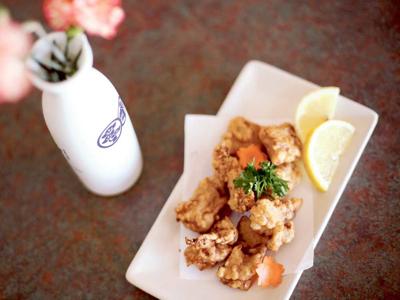
Karaage – chicken marinated in fresh ginger and garlic, then fried – has emerged as one of the festival’s signature (and gluten-free) snacks. Shiho Fukushima, Ocean Sushi Deli general manager, local gluten-free gourmand, and former Weekly restaurant reviewer, is preparing a whopping 250 pounds of chicken for the festivities. “It’s a lot of work, but we’re doing it for the community,” she says. “It makes you feel good.”
As to the element of community, Fukushima adds, “It’s everyone: There are 90-year-olds making sushi, 12-year-olds helping pass hot tea. You see all sorts of people, not just Japanese people. It’s a blending of cultures. It’s what we need right now, especially during times like these. It doesn’t matter what ethnicity or religion you are, we’re together at Obon.”
In a series of tweets in June, The New Yorker’s Helen Rosner pleaded, “Can we retire the lazy, empty, self-congratulatory trope that ‘food connects people’? Because it doesn’t. People connect people. It’s not the food, it’s the table.”
Rosner is right: Focusing too much on food risks disconnecting from the people who make the food, turning attention to a commodity, not a culture.
But Obon is an opportunity for both, gathering people at communal tables: “Food not only sustains our life, but adds flavor to our life and the true flavors of life cannot be truly enjoyed unless we share them with others,” temple reverend Jay Shinseki says.
OBON FESTIVAL happens noon-5pm Sunday, July 8. Monterey Peninsula Buddhist Temple, 1155 Noche Buena St., Seaside. Free admission, food available for purchase.


(0) comments
Welcome to the discussion.
Log In
Keep it Clean. Please avoid obscene, vulgar, lewd, racist or sexually-oriented language.
PLEASE TURN OFF YOUR CAPS LOCK.
Don't Threaten. Threats of harming another person will not be tolerated.
Be Truthful. Don't knowingly lie about anyone or anything.
Be Nice. No racism, sexism or any sort of -ism that is degrading to another person.
Be Proactive. Use the 'Report' link on each comment to let us know of abusive posts.
Share with Us. We'd love to hear eyewitness accounts, the history behind an article.