
In response to racism and police abuse, in the late 1960s young black people in the North and West of the United States formed the Black Panther Party, a more militant and black nationalist kind of organization than the nonviolent precedents of the Student Nonviolent Coordinating Committee (SNCC) or Martin Luther King Jr.'s Southern Christian Leadership Conference (SCLC). Today, Black Lives Matter has taken up the Panther's activist fervor.
In archival footage embedded in Stanley Nelson's documentary Black Panthers: The Vanguard of the Revolution, a reporter asks of then-FBI director J. Edgar Hoover about how the agency is seeking justice with regard to the Black Panthers. "Justice is incidental to law and order," Hoover says. Trump recently emphasized that same diligence to "law and order" during the last presidential debate.
History can and often does repeat itself.
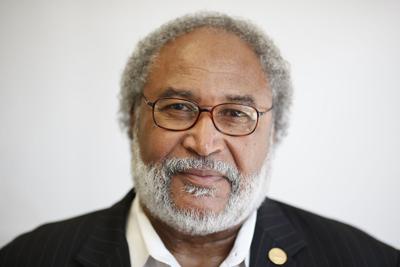
You can watch Stanley Nelson's documentary at the 50th anniversary commemoration of the founding of the Black Panther Party (the full title was the Black Panther Party for Self-Defense) 6:30pm this Saturday at Monterey Peace and Justice Center in Seaside. Mel Mason, longtime Seasider and former Black Panther, will speak before and after the film, further connecting the past that he and others lived to the present we all find ourselves in. (He calls the documentary the "best most even handed documentary that was ever done on the Black Panther Party.")
Historical perspective can lend understanding to confusing times. While on vacation, Mason offered some of his understanding to the Weekly in this email interview.
Weekly: What was your time in the Black Panther Party like?
Mel Mason: I joined the Black Panther Party in January 1968. I was fresh in the aftermath of being barred from playing basketball at colleges in the country after a stand I took against racism at Oregon State University. When I joined the Party, I was living in San Jose and working for Western Electric Company, which was then part of the old AT&T “Ma Bell” corporate complex. Confronted with racist treatment of the few Blacks that worked for that company, a group of us formed an organization called Black Workers Unity. I was asked to chair it and be its spokesperson. We won a number of significant victories for Black workers which brought me, especially, to the attention of BPP [Black Panther Party] Chairman Bobby Seale. The Party at that time was beginning to make political inroads in labor with the formation of Black caucuses inside the major labor unions. So what we were involved in at Western Electric fit right into the Party’s decision to ally itself with organized labor. Bobby sent a member of the Party, an Auto worker named Kenny Ortsley, to meet with me about joining the Party, which I immediately did and became one of the Party’s labor organizers. Life in the Party was exciting and arduous. Much was expected of each of us, which included working in the Party’s Community Survival Programs. I worked in the Free Breakfast for Children, Free Medical Clinic and the little known “Kick Joints”, where some of us helped people hooked on heroin kick the habit. Additionally, there were the regular Political Education Classes that we were required to attend. We were also expected to sell the Black Panther Party Community Newspaper. There was little time for “kicking back”. Remember, I also had a fulltime job and was still the Chair and spokesperson for our organization at Western Electric. Rallies and demonstrations were constant, especially the Free Huey Newton demos. The first mass demonstration I was part of was a Free Huey Demonstration on Golden Gate Avenue in San Francisco in front of the Federal Building in which over 50,000 people participated. Almost that entire section of San Francisco was shut down that day. Being a member of the Party meant understanding that you were part of a movement that had not only national, but international implications. We also knew what we were doing was dangerous, but we took pride in our love for our people and that we had stepped forward to be at the vanguard of their struggle for justice and liberation. Many of us, to include me, lost numerous friends from shoot outs by cops who, with the help and direction of the FBI, was hell bent on destroying the Party. One of my first assignments occurred in April of 1968 to be part of the security at the funeral of L’il Bobby Hutton, who was our first Comrade to die when he was shot to death with his hands up during a police shoot out in Oakland. This drove home the point to us that war had been declared against us. I still have strong friendships developed during my time in the Party.
Can you tell me about one action you participated in that was successful? And one that wasn't?
The demonstrations to free [BPP co-founder] Huey, while not immediately successful, did lead to Huey being set free from charges that in October 1967, he killed Oakland police officer John Frey after Frey and his partner stopped Huey and other Panthers. Huey was shot as well. Huey was convicted despite evidence showing that he didn’t shoot Frey, that more than likely, Frey had been shot by his own partner. Long story short, the case was overturned on appeal, which we were convinced would not have happened had there not been national and later international demonstrations for his freedom. Another intended success of these demonstrations was the education people received about the existence of other political prisoners in this country, thus the call in our demonstrations, “Free Huey and all political prisoners!” One action that wasn’t seen as successful was the Party’s attempt to have a ballot initiative on the Oakland ballot during that early period that, if passed, would have put the Oakland Police Department under Community Control. Community control of police was a huge issue in Oakland and other cities’ Black communities throughout the country. While the initiative was unsuccessful for a number of reasons, what it eventually resulted in were communities throughout the country coming up with community control formulations that included police commissions, police review boards, community police advisory bodies, etc, none of which had any teeth, but yet represented the reality for a lot of Black and Brown communities that some form of control of police in their communities needed to happen to stop cops from rampaging in those communities. However, the defeat of the initiative in Oakland was devastating for a lot of Black people.
What are some misconceptions about the Black Panthers?
The major misconceptions about the Party – which continues to be promulgated by the so-called “mainstream media” – include the lies that we were a gang, or a hate group that hated white people, and that we were, of course, violent. We were not a gang, in fact, the party was opposed to gangs and saw them as weapons against the black community that, in some cases, were used by the FBI against progressive and revolutionary forces developing in the Black community. Chicago Panther leader Fred Hampton’s assassination by the FBI and Chicago police was carried out, in large part, because of his successful work in getting gangs in that city to renounce their gangster ways and becoming political allies of the Black Panther Party. Violence was exacted against the Party by cops, not the other way around. This was most personified when J. Edgar Hoover issued his mandate in 1968 that authorized the use of COINTELPRO against the party and a host of illegal means of disruption to include false incarcerations, character assassinations of party supporters, especially white supporters, and outright murder of Party leaders and members. One of my friends is a now retired Professor at CSUMB named Steve Levinson. Steve’s parents were founders and leaders of an organization called the National Committee to Combat Fascism. The NCCF’s mission was to organize in white communities to build white support for the party, which served to emphasize the Party’s political position that we were involved, ultimately, in a class struggle for power that included people from all ethnicities and colors who make up our class – the working class. Among the many coalitions the Party developed – Brown Berets, Red Guard, Yellow Peril, American Indian Movement – were groups like the White Panther Party from Michigan and the Young Patriots, a white organization from Appalachia, who adopted a ten-point program for the Appalachians that was similar to the Black Panther Party . In fact, our lead attorney, Charles Garry, was white. Some of our prominent white supporters were people like Marlon Brando, Jane Fonda and a then up and coming actress named Jean Seberg, among others.
How did you witness the dismantling of the Black Panther Party?
We saw the party changing in a very significant way around 1973 to 1974, when, in response to the attacks on the party, infiltration by the FBI, the frame ups and jailings of party members the Party began to centralize decision making. We always prided ourselves in having what we called democratic centralism, meaning that decisions that affected the Party nationally were the result of “bottom up” decisions. Now decisions were being made at the top with little to no input from the grass roots of the organization. This proved to be a prescription for disaster. So when political disagreements began to develop within the party about where the party should politically proceed, there was no place for that discussion to take place, because the Party was now on what some of us called “a war footing”. So political differences were being carried out in cliques and other sub-formations. On top of that, the Party was in a state of paranoia about spies inside the organization. So the Party went on its version of a witch hunt, looking for spies. This served to sow even greater suspicion and distrust between party members. The FBI got into the middle of this with poison pen letters to different party members saying that another party member was out to shoot them over some supposed rivalry, alleged affairs with wives, husbands and partners. Other letters would give names of Party members suspected of being spies. That combined with the ongoing attacks and murders by police and the constant trials on false charges decimated the party to the point where it eventually closed its doors in 1982 as not even a shell of its original self.
How do you compare the Black Panther Party with Black Lives Matters?
Many of us who were Party members see the Black Lives Matter movement as an extension of the legacy we left as the most politically developed organization of its time. Like the Black Panther Party, Black Lives Matter was born out of response to police brutality being monstrously exacted against Black communities across this country. It was also created by young Blacks, just like we did with the Black Panther Party as young Blacks of our time. Black Lives Matter has consciously sought allies and helped build coalitions outside the Black community, just like we did. It is also being castigated by the so-called “main stream media”, just like we were. The difference between that movement and ours is that we were an organization that was made up of chapters that were under the discipline of a central organizational leadership. Black Lives Matter is made up of different chapters or affiliates without a central political leadership through which political actions or thinking is coordinated. Unlike the Party, Black Lives Matter, by the nature of its structure, lends itself to having a variety of ideologies that can move different chapters or affiliates in different or even competing ways. Also, the media and police, all of whom are aware of this type of structure, seek to use actions – generally fabricated – of one group and use them against another group of the movement as a whole. Also, we had a vision of the society we were fighting to bring into existence. We were Marxists who believed that this capitalist society had to be replaced through revolutionary struggle with a society that put justice and human needs over profits. But, despite these differences, I am a supporter of the Black Lives Matter Movement as are many of my former Panther Comrades. In their own way, they are carrying out the struggle legacy of the Black Panther Party.
What is the state of the BPP today?
The Black Panther Party officially ceased to exist in 1982. However, while many of us are in our 70’s and older, we are still being productive in other movements and works in our various communities. Many of us – to include me – have been working for years to free Panthers who have been held as political prisoners for as many as 47 to 48 years. Some have been freed in the past three to four years, but others remain locked up. They paid a price for standing up to power and fighting for power. They are not criminals. They were fighting against a criminal government and its ruling class.


(0) comments
Welcome to the discussion.
Log In
Keep it Clean. Please avoid obscene, vulgar, lewd, racist or sexually-oriented language.
PLEASE TURN OFF YOUR CAPS LOCK.
Don't Threaten. Threats of harming another person will not be tolerated.
Be Truthful. Don't knowingly lie about anyone or anything.
Be Nice. No racism, sexism or any sort of -ism that is degrading to another person.
Be Proactive. Use the 'Report' link on each comment to let us know of abusive posts.
Share with Us. We'd love to hear eyewitness accounts, the history behind an article.