
Like me, you may be reading this newsletter on your phone. Long gone are the days when most of us read most of our news in printed form.
Sara Rubin here, thinking about the fast-changing information ecosystem we live in. Some of it is the medium—information moves quickly online, and the expectation of information is now, not tomorrow. Some of it is the message—there is deliberately deceptive information published on the regular, and of course the internet makes it easier to disseminate widely. Some of it is how we, as humans, interact with information: In the world of social media, everyone can be a curator and producer, not just a consumer.
I think in general this has had a fabulous effect of elevating people’s voices. It’s also made it harder than ever to discern what is real, and who to trust—and the power comes with certain responsibilities.
This complicated role as consumer/producer of information is at the core of the mission of the Monterey County Media Literacy Coalition, created by Susan Meister, who studied journalism in the pre-digital era. The coalition’s efforts are the subject of this week’s cover story, in celebration of Media Literacy Week, Oct. 21-25. (The Weekly is a member of the coalition, and staff writer Pam Marino will speak on a panel discussion tomorrow, Oct. 21, in The Press Club. I hope you’ll join us.)
I remember learning media literacy in elementary school. The exercise was known as Current Events, and we were assigned to cut out a newspaper article, then present a summary to our classmates. I found it tedious and boring—it was reading comprehension more than critical thinking, and as a fourth-grader, I would have rather read anything besides a newspaper article written for adults.
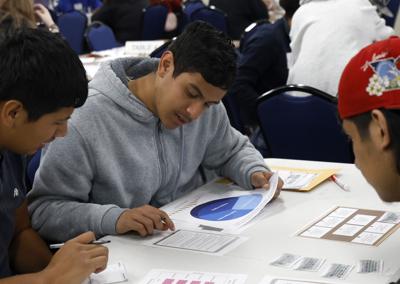
Luckily, we’ve come a long way in teaching media literacy, a big focus for the Media Literacy Coalition, which in May, hosted the first-ever Misinfo Day in California. It was fun, for one thing—and very online. (You can read more about the activities, including an escape room-style game, in the cover story, and find a link to play it yourself.)
But of course we all have a lot to learn, and the subject we are learning is always changing. Consider AI, which rendered Taylor Swift (falsely) pleading her support for Donald Trump for president. When Swift announced she was in fact voting for Harris, she put it beautifully: “The simplest way to combat misinformation is with the truth.”
How did you learn media literacy? Did you learn in the digital era, or have you had to adapt? Are you among the 52 percent of Americans who reported to Pew that it’s hard to find accurate news on the election? I’d love to hear your insights into this learning process we’re all in together.


(2) comments
Bravo and thank you for covering this issue. The day after the panel discussion, the Washington Post published a test of media literacy titled "Misinformation Is Everywhere This Election. Can you Tell What's Real?" A test worth taking and sharing.
My dirty secret is that I worked at Fox News Channel in NYC for seven and a half years. I was in the research department. It’s known as the Brainroom. When I hear people say that Fox makes up news or lies, I have to laugh because, as a researcher, I had to source absolutely everything and put the source in a database. If you make up news, you get sued. Of course, the news division, where I worked, is quite different from the editorial or commentary side, where there can be more gray area. I think most people by know understand the difference between editorial and news, but sometimes the lines do seem to blur and news can be conveyed slyly. I remember when AP announced that it would start explaining the news rather than just providing it. I knew that was a slippery slope. The 24 news cycle changed things too, and the Internet…well…. We all have to be thoughtful as readers and not allow ourselves to buy into conspiracy theories, even if it’s tempting to believe the worst about someone you dislike. Truth must always be sought and defended.
Welcome to the discussion.
Log In
Keep it Clean. Please avoid obscene, vulgar, lewd, racist or sexually-oriented language.
PLEASE TURN OFF YOUR CAPS LOCK.
Don't Threaten. Threats of harming another person will not be tolerated.
Be Truthful. Don't knowingly lie about anyone or anything.
Be Nice. No racism, sexism or any sort of -ism that is degrading to another person.
Be Proactive. Use the 'Report' link on each comment to let us know of abusive posts.
Share with Us. We'd love to hear eyewitness accounts, the history behind an article.