
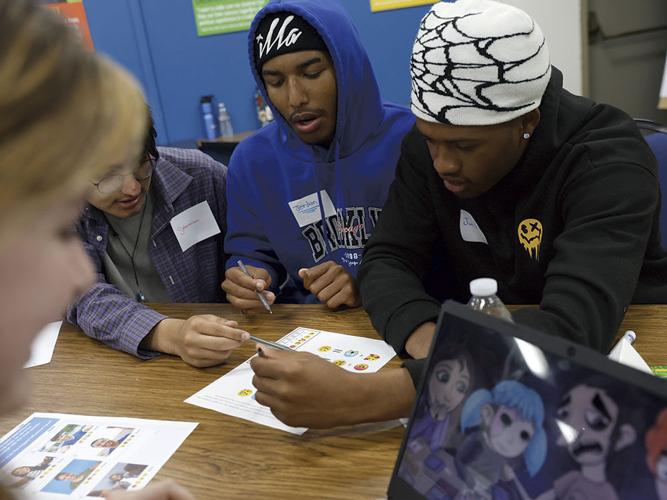


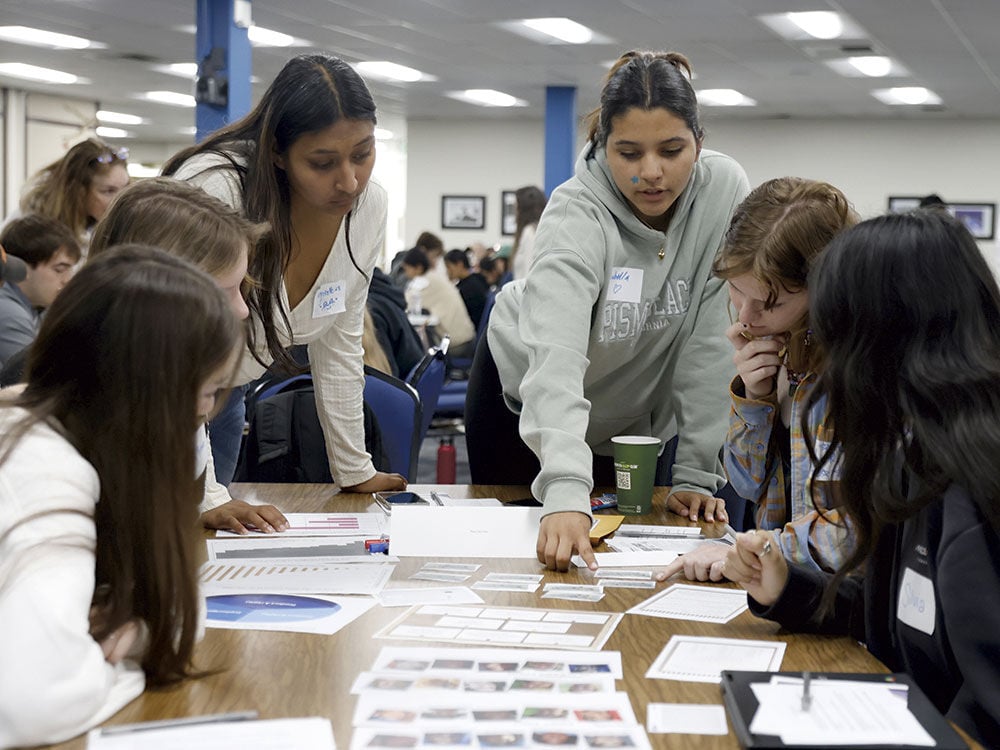
Groups of students (from Alisal High School, above, and Marina High School, below) participated in Monterey County’s first-ever Misinfo Day on May 7. This escape room activity required students to solve puzzles – including determining which portraits were real versus AI-generated, as shown above – to crack codes and advance to the next clue.
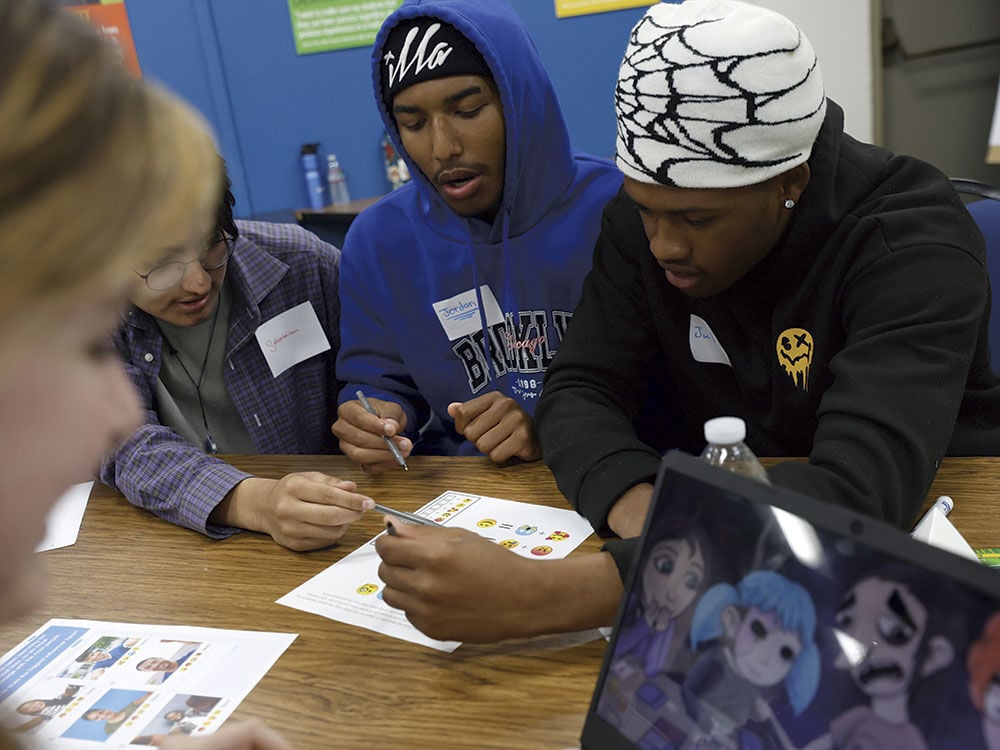
A group of high schoolers is studying the image of a middle-aged man’s face. Their mission is to determine if this is a real photo of a real person, or a product of artificial intelligence.
His bald spot looks like a dent – real, or fake? It’s hard to tell.
“She has no neck, so she looks scary,” says a student named Lily examining another portrait spread out on the table in front of them. Then she turns to another face: “This guy, I feel, is definitely a fake.”
Her Alisal High School classmate Isabella chimes in: “It’s hard! Some people’s eyes are just like that.”
The students are trying to be correct in their assessment, but in this case they are also trying to be fast. They are playing a game and competing against dozens of other teams, mostly five or six students each. It’s an escape room concept, although there is no physical room to escape from. Instead, they are tasked with solving one puzzle to unlock a code that takes them to another puzzle. Along the way, they gather bits of information and they are asked to assess: Real or fake?
The frustrated group checks in with an adult volunteer, Sheila Robinson, to find out if they’ve succeeded at the photo identification puzzle and can move on. “This is the hardest part,” Robinson offers by way of encouragement before continuing to make her rounds. “The AI is very good.”
A few minutes later, the students are still stuck. “Oh my god, this is hard!” Isabella offers.
Robinson returns with a hint. One photo the teens have identified as AI – of a woman with wildly done-up hair, an elaborate flower crown and vivid eye makeup – is, in fact, real. “Just because it’s artistic doesn’t mean it’s fake,” Robinson offers by way of explanation. Instead, she points them to a background that does not match up quite right behind a supposed person – a sign that it’s a product of generative AI.
As this Alisal group works to crack the code, Julius Robinson, a Marina High School senior who is seated at a table across the room, calls out, “We got it, we got it!” The race is on.
A few minutes later, the Marina group has cracked a password that enables them to log into a laptop and watch a 30-second video.
A scientist named Henry Jones appears in a white coat to announce the findings of a study on a supplement called Euphorigen. Jones has bad news to share with the public after 10 years of research, reporting in the video that the product – which has been used by wealthy people to boost brain activity and productivity – is not effective.
The game next directs students to share the video, and they do – only to learn it’s a deepfake.
This entire narrative, of course, is a work of fiction – the researcher, the research, Euphorigen, the influencers (both those who support and who oppose the drug) – but the game is real, and the students are as thoughtful as they are fast.
They’ve all stumbled into the trap of sharing a video that is bogus. “The idea was, let’s make a game where people have the experience of being fooled, then reflect on that and realize we are all vulnerable,” says Liz Crouse, program coordinator at University of Washington’s Center for an Informed Public. (The game and corresponding curriculum came from UW’s Information School before the Center officially launched, in 2019.)
The game – available online, in addition to this in-person version – was developed with an adult audience in mind, for use at public libraries, but it became the energetic cornerstone in a series of events called Misinfo Day, that UW has hosted for various Washington high schoolers since 2019, inviting students to UW and Washington State University campuses.
One-hundred local students, who come together from seven local high schools on Tuesday, May 7, participated in Monterey County’s first-ever Misinfo Day, packed with activities and presentations designed to help them ask and begin to answer such questions. It’s also the first time this curriculum has ever been delivered outside of the state of Washington.
Their hope had always been that others might reach out and ask to try this action-packed Misinfo Day and Susan Meister, founder of the Monterey County Media Literacy Coalition, was the first to call. “It’s amazing to see it come together so beautifully,” Crouse says.
The Misinfo Day program is one example of the type of learning that will be rolling out more widely as California adopts new standards to teach media literacy in K-12 schools.
Monterey High School student Ryan Roth is a member of the winning team in the escape room activity. He sums up their strategy this way: “You’ve got to figure out what’s true or not.” If you can’t tell, he adds: “Go find out more information.”
The goal, of course, is to give participants the skills they need in real life, outside of the game world, to determine which information is credible.
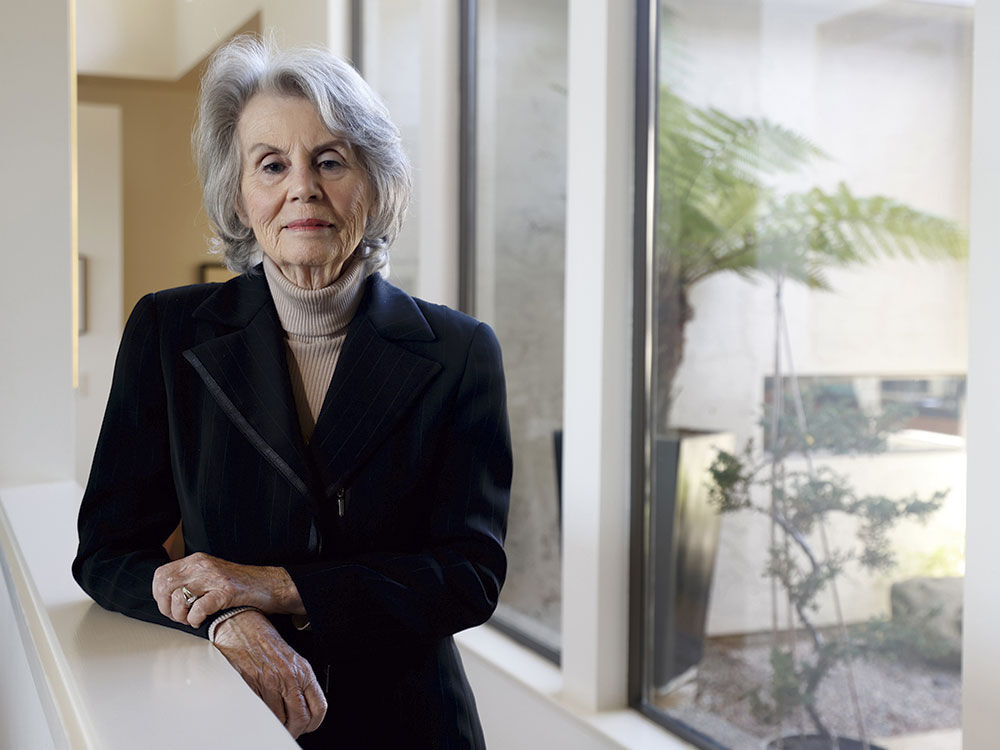
“No one can escape the fact that we are deluged with misinformation and disinformation,” says Susan Meister, founder of the Monterey County Media Literacy Coalition. “It’s a symptom of the sickness of our society right now. We don’t agree on anything, especially on facts.”
THAT WE ARE BOMBARDED WITH INFORMATION IS NOT NEW. The speed of that bombardment, and the technology that can be used to quickly share information or falsify information, is new and ever-changing.
A 2019 study at Stanford University gauged 3,446 high school students’ ability to evaluate digital information sources on the internet, and found that 96 percent failed to consider that ties to the fossil fuel industry might affect the credibility of information on climate change. Meanwhile, 52 percent believed a video – actually shot in Russia – that showed “ballot stuffing” provided compelling evidence of voter fraud in the United States.
A 2023 Pew Research poll shows half of U.S. adults get their news at least sometimes from social media, even as 40 percent said one reason they dislike getting information there is because of inaccuracy – but people reported that they kept returning because of convenience. A newer Pew study, released on Oct. 10, found that 52 percent of Americans find it is generally difficult to determine what is true and what is not about the upcoming election.
And the first week of October, between Hurricane Helene and Hurricane Milton, FEMA launched a “Hurricane Rumor Response” website to quell untrue rumors about federal assistance. “Rumor: FEMA is blockading people in Florida and preventing evacuations,” the site reads in one example. “FEMA does not control traffic flow or conduct traffic stops, which are handled by local authorities. This is a harmful rumor that can put lives in danger… Local officials are the best source of information about evacuation and resources to help.”
This information landscape is what prompted Assemblymember Marc Berman, D-Menlo Park, to introduce Assembly Bill 873, which was signed into law in 2023. The law requires that California’s K-12 schools incorporate media literacy into the curriculum across major subjects (language arts, math, science, social studies) the next time the curriculum is revised.
“As we’ve seen too often in the last decade, what happens online can have the most terrifying of real-world impacts,” Berman said at the time of the bill signing one year ago. “From climate denial to vaccine conspiracy theories to the Jan. 6 attack on our nation’s Capitol, the spread of online misinformation has had global and deadly consequences. We have a responsibility to teach the next generation to be more critical consumers of online content and more guarded against misinformation, propaganda and conspiracy theories.”
As Mark Gomez, ethnic studies coordinator at the History & Civics Project at UC Santa Cruz, told the students at Misinfo Day in Monterey on May 7, “The things we are talking about here today could save this country’s democracy.”
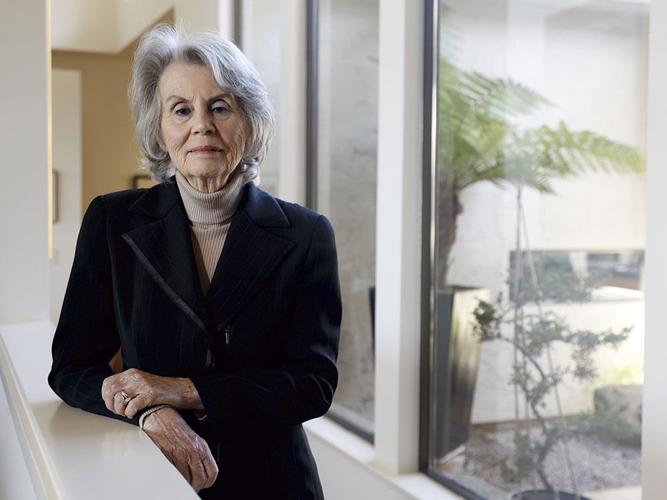
FROM HER HOME IN PEBBLE BEACH, Susan Meister was reading about Berman’s pending AB 873. Decades earlier, she attended Columbia Journalism School and had hoped to work for a big newspaper, but found they would not hire women at the time. Instead, she became the editor of special publications for an international medical foundation based in Holland, and from there developed a career in medical publishing.
She was living in San Francisco when she met her now-husband, who lived in Monterey County. She moved here in 2012, and wanted to get involved. She launched a local chapter of Moms Demand Action, a group focused on safe gun storage. She used her journalism training and wrote occasional columns for the Monterey Herald. And as AB 873 was winding through the Legislature, she saw a new call to action.
“When I saw the bill I thought, this is our opportunity to do something in California,” she says. She got to work on creating the Monterey County Media Literacy Coalition and developing programming that she hopes can become a template for wider use: “We want this program, or something like it, to be in every California county.”
The Coalition’s members include the History & Civics Project at UC Santa Cruz (which supported Misinfo Day with a $6,000 grant); Monterey County Office of Education (which provided buses and staff for the event); Monterey County Free Libraries; Monterey County Board of Supervisors, which on Oct. 1 passed a resolution declaring National Media Literacy Week in Monterey County from Oct. 21-25; Monterey County Weekly; Institute for Public Trust at Fresno State; and Assemblymember Berman.
The Coalition is marking the 10th annual National Media Literacy Week, Oct. 21-25 (held in conjunction with UNESCO’s Global Media and Information LiteracyWeek), with another installation of Misinfo Day at York School, and a panel discussion on Oct. 21 featuring Gomez, MPUSD Superintendent PK Diffenbaugh, Monterey County Free Libraries Director Hillary Theyer and Weekly staff writer Pam Marino.
Meister says she returns again and again to the basics of fact-checking, even in the digital era. “I went to journalism school, and that’s where I learned most of what I know and have used it ever since,” she says. The hope is to help participants – K-12 students for now, as well as the general public – learn, practice and apply those same skills.
“The forces of disinformation are overwhelming and voluminous, and the internet has made that much more difficult to penetrate,” Meister says. “It takes a state of mind which we are hoping to instill in students: Is it trying to persuade me of something? Am I emotionally reacting to it?
“If I know something’s fishy, now I know how to investigate it.”
She is realistic about her efforts and how long it can take to transform the information ecosystem. But she can imagine what success looks like – purveyors of disinformation will go out of business, and misinformation will not flow so fast.
“We will get back to a fact-based society,” she says. “At least we have a formula, and our formula is understanding what we are looking at and critically evaluating it. I don’t think it will be in our lifetimes, but I think it is achievable. We start with leaders of tomorrow.”
SPEAKING TO THOSE LEADERS OF TOMORROW at Monterey County’s first-ever Misinfo Day in May, Daisy Martin presents to the students after they complete the Euphorigen escape room game. (Spoiler: Euphorigen is deemed safe and effective after 10 years of study, and scientists plan to use it in the drinking water supply.)
Martin, the founding director of the History & Civics Project at UC Santa Cruz, starts by distributing a grid for participants to complete a social media diary. In the past 24 hours, which sites did they visit, for how long, and what did they do there – post, share, like, doomscroll?
The key takeaway in module after module of learning is a surprisingly simple trick: Pause.
“It’s so important to stop before you share,” Martin tells the students. “I encourage you to be more careful and critical on social media.”
This is where contemporary times are unique – media literacy as an umbrella term not just for how to be discerning as a consumer of media, but also as a curator or producer of media. Part of the objective of media literacy training is to encourage people not to inadvertently share misinformation and help it go viral.
“Pause and stop and think. If we could all be just a little more reflective, it would get us a long way,” Martin says.
The History & Civics project educates educators, focused on history and civics education in K-12 California schools. (AB 873 will provide guidance on teaching media literacy across all major subjects, history included.)
“It’s not a new idea that we need informed and educated people in our democracy to make the democracy work and make it more democratic,” Martin says. “The goal is not whoever fools the most people wins. The idea is that we are working for the public good, and that means everybody.”
With a quickly changing media landscape (see: the internet), teachers are seeking guidance on how to teach media literacy in the classroom – and how to do it without being political.
Instead, the mission of the evolving curricula will be to get students to be critical thinkers in a world full of misinformation and disinformation, to recognize the lies and manipulations. “We are helping students learn how to think, not necessarily what to think,” Martin says.
Classroom examples work best when they are not politically charged. For example, according to Martin and Gomez: “Was there really a shark in the middle of a highway?” is a better question for real engagement and critical thinking than “Did Russia influence the American election?”
The idea is not that educational institutions alone are responsible for creating an engaged, thriving, functioning democratic society. There are responsibilities for producers of content (which is, increasingly, all of us) and for consumers of content. But schools are already at the front line of how to teach people to think critically, and AB 873 will expand and more clearly articulate how that looks.
Monterey County Office of Education increased its emphasis on digital citizenship and media literacy during the pandemic, when students were learning remotely. (MCOE is a member of the local coalition, and on Oct. 9, hosted a media literacy forum focused on technologies such as AI and social media for educators.)
“You are not going to have a well informed citizenry if our young people – and adults, for that matter – don’t have a good skill set to critically analyze all the various sources of information that come their way,” says Monterey County Superintendent of Schools Deneen Guss. “The cornerstone of our democracy is based on a well informed citizenry.”
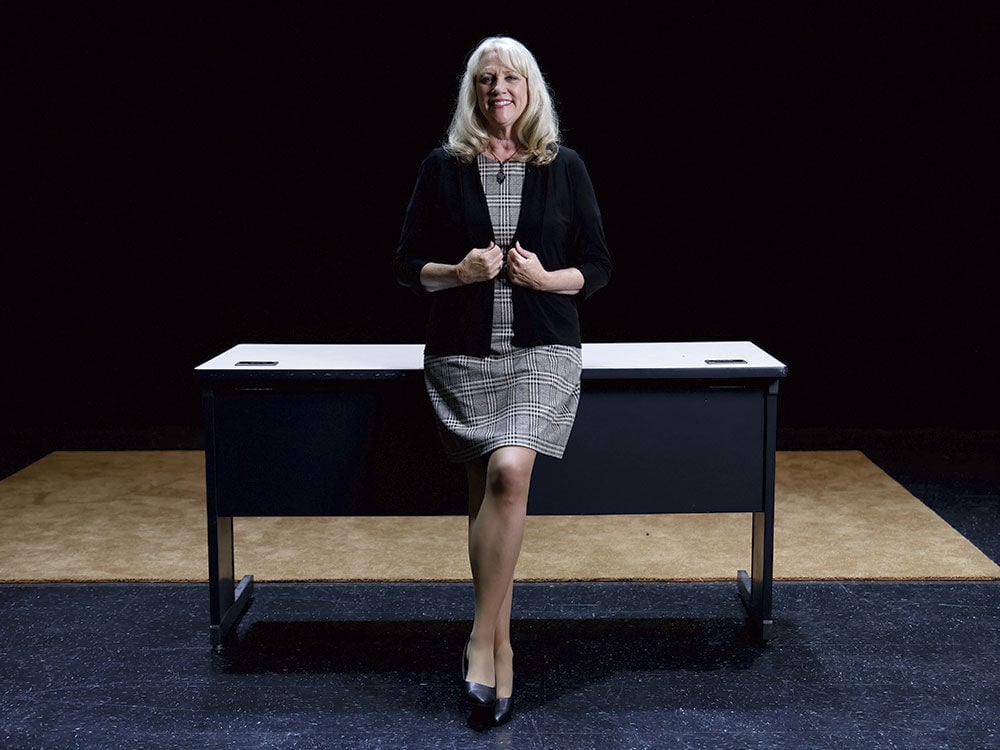
“Media Literacy Week serves as an opportunity to promote essential skills, ensuring students are prepared to be informed, responsible and engaged digital citizens,” Monterey County Superintendent of Schools Deneen Guss says.
THERE IS A DIFFERENCE BETWEEN SKEPTICISM AND DISTRUST. The objective is not to sow generalized distrust – in fact media literacy is largely about restoring trust in credible sources of information. Likewise, the objective is not for people to stop asking critical questions – instead to empower them to responsibly fact check government’s spokespeople or candidates’ campaign promises. It’s to pause and think about our trust or distrust, our biases, and to allow ourselves to think critically.
This applies not just to when we are scrolling through social media, or reading newspapers or deciding who to vote for. The aspiration is that it also applies when we are in conversation with each other, rolling around ideas, disagreeing and learning.
Guss observes these forces at play at her own family gatherings, where her 35-year-old son, an aerospace engineer and a Democrat, will debate issues with her brother, a successful business owner and a Republican. Both men, she says, are “brilliant.”
When they disagree, they will ask: Where did you read that? And then look up the source, and discuss whether it’s credible. “That’s the beauty of this, we can have these amazing, critical debates and leave the table with respect,” Guss says.
The kind of information sharing and cross-checking that works at the dining room table works in a democratic society, as well: “Whether you are making decisions about your health or who to vote for, you have to know how to dig deep and do critical analysis to be a good decision-maker,” Guss adds. “If we don’t know how to do that, our world’s going to be in a world of hurt.”
(0) comments
Welcome to the discussion.
Log In
Keep it Clean. Please avoid obscene, vulgar, lewd, racist or sexually-oriented language.
PLEASE TURN OFF YOUR CAPS LOCK.
Don't Threaten. Threats of harming another person will not be tolerated.
Be Truthful. Don't knowingly lie about anyone or anything.
Be Nice. No racism, sexism or any sort of -ism that is degrading to another person.
Be Proactive. Use the 'Report' link on each comment to let us know of abusive posts.
Share with Us. We'd love to hear eyewitness accounts, the history behind an article.