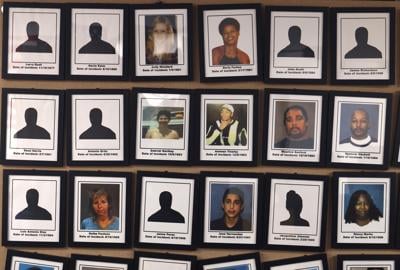

Katie Rodriguez here, starting with a disclaimer as you may be sipping on your morning coffee. This week’s cover story is on cold cases, and it includes some graphic details.
One additional dimension of the story is the legal side, with rulings on what kind of evidence can and cannot be admitted in court as judges wrestle with evolving technology and privacy concerns.
Earlier this month, a New York judge ruled that prosecutors could use DNA evidence—specifically whole-genome sequencing—in a trial involving a man accused of killing seven women whose bodies were found on Gilgo Beach in Long Island.
Whole-genome sequencing is a comprehensive type of DNA testing which allows analysts to look at a person’s entire DNA fingerprint instead of just a portion of it. While it can be expensive, it allows for extreme precision, even helping analysts distinguish between identical twins (who have almost identical DNA).
The lab used to generate that DNA analysis was Astrea Forensics, which is based in Santa Cruz and specializes in analyzing highly degraded pieces of evidence. It’s the same lab that was used in a Seaside cold case, the 1982 murder of then-5-year-old Anne Pham. In that case, all investigators had was a single pubic hair to solve a brutal murder that occurred in 1982.
DNA technology has evolved dramatically in the last decade, helping to solve cases that have gone cold due to insufficient evidence initially collected to bring a suspect to trial.
In this week’s cover story, I write about several local cases recently solved through various types of DNA analysis—including how it’s been used to identify perpetrators of crimes, and also remains that were found out at sea decades after the person went missing.
In that instance, the family had believed their loved one was still alive. DNA testing and genetic genealogy helped them close that door.
Something I found especially striking while reporting this story (for big true-crime fans, this might be common knowledge) is how much collaboration these cases require: from local police departments and prosecutors to funding via the Cold Case Project, to work by state and private forensic labs, and even assistance from the victims’ family members.
And of course, DNA evidence alone isn’t enough. It must be used alongside other pieces of evidence to prove, beyond a reasonable doubt, that the investigators have the right person.
The Monterey County District Attorney’s Office Cold Case Task Force is the team responsible for pursuing these cases, with the help of the aforementioned groups. In reporting this story, I was able to watch their main prosecutor, Matthew L’Heureux, bring witnesses to the stand, present DNA evidence to the jury, and ultimately prove to them that they had identified the correct person, finally providing an answer for a murder that happened in 1991.
It’s impressive work, I hope you find it interesting, too. You can give the story a read here.


(0) comments
Welcome to the discussion.
Log In
Keep it Clean. Please avoid obscene, vulgar, lewd, racist or sexually-oriented language.
PLEASE TURN OFF YOUR CAPS LOCK.
Don't Threaten. Threats of harming another person will not be tolerated.
Be Truthful. Don't knowingly lie about anyone or anything.
Be Nice. No racism, sexism or any sort of -ism that is degrading to another person.
Be Proactive. Use the 'Report' link on each comment to let us know of abusive posts.
Share with Us. We'd love to hear eyewitness accounts, the history behind an article.