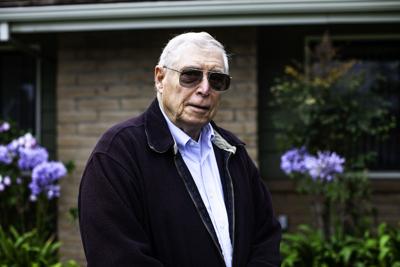

One morning in early April, Patrick Dunne couldn’t taste the raspberries in his oatmeal. That’s weird, he thought. In the shower he noticed he couldn’t smell the soap.
At that point in the Covid-19 pandemic, it wasn’t widely known or officially recognized that loss of taste and smell are symptoms that some people experience when they are infected with the virus. Other than feeling a bit “sluggish,” Dunne says, he didn’t feel sick and it didn’t occur to him he might have coronavirus. In fact, he thought he wouldn’t get it.
Brother Dunne, as the 75-year-old Christian Brother is known, was still president of the all-boy Palma School in Salinas, where he had worked for 33 years. (Christian Brothers take vows but are not ordained like Catholic priests.) His official retirement was coming in June. Dunne thought he was at low risk for contracting Covid-19, since he wasn’t going out much during shelter-in-place.
He was keeping up his years-long practice of waking up between 3:30-4am and walking 10,000 steps on the streets of Salinas before starting his day at Palma. That and his daily oatmeal and berries breakfast and big salads for lunch were more reasons to think that even though a senior placing him in a high-risk group for Covid-19, he was in excellent health and had no underlying conditions.
The loss of his senses went on for 16 days, during which time he lost 14 pounds after food lost its appeal. Then during the last week of April, he found he was having troubles breathing. Each day became a little more labored than the last until finally, on April 29, he was worried enough to call Salinas Valley Memorial Healthcare System’s Covid-19 hotline. He was told over the phone he didn’t have enough symptoms to qualify him for a test—it was back when test supplies were still in short supply and he had no fever—but they told him to come in if he wanted to. "I'll be there in 20 minutes," he said.
Dunne drove himself to SVMH and parked a block away, the closest spot he could find. Now the man who had been walking with ease for 10,000 steps every morning found each and every step tortuous.
“It was like my lungs were collapsing,” he says.
Once he got inside, they did collect a specimen and the results came back quickly; his memory is that it was only about 15 minutes.
"I was kind of stunned when I heard that," he says. "It was a life-changing event, almost."
His first night in the Covid-19 ward was “terrifying,” Dunne says. “I didn’t know which way it could go.” The nurses wore “space suits,” his term for their personal protective equipment, and were by his side constantly checking his vital signs and his flow of oxygen. One nurse went down to the gift shop and bought him a new charger cord when his phone battery died.
“The people in the emergency room were super, the people upstairs were super,” he says. “If it wasn’t for them, I may not have made it so I’m very thankful.”
That first night he thought maybe he saw a person who didn’t survive Covid being wheeled out of the ward. It could have been his imagination, but either way, the fleeting image led to some deeper reflection on Dunne’s part.
“It's a real spiritual experience when you realize where you are and which way it could go. It was a challenge but a great thing to go through in one sense,” he says.
By the third day he was feeling better, and on the fifth day he was released home with an oxygen tank. The Visiting Nurses Association came regularly during his first three weeks at home. Faculty and staff at Palma brought him meals every day for the first two weeks home.
“The VNA was instrumental in helping me learn how to take care of myself and head in the right direction on a daily basis over those three weeks,” Dunn says. “I am deeply in debt to their assistance in helping me make the progress I have made up to this point.”
Under instructions to do so, he's been weaning himself off the oxygen and now goes without it during the day, but sometimes relies on it briefly in the nighttime.
Today he say he’s 95-percent back to normal. He hasn’t attempted his 10,000-step-a-day morning walk yet. He hopes to spend retirement improving his golf game and, when it’s allowed, traveling.
As for where Dunne was infected, he suspects it was a trip he took to Chicago by plane in mid-March for a meeting. He returned on March 17, the day Monterey County’s shelter-in-place order was announced. The loss of taste and smell came about two weeks later and it’s possible he had the virus for those 16 days but didn’t build up enough antibodies to protect him from a second wave when he began having trouble breathing later in April.
He continues to shelter in place, and when he does go out to shop he wears a mask. “I find it really hard to believe that people don’t take this seriously, but it’s a serious thing,” Dunne says.
“Since it happened to me, it can really happen to anybody,” he says, emphasizing that he shares his story not because it's about him but because he hopes it helps others. “I’m fortunate I had such great treatment and am able to talk about it.”


(0) comments
Welcome to the discussion.
Log In
Keep it Clean. Please avoid obscene, vulgar, lewd, racist or sexually-oriented language.
PLEASE TURN OFF YOUR CAPS LOCK.
Don't Threaten. Threats of harming another person will not be tolerated.
Be Truthful. Don't knowingly lie about anyone or anything.
Be Nice. No racism, sexism or any sort of -ism that is degrading to another person.
Be Proactive. Use the 'Report' link on each comment to let us know of abusive posts.
Share with Us. We'd love to hear eyewitness accounts, the history behind an article.