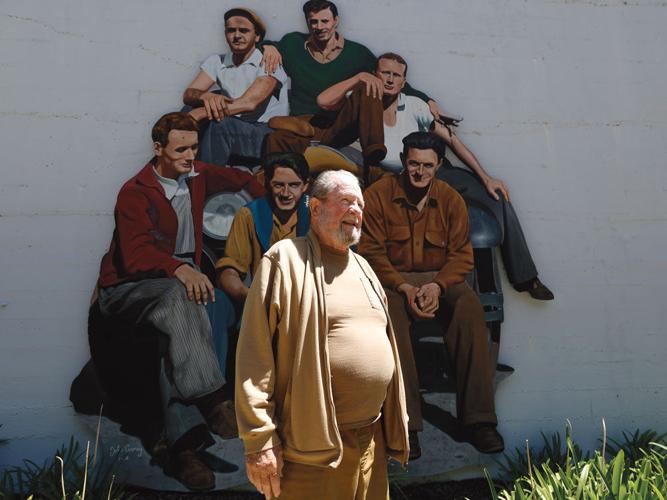

Kent Seavey was one member of a team that created a Cannery Row interpretive project, including a mural of Mack and the Boys from John Steinbeck’s Cannery Row.
NAME A HISTORIC HOME, COMMERCIAL BUILDING OR DISTRICT IN MONTEREY COUNTY,and Kent Seavey, 86, probably knows its history, and likely worked to save it from disappearing or help amplify its story. After more than 60 years as a historic preservationist and museum interpretation consultant, Seavey is a walking database of the county’s historic places.
Seavey estimates he’s written two-thirds of all historic surveys in Monterey County. He’s been a part of efforts at Cannery Row, Deetjen’s Big Sur Inn and Paraiso Springs near Soledad, among many others.
He taught art and historic preservation part-time at Monterey Peninsula College for 20 years and lectured at numerous universities in Northern California, including UC Berkeley and Stanford. He’s written two books, one on the history of Carmel architecture and another on the history of Pacific Grove.
In May, Seavey was awarded the 2026 President’s Award for Advocacy or Outreach from the California Preservation Foundation, for his lifetime of work throughout the state, including contributing to shaping public policy like the historic preservation portion of the California Environmental Quality Act. He’s written hundreds of resource surveys and preservation nominations for the National Register and served on various preservation boards and commissions.
“His career stands as a remarkable example of how thoughtful outreach and dedicated advocacy can leave a lasting mark on the preservation movement,” a statement by CPF reads. “His work has not only preserved places, but has also deepened public understanding of why they matter.”
Salvador Muñoz, a Salinas architect and historic preservationist who has collaborated with Seavey since the 1980s, nominated his friend for the CPF award.
“I’m glad he received it because he deserved it,” Muñoz says. “He’s one of the foremost, if not the foremost, preservationists we have in our area. We’re very privileged to have him.”
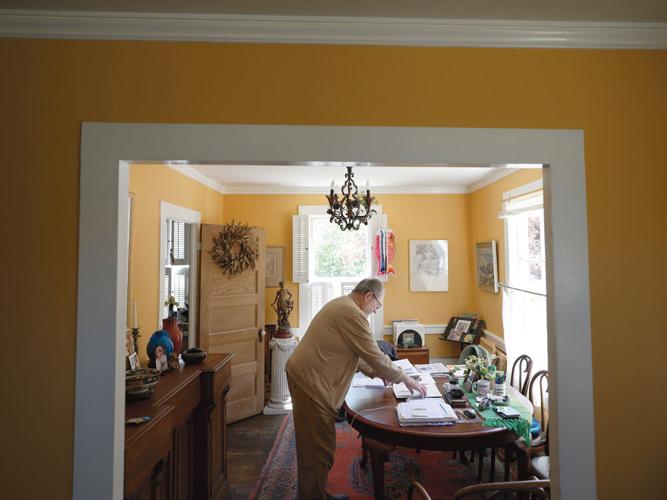
Even as an octogenarian, Seavey is still working as a consultant using his dining room table as his office inside his Pacific Grove Victorian home, a former barn from the 1890s that was later converted into a house in the 1920s. Inside he’s surrounded by artwork by his late wife Marie Brumund and one of his daughters, Heather Lynne Seavey Brumund (who also goes by CV.Brumund). Seavey also has two other daughters and three granddaughters.
Sitting on his dining table/desk is a coffee mug he found in a thrift store that he likes to show off with a bit of a chuckle. It reads, “Damn, I make 86 look good.”
SEAVEY NEVER STARTED OUT WITH A PLAN to become a museum curator and historic preservationist. He went into the military and through a series of what he calls “happy accidents” fell into what became his life’s work.
Born on April 1, 1940 in Riverside, he remembers a life as the son of a single mother, growing up on the family’s 40-acre farm of walnut trees and alfalfa.
“I really think my mother thought I was going to be a gas station attendant or something like that because I was never pushed educationally to do anything other than survive in context,” Seavey says.
When he graduated high school in 1957, he and a friend joined the U.S. Marines, where he landed in the 1st Force Reconnaissance Company doing intel work in Asia, including parachuting into locations. He left active duty in 1961 to get an education – he intended to re-enter later as an officer. He studied at Riverside City College and then San Francisco State.
“I took a degree in the humanities because I didn’t learn anything in grade school except cursive and how to add 2 and 2,” Seavey says.
He was set to return to active duty, knowing he’d be sent to Vietnam. That is until he had an encounter with a pilot who was recovering after being shot down over China.
“‘All you’re going to do is get killed. We lose 70 percent of our second lieutenants,’” he recalls the pilot saying. The pilot took Seavey’s re-enlistment papers and tore them up.
He stayed in the reserve and ended up as a sergeant major of the 23rd Marine Regiment in the 1980s.

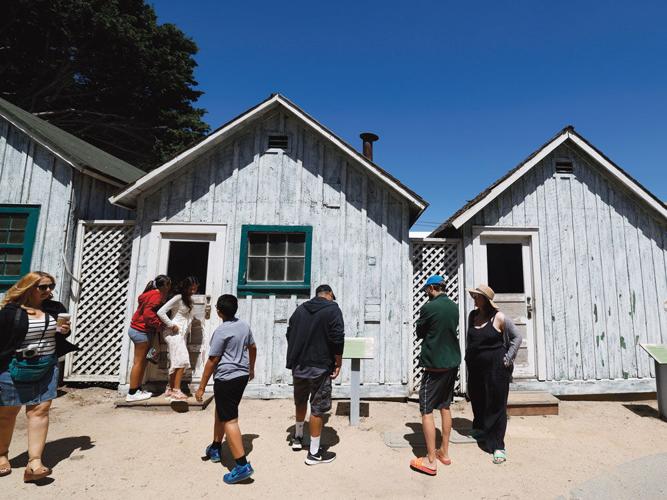
Visitors check out the Cannery Row worker cabins, which include furniture and items that workers in the early to mid-20th century would have used.
WHILE HE WAS AT RIVERSIDE CITY COLLEGE, he worked in his first museum, a job that came about by chance. He was attempting to collect unemployment, but after being told he’d have to be available to work at any time day or night – not conducive to attending classes – he had a few choice words with the agent and walked out.
Seavey stepped out of the office into the 105-degree Riverside heat and noticed a sign across the street that said “museum.” An indoor job seemed like a good idea. He walked over and asked if they had any work. It turned out the retired colonel in charge was looking for an assistant. During the interview, the two men discovered they had both served in Taiwan at different times and a bond was formed.
“That’s how I entered the museum world,” Seavey says.
When he left Riverside for San Francisco, it was a random conversation with a man on a bus that led to another opportunity. As they talked, the man asked Seavey what he did for work. “Nothing,” was Seavey’s reply.
“‘Well, you’ve got a bulletin board there. Go check it out, you might find something interesting,’” Seavey recalls the man saying. He looked at the board and found a notice from the California Historical Society looking for someone to move a 25,000-volume library from one place to another. He interviewed for the job and was named assistant curator of the society that day.
“And my life has been somewhat like that, happy, happy accidents – circumstance,” Seavey says.
Eventually Seavey became curator of the Society and then went to work for the de Young Museum in San Francisco. In his free time he played rugby and enjoyed a wide array of friends, including museum people, doctors, lawyers and “interesting friends in the middle of hippie hippie-ness,” he says. “To give you some suggestion of my life in the city: I was there at one of the dives when Janis Joplin replaced Grace Slick. That was an interesting night.”
Seavey spent 1965 lecturing on behalf of the California Historical Societies on “The New Museum,” according to one newspaper account, advocating for the establishment of small, regional museums. He also served as a “trouble-shooter” to solve problems for existing museums, according to the article.
His rapidly growing reputation as a curator led him to Carmel for the establishment of an art museum that briefly came together, only to fall apart. Carmel’s loss became Monterey County’s gain.
IN 1966 SEAVEY WAS ASKED BY A MEMBER OF THE CROCKER FAMILY, Suzanne Crocker White, and her husband Anthony White, for some help with their grand vision for an art museum to house their extensive California art collection. The Carmel Museum of Art seemed like a perfect fit for a town known for its bohemian roots and arts community. They tapped Seavey to be its first curator.
A 1967 Monterey Peninsula Herald article said the Carmel Museum of Art “is about to take concrete form, adding a new dimension to the cultural life of the Peninsula community.”
The Whites purchased a former bank building on Dolores Street between Ocean and 7th, now known as the China Art Building, for $150,000, Seavey says. He began working out the remodeling details and working with a contractor. The goal was to open the museum on July 4, 1967.
Seavey told the Herald reporter that the plan was “to construct a permanent collection of first-rate examples of work by the most representative painters of the Peninsula art colony in the era between 1870 and 1930s,” which would encompass artists from Jules Tavernier to Armin Hansen.
It was also planned to show rotating collections in a smaller room, plus a library. Programming would include lectures and publications related to exhibits. The museum did open in 1967, then closed in 1969 due to a lack of funds.
A few months later, in January 1970, Anthony White, chair of the Carmel Museum of Art board, accepted a prestigious award from the American Association for State and Local History for creating collections “that preserve the rich cultural heritage of the Monterey Peninsula.”
After the closure, the Whites wanted to donate the entire art collection and the building to the city. On Jan. 8, 1970, the Monterey Peninsula Herald reported on a Carmel City Council meeting where councilmembers discussed putting the matter up to voters to decide.
Seavey outlined to the council how the collection, estimated in value at $75,000, would be deeded to the city. He also estimated annual operating expenses at $25,000. The museum corporation would continue to operate, raising money to erase $80,000 in mortgage debt and another $16,000 debt for the renovations.
Councilmembers were hesitant but they voted 5-0 to have Seavey help draw up a ballot measure. But the measure never made it to the ballot.
One of the main opponents was councilmember Gunnar Norberg, who went on to become Carmel’s mayor in 1976. Seavey tells the story, imitating Norberg’s low, gruff voice. “‘Carmel has enough art,’” Seavey recalls the councilmember saying.
The building was sold in August 1970 and the entire collection was donated to the Oakland Museum of Art.

The dining room inside Seavey’s home serves as his office. At 86, he’s still working as a historic preservationist consultant.
SEAVEY WENT INTO PRIVATE PRACTICE, doing historic inventories for California cities, mainly in Northern California. He moved from Carmel to Pacific Grove, purchasing his first home, the Victorian where he still resides. The purchase was another one of his happy accidents, through encounters with people who guided him toward the successful sale.
One of P.G.’s prominent residents, Elmarie Dyke, known as “Mrs. Pacific Grove,” founder of the Pacific Grove Art Center and member of the County’s historic preservation board, lobbied to have Seavey hired as the first historical coordinator for the County of Monterey. He worked for several years on various projects, including the creation of San Lorenzo County Park in King City, home to the Monterey County Agricultural and Rural Life Museum.
Seavey’s military background proved helpful in at least one project, preserving the Dutton Hotel in Jolon. It was a rammed earth structure and over time the earth was melting away and needed to be covered. Seavey had already noticed a series of cedar poles running diagonally through the rifle range at nearby Fort Hunter Liggett. There was also leftover plywood from other projects in good condition. Between the poles and the plywood, there was enough to cover what was left of the hotel. He approached the commanding officer with a proposal.
“I show up as county historical coordinator, but also as master gunnery sergeant Marines, and have a talk with the colonel,” Seavey remembers. It did not go well at first – the Army colonel made a crack about the Marines being a $60 million Navy accounting error.
Determined, Seavey offered to solve the problem of the poles blocking the rifle range by removing them for free. The colonel sent him up the chain of command. After a general told him to go back to the colonel, Seavey called then-U.S. representative Leon Panetta. Seavey got the materials. The Dutton project, budgeted for $50,000, only cost around $15,000.
Despite Seavey’s success in the county job, he ruffled feathers of some higher-ups along the way by standing up for what he believed was in the best interests of the public and preserving the county’s historical assets. He was the only employee laid off after Proposition 13 passed in 1978.
He went on to chair the Monterey County Historical Advisory Commission.
WHILE THE COUNTY CONTINUES TO DRAW VISITORS to attractions like the Monterey Bay Aquarium, Big Sur, beaches, plus major golf and car events, Seavey sees another profitable draw: cultural tourism.
“Monterey is the first capital of California. We have more adobes in Monterey County than anywhere else in California – we have 36,” he says. “The Amalfi? We’ve got Big Sur along with a bridge that is known internationally. So we’re an incredible tourist draw.”
Inland, Salinas – the birthplace of author John Steinbeck – is rich with history and culture, and Seavey has been working for decades to amplify and protect the city’s assets.
It was Seavey who wrote the 1989 Historical and Architectural Resources Survey and Preservation Plan for Salinas, chronicling landmarks and historic buildings. It is still used as a reference today.
“Last year we had 35 or 40 preservationists that came down as a group and we toured Salinas and everybody at the end of the day said, ‘Jesus, this is amazing!’ And so now the City is beginning to realize and has a Historic Preservation Commission, small but good,” he says. In 2024, Salinas officials approved a survey of historic buildings citywide.
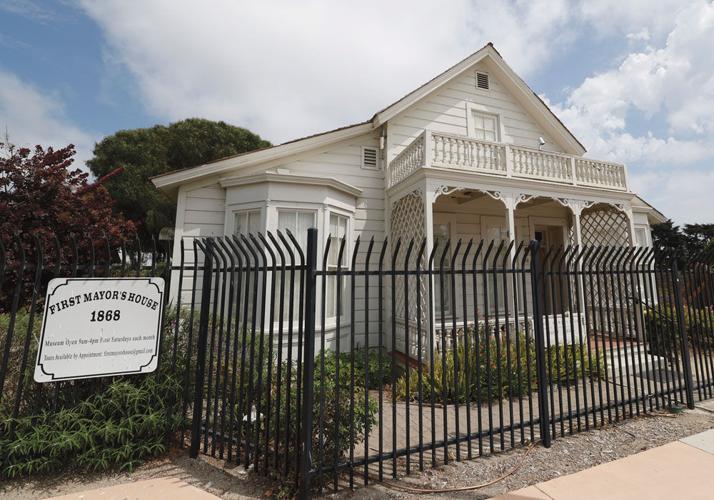
For 30 years, Seavey worked with others to create what is now Salinas City Heritage Park, formerly the Intermodal Transit Center, a designation approved by the Salinas City Council in June. It contains the First Mayor’s House, also known as the Harvey Baker House, which was moved from its original location on Romie Lane to the park. It joined other historic buildings on the site tied to the days of the Southern Pacific Railroad, including the Salinas Amtrak Station. The park is also home to the Monterey & Salinas Valley Railroad Museum and the California Welcome Center, Salinas. The name change was just one more step in making the park a true cultural tourism destination.
Back on the Peninsula, Seavey was part of a team that created the Cannery Row Interpretive Project, commissioned by the Cannery Row Company and the Cannery Row Business Improvement District in 2008. Seavey worked with the late Dennis Copeland, a longtime historian and archives manager for the City of Monterey, local historian Tim Thomas and artist John Cerney, who did the murals along the Rec Trail that passes through the Row, including one depicting Mac and the Boys from Steinbeck’s Cannery Row.
Seavey helped create the three workers’ cabins that can be found off of Cannery Row on a walkway called Bruce Ariss Way. Seavey and the team outfitted each cabin with items that might have been used by workers when the canneries were in operation in the early to mid-20th century.
“How do you protect a place like this?” Seavey asks. “Cultural tourism.”

The First Mayor’s House in Salinas, located in what is now Salinas City Heritage Park, formerly the Intermodal Transit Center. Seavey has worked with others for around 30 years to make the park into a historic asset to draw visitors to the city.
NOT ALL HISTORY CAN BE SAVED FROM BULLDOZERS, a developer’s remodel or a natural disaster.
Seavey points to one such loss at Paraiso Springs in South County, a once popular resort. He was active in trying to save the Victorian cabins there. He did get photographs of each one, but when no one was looking the property owner bulldozed them without permits.
There was the Cominos Hotel in Salinas, built in the early 1920s in the 100 block of Main Street, it became one of the premier hotels of the Central Coast and an important social hub for the town. It closed in the 1960s and was eventually sold to the city. After it was damaged in the 1989 Loma Prieta Earthquake, the city tore it down and built the parking garage and what is now One Main Street, home to the National Steinbeck Center.
In just the past year, a bit of history was covered up at 601 Lighthouse Ave. in Monterey, after it was renovated and turned into retail space and several condominiums. Seavey wrote up the historic assessment in 2020, reporting that the building, once known as the Labor-Temple, was historically significant as a labor union hall for cannery workers and other local unions from 1941-1953. He called it a good example of the architectural style of Public Works Style Moderne.
He recommended that some exterior features of the building be preserved, including the uncovering of the original band across the top with the name of the building, “Labor-Temple.” But the building changed hands in 2022 and the original signage was lost in the remodel.
On other buildings along Lighthouse, original names are still preserved, giving a hint as to the neighborhood’s past. It was that hint that Seavey wanted to be saved. “They took off the sign, so now it’s a big, blocky monstrosity,” Seavey says.
TO ACTUALLY SAVE THE PAST YOU HAVE TO LOOK TO THE FUTURE, which is why Seavey has been involved in efforts to collect and save important documents and photographs so that Monterey County’s past is preserved for future generations.
In 2015, he teamed with historian Richard Janick and others to launch the Monterey Area Architectural Resource Archive to collect, catalog, store and preserve such records as manuscripts, photographs and archival materials pertaining to architectural history of the Monterey area.
After the death of Pacific Grove photographer Pat Hathaway at age 72, who had amassed a collection of over 80,000 photographs, his friend Seavey was appointed as administrator of Hathaway’s estate. Besides taking his own photos, Hathaway was fond of dumpster diving, Seavey says, finding old photos thrown away by people who didn’t realize how significant those photos could be. Hathaway had already been in contact with UC Berkeley about taking the collection.
“I knew right off the bat that if this went to Cal, it wouldn’t be seen by anybody probably for 100 years,” Seavey says.
He chose the Monterey County Historical Society in Salinas to house the archive. Eventually all the photos will be published digitally and made free to the public by the State of California, which, Seavey says, is what Hathaway wanted.
“So now the State benefits from Pat’s dumpster diving,” he says.
Seavey himself has amassed his own collection of documents, from hundreds of historical assessments and projects he’s worked on, maybe as many as 1,000. His system has been to file them away in manila envelopes. Like Hathaway’s collection, Seavey plans on donating them to the Historical Society.
“Those poor bastards are going to have to get them all,” Seavey says with a chuckle.
(3) comments
Wonderful article! Kent Seavey has done a tremendous good for generations of Monterey County residents and tourists alike! Preserving the very essence of what has formed Monterey County communities. The Salinas Valley! I am grateful for his military service, too. Three cheers for Kent Seavey! 😃👏🏼🇺🇲
The Monterey County Historical Society, located at the historic Boronda Adobe (a cultural gem in its own right) on Boronda Road, is an excellent choice for persons seeking to donate historical collections, artifacts, etc. It has a new botanical garden emerging which preserves the bricks of the old Spreckels Sugar Factory, and the Library is very elegant. It is becoming a cultural tourist destination in its own right.
Great Local Bio Article. I love stories about folks in our community who quietly just Get It Done. Kent's as significant as the historical resources he helps preserve.
Welcome to the discussion.
Log In
Keep it Clean. Please avoid obscene, vulgar, lewd, racist or sexually-oriented language.
PLEASE TURN OFF YOUR CAPS LOCK.
Don't Threaten. Threats of harming another person will not be tolerated.
Be Truthful. Don't knowingly lie about anyone or anything.
Be Nice. No racism, sexism or any sort of -ism that is degrading to another person.
Be Proactive. Use the 'Report' link on each comment to let us know of abusive posts.
Share with Us. We'd love to hear eyewitness accounts, the history behind an article.