
In a time that many businesses have been deemed nonessential and forced to shut down, California's relatively new cannabis industry got a reprieve: They can stay open during the shelter-in-place order.
And while prospective customers have been stuck at home, some dispensaries report an uptick in sales.
But per a referral from County Supervisor Chris Lopez on April 14, because the cannabis industry is outside the scope of federal law—cannabis remains a Schedule 1 drug according to the U.S. Drug Enforcement Administration, even while it's recreationally legal for adults 21 and older in California—businesses are unable to access federal relief funds made available through the CARES Act.
"The purpose of this referral is to assist Monterey County-based cannabis businesses in weathering the Covid-19 economic downturn and to help keep people employed at this critical juncture for our local economy," Lopez wrote. "I ask that staff bring to the board next week options to defer the April tax payments due until June. This is not a proposal for forgiveness but rather a delay until June when two quarters will be due. This is proposed in order to help these businesses who are not eligible for federal assistance or traditional banking relief to survive the crisis."
The other part of Lopez's ask is to delay planned tax increases for cannabis cultivation in Monterey County that are scheduled to take effect on July 1.
The Board of Supervisors is scheduled to decide on both requests tomorrow, April 21, at 10:30am.
Currently, unincorporated Monterey County has 14 manufacturing licenses, 42 distribution licenses and six retailer licenses, according to a report to the board from Assistant County Administrative Officer Nick Chiulos.
Of the county's cannabis revenue, 90 percent comes from cultivation taxes. With the $1-per-square-foot increase, tax revenue is expected to reach nearly $20 million annually. The current rate of $5 per square foot would generate about $16 million annually, according to Chiulos' report.
The county's total cost of operating its cannabis program—from staff salaries to law enforcement overtime to lab analysis—is about $4.9 million annually, according to the report.
Bob Roach is executive director of the Monterey County Cannabis Industry Association, and says he is hopeful the board will vote to keep the tax rate where it is and scrap the planned increase.
"Even before the Covid-19 crisis became what it is today, businesses were wanting to ask for some relief on the taxes," Roach says. "They've been forced into a business model that requires high costs for regulatory compliance and high taxes.
"The county needs the money. They didn't get into cannabis just to get into cannabis, they got into it because it's a revenue source," Roach adds. "The danger for the county [of tax increases] is, if people start to go out of business, the canopy shrinks."
According to an April 1 memo from County Cannabis Program Manager Joann Iwamoto to the Board of Supervisors' cannabis committee, the first reduction in canopy space—about 38,000 square feet—was reported.
"That's only a small number," Roach says, "but is that the peak of the curve?"
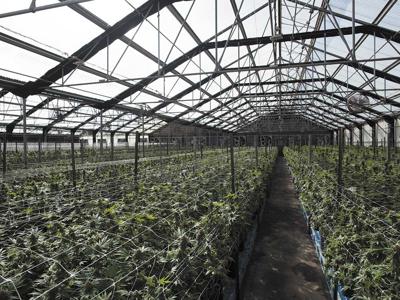
There are more than 3.9 million square feet in cannabis cultivation, according to Iwamoto's report, meaning the decrease represents less than 1 percent of the total.


(0) comments
Welcome to the discussion.
Log In
Keep it Clean. Please avoid obscene, vulgar, lewd, racist or sexually-oriented language.
PLEASE TURN OFF YOUR CAPS LOCK.
Don't Threaten. Threats of harming another person will not be tolerated.
Be Truthful. Don't knowingly lie about anyone or anything.
Be Nice. No racism, sexism or any sort of -ism that is degrading to another person.
Be Proactive. Use the 'Report' link on each comment to let us know of abusive posts.
Share with Us. We'd love to hear eyewitness accounts, the history behind an article.