
Sara Rubin here, with a shoutout to everyone who has ever been part of an event-organizing team. If you’ve done it, you know—it’s more work than you could imagine.
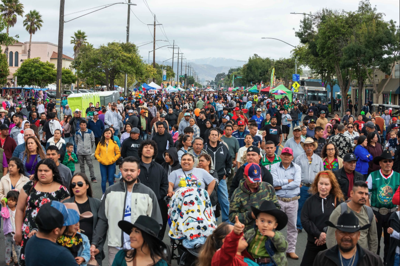
We are fortunate in Monterey County to live in a place that thrives on community events, both new ideas and those that have been happening for decades. It takes a certain amount of time for a recurring event to become a tradition. (I think of Ciclovía in Salinas, a youth-led idea that includes closing a stretch of Alisal Street to traffic and opening it up for bicycling, walking and skating, hitting that threshold after more than a decade. It’s a celebration of car-free modes of transportation as well as a showcase of cultural performances and a social gathering.)
But just because something is fun and it’s been around forever doesn’t mean an event is a guarantee. See above: lots of work, not to mention money.
In 2024, the Holiday Parade of Lights in Salinas was canceled, then reinstated after a hustle to recruit volunteers and get City officials on board with necessary elements (insurance, road barriers, etc.—the unglamorous behind-the-scenes necessities of a big event). In 2025, after a 65-year run, the Artichoke Festival ended. Our editorial team observed a trend of hardships for many longtime events, and Senior Staff Writer Pam Marino wrote a story about it last year.
It seems the trend continues. Staff Writer Royvi Hernandez reported for Salinas Valley Now on Aug. 17 that the El Grito festival and parade would not go on as planned in Salinas this September.
Three days later, organizers announced the event would go on, thanks to a one-time County of Monterey contribution of $10,000 toward their total $80,000 budget, as Hernandez reported on Friday.
It’s good news for El Grito and this annual celebration, but I find the story especially interesting because of what else it reveals. The County contribution comes from Supervisor Luis Alejo’s discretionary funds—each of five county supervisors get $100,000 annually—and his choices about where to spend that money have not been without controversy.
After he announced plans to help fund a plan for an Alisal Arch in East Salinas, modeled after the downtown arch on Main Street, outcry—and even a recall attempt—swiftly followed.
Most discretionary fund contributions from most supervisors don’t generate much of a reaction. Alejo previously used discretionary funds to support the creation of a Covid-19 memorial (which was completed in March of 2026). In May, he gave $10,000 to Alliance on Aging to support senior-serving programs, just as the nonprofit was poised to lose government funding for its mental health offerings.
In the scheme of the County’s $2.3 billion budget, these are small numbers. But for the recipients, they carry a lot of weight. For people who rejected the arch as an empty symbol while glossing over needed infrastructure improvements, it was a failure. For El Grito, it’s the difference between happening or not happening this year—and I for one am glad it’s back on.


(0) comments
Welcome to the discussion.
Log In
Keep it Clean. Please avoid obscene, vulgar, lewd, racist or sexually-oriented language.
PLEASE TURN OFF YOUR CAPS LOCK.
Don't Threaten. Threats of harming another person will not be tolerated.
Be Truthful. Don't knowingly lie about anyone or anything.
Be Nice. No racism, sexism or any sort of -ism that is degrading to another person.
Be Proactive. Use the 'Report' link on each comment to let us know of abusive posts.
Share with Us. We'd love to hear eyewitness accounts, the history behind an article.