
Monterey County is home to the “Salad Bowl of the World,” and California’s Central Valley is the “Breadbasket of the World,” making the state an agricultural economic powerhouse. But did you know that it was the bounty of California’s coastline that launched the region as a force in the world economy?
Pam Marino here, noting that was one of the facts that struck me while reading the new book, Tin Can Coast: A History of Industry, Greed, and Fishing in the Golden State, by author and chef Joseph Ogilvy. It’s the focus of this week’s cover story in the Weekly.
Ogilvy starts with the California Current in prehistory, rich with the nutrients that support sea life along the coastline. It was the Current and the opportunity for fishing that brought the first peoples from Asia over to the North American continent. As the coastline was settled, indigenous people fished, harvested abalone and other sea creatures and hunted sea otters.
Then came the Europeans, who hunted sea otters nearly to extinction, which allowed abalone to flourish, and so it went through history, each new wave of harvesting from the sea upsetting the balance of life that once flourished here, as well as forever disrupting the lives of the ones who settled here first.
Monterey County’s history features prominently in the book, including the Chinese immigrants who launched this region’s fishing industry, followed by the Japanese, as well as the Sicilians, Portuguese, Filipinos and others who fished and worked in the canneries and reduction facilities.
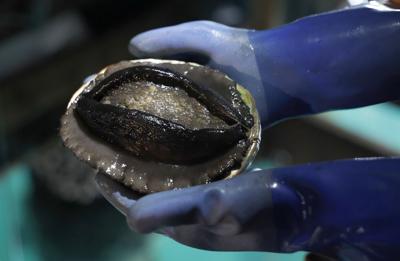
There’s also a chapter on early influencers like “King of the Bohemians” George Sterling and Ernest “Pop” Doelter, the “Abalone King,” who each popularized eating abalone in their own way, driving down the sea snail’s population.
Tin Can Coast is beautifully written and well researched. To me it’s the definitive book on California’s fishing history.
To learn more, check out this week’s story, which comes with a Q&A interview with Ogilvy and an excerpt from the book, “Monterey-by-the-Smell.”
There’s an opportunity to hear Ogilvy speak in person at 11:30am Sunday, Aug. 2, at the Monterey Abalone Festival, held at the Japanese American Citizens League Hall, 424 Adams St. The festival runs from 12:30-3:30pm Saturday, Aug. 1, and continues from 10am-2pm on Sunday. A complete schedule is available on the JACL website.


(1) comment
I’m wondering why the cover of this week’s paper used a title that didn’t fit the story or image. “On the half shell” is used for bivalves, not sea snails.
Welcome to the discussion.
Log In
Keep it Clean. Please avoid obscene, vulgar, lewd, racist or sexually-oriented language.
PLEASE TURN OFF YOUR CAPS LOCK.
Don't Threaten. Threats of harming another person will not be tolerated.
Be Truthful. Don't knowingly lie about anyone or anything.
Be Nice. No racism, sexism or any sort of -ism that is degrading to another person.
Be Proactive. Use the 'Report' link on each comment to let us know of abusive posts.
Share with Us. We'd love to hear eyewitness accounts, the history behind an article.