
When Maija West describes her law practice, it sounds less like she’s working as an attorney than a motivational speaker or a business coach. She takes on clients who are “forward-thinking business owners who care about how their employees feel,” she says, and “folks interested in solving problems.” It’s not a litigation practice; what she does is preventive law, meant to help resolve legal disputes before they get to that level.
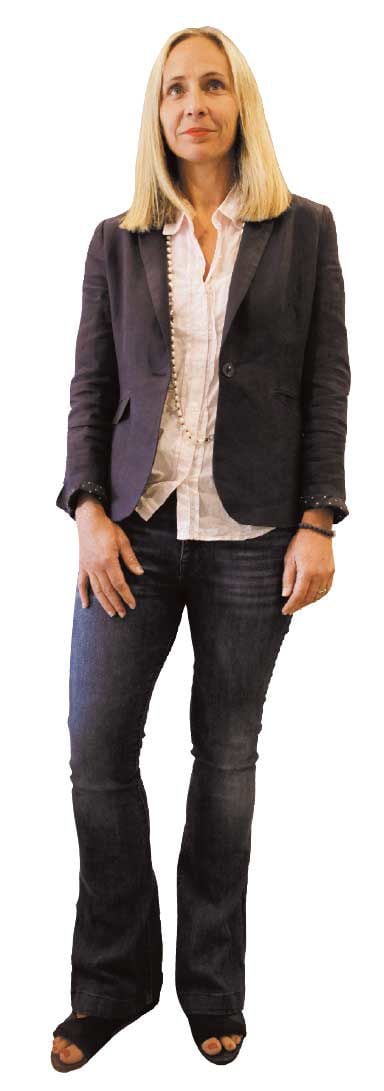
West says the healing and reconciliation curriculum applies for people of all ethnicities: “We both have the ability to harm and be harmed. We have both the oppressed and oppressors in our ancestral story.”
West, a California native of a small Sierra town, first arrived in New Mexico while pursuing her community studies degree at UC Santa Cruz, then went on to work in the nonprofit sector. Frustrated by policy-level failures, she attended law school and contemplated a run for State Senate, before resolving to instead focus on mediating community-level and client-level dilemmas.
She’s hoping to take creative problem-solving to the next level with the Healing and Reconciliation Institute, a nonprofit that launched in June in Taos, New Mexico, where she lived before moving to Carmel Valley six years ago to be near her father who’d been diagnosed with Alzheimer’s. Local clients so far include members of the Esselen tribe.
Weekly: Your work doesn’t sound like a law practice to me.
West: Most of the time, attorneys operate from crisis. That often leads to court. I wanted to work with clients who want to resolve those issues before they start. We help them identify the embers of conflict before they become forest fires.
How much of what you do is lawyering versus business coaching?
Half and half. We help sell and buy businesses, we do real estate transactions, all of that. We also coach, if they’re making a decision about which way to take the growth of their company. We help CEOs who want to find behind-the-scenes superpowers.
How did you arrive at the idea of reconciliation as the goal?
In New Mexico, Anglo folks are a minority. You live in a community that has 400 years of Spanish influence, and 1,400 years of the presence of the Taos-Pueblo Indians. The issues that have come from various conquests and power shifts are part of the daily decision-making in Taos.
I had an idea about gathering a group of women together in Taos four years ago. I developed a curriculum based on the idea that trauma is a bridge to understanding across perceived cultural and racial divides. I wanted to know that a diverse group of women could get together in the same room and feel safe. That was the beginning of the curriculum.
How do you achieve that?
The philosophy is, when we come into the room to make decisions in a multicultural setting, we come in not only with the experiences we’ve had in our lifetime, but the experiences of our ancestors, through epigenetics. That means the joys and traumas of our ancestors literally change the genetic makeup of future generations. This is helping us understand how we treat trauma and how we can use this knowledge in resolving conflict in community.
What does that look like in practice?
Folks who are not getting traction with community organizing, or they’re not seeing results based on listening sessions or community forums – the different ways folks try to get stakeholders to the table – if they’re not seeing results, those folks are interested in a different tool.
Does your work change in the polarized climate we’re in now?
I’m on the same track. I don’t use that as my point of reference as to whether my work is important or not.
Any advice for someone who is white and wants to be part of this work?
First of all, ask themselves why they feel defensive in this space, and ask what they do every day to ensure racial violence and disparities aren’t in their own community. And find out more about their own ancestors, history and cultural traditions, even folks who say they’re “mutts.” There’s a cultural tradition they came from: Go find that, buy some books, call some relatives.
What does that lineage accomplish?
I support white allies going back in time and identifying the moment in their own family history where they became disconnected from their cultural traditions.
What’s your story?
I’m 50-percent Latvian, my mother is from there, and I was raised with the pagan traditions of Latvia. Those traditions give me a strong sense of connection to my ancestral story. I don’t need to consume other cultures.


(0) comments
Welcome to the discussion.
Log In
Keep it Clean. Please avoid obscene, vulgar, lewd, racist or sexually-oriented language.
PLEASE TURN OFF YOUR CAPS LOCK.
Don't Threaten. Threats of harming another person will not be tolerated.
Be Truthful. Don't knowingly lie about anyone or anything.
Be Nice. No racism, sexism or any sort of -ism that is degrading to another person.
Be Proactive. Use the 'Report' link on each comment to let us know of abusive posts.
Share with Us. We'd love to hear eyewitness accounts, the history behind an article.