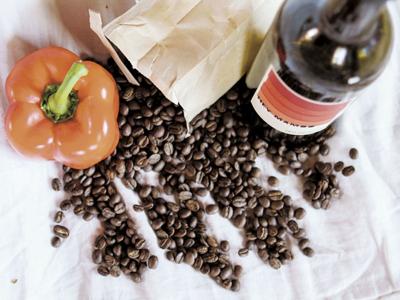
Breakfast turns me into a speed freak. Steak, meanwhile, converts me into a temporary alcoholic – until it’s gone.
Put me in front of a greasy or sweet breakfast, and I’m going to suck coffee like it’s oxygen. This is how my body extracts maximum pleasure from the muffin or omelet: by bathing my mouthful in coffee. The coffee’s acidic bitterness makes the flavors of the food stand out, and completes the meal. I’ve researched this relationship at many a greasy-spoon diner, where servers endlessly circle to keep your cup full. What the coffee lacks in quality, it makes up for in quantity.
That’s important when you’re eating with a beverage condiment, because the last thing you want is for that well to dry up.
Later in the day, there are many foods that command me to drink wine. If I’m chewing a succulent piece of meat, for example, I need to be drinking wine at the same time. While there are many foods that go well with wine, only one – meat – will make me drink wine like a dehydration victim does Gatorade.
Other than producing buzzes, coffee and wine otherwise seem completely different. But if you look beneath the surface, you see that they’re competing for the same niche in the ecosystem of the dining table: the acidic beverage niche.
Acidity enhances fatty foods. The fat coats your taste buds and the acid washes that fat away, exposing and stimulating the taste buds and creating fireworks of juxtaposition.
This principle of creative tension is at the heart of established pairings like wine with cheese, coffee with cream, and roughly 10,000 other flavor combinations.
One thing you rarely see is coffee and wine together. One of them needs to be there, but having both is like two alpha males in the same room. Potentially rough, and at least awkward. But it turns out that another one of my favorite foods, chili peppers, can smooth this tension.
Chili also goes exceptionally well with fat, from the jalapeño popper and its elder, the chile relleno, to the squirt of hot sauce upon your greasy breakfast.
Chili also produces its own kind of buzz – an adrenaline rush, to be exact. Chilies have many proven and suspected medical benefits, including reducing inflammation and improving lipid levels in the blood. But unlike coffee, wine or fat, there are few apparent reasons not to indulge one’s chili-tooth.
The assumption that wine and coffee don’t mix was discredited when I bit into a piece of pork belly that had been braised in red wine, coffee and red chili.
The coffee and wine forged a common flavor all their own. Chili mediated the sharp bitterness and sweetness.
This revelation went down at the magical (and now sadly defunct) Casa Vieja in Corrales, New Mexico. Since then I’ve endeavored to re-create this recipe, and somewhere along the line I surpassed the original, stealing tricks from similar recipes I found online.
Any meat will work, even chicken. Bones, whether in oxtail, osso bucco or ribs, improve the result. The tougher the meat, the better. But if using very lean meat, there needs to be some fat, like bacon or olive oil.
The wine and coffee-based broth tastes disharmonious when you first combine the ingredients. But it cooks into something special, a flavor that is deep and darkly delicious and thoroughly unique.
This dish won’t give a caffeine high or a wine buzz, but it provides a kick all of its own. It was, after all, the pursuit of a flavor fix along these lines that got me into coffee and wine to begin with.
Fatty Meat Cooked In Coffee and Wine
- 2 lbs meat
- 1 cup wine, of a quality you would drink
- 1 cup of strong coffee (no greasy spoon brew here)
- 3 bay leaves
- 1 large onion, chopped
- 2 cloves garlic, chopped
- 2 tablespoons mild red chili powder
- 2 Santa Fe-style dried mild red chilies, seeded and crumbled
- 2 mild pasilla chilies (or more red chili), seeded and crumbled
- Salt, pepper, and garlic powder
- Olive oi
Brown the meat in whole chunks under the broiler. In a pan, sauté the onions, garlic and bay leaves in oil. When onions are translucent, add chili. Cook a minute, stirring, then add the coffee and wine. Cook until the volume reduces by half. Season with salt, pepper and garlic powder. Add the meat. Cover meat with stock or water, and slow cook or braise for four to eight hours, until meat is completely tender. Add water, wine or stock as necessary to replace any evaporated liquid. Season again.
Serve in a bowl with minced onions and a hunk of bread, which will absorb the mysterious broth and deliver it to your mouth, where no further adjustments will be necessary. No hot sauce. Not even mayo (well...). Not even wine or coffee (but if you want to, please do).


(1) comment
I think you're selling wine and coffee short if you classify them only as something to help wash down food. Both have great examples that are at the pinnacle of their enjoyment in their own, standalone right.
This would be like espousing the virtues of abalone, but smothering them in barbecue sauce as justification for their greatness.
Welcome to the discussion.
Log In
Keep it Clean. Please avoid obscene, vulgar, lewd, racist or sexually-oriented language.
PLEASE TURN OFF YOUR CAPS LOCK.
Don't Threaten. Threats of harming another person will not be tolerated.
Be Truthful. Don't knowingly lie about anyone or anything.
Be Nice. No racism, sexism or any sort of -ism that is degrading to another person.
Be Proactive. Use the 'Report' link on each comment to let us know of abusive posts.
Share with Us. We'd love to hear eyewitness accounts, the history behind an article.