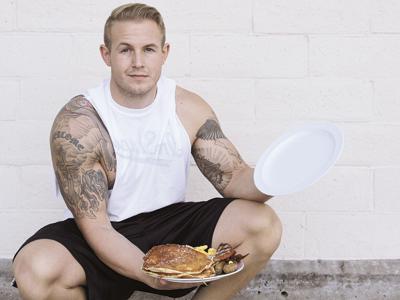
The New Year seems to be a popular time to contemplate one’s relationship to calories. The goal used to be to simply reduce one’s intake, but in the last decade our understanding of how the body deals with food and calories has grown considerably. So let’s take a look at what it means to eat a calorie in 2016.
You’ve probably heard processed carbohydrates are now being viewed with the skepticism once reserved for fats, which are making a comeback. Meanwhile, it seems when you eat can be as important as what or how much. There has also been a rekindling of interest in the question: Are you even hungry?
The 2008 book by Gary Taubes, Good Calories, Bad Calories, blew a hole in the idea that fat is a dietary boogeyman. He pointed out the obesity epidemic has coincided with the rise of a fat-fearing dietary paradigm, and the accompanying boom – supported by your tax dollars – in low – and non-fat processed foods that swapped fat for extra sugar, which is the real problem. Refined carbohydrates, he explained, quickly convert into sugars, a process that starts in the mouth. And refined carbohydrates are everywhere, dominating most dishes on the American menu, from mac ’n’ cheese to pizza. These arguments formed the basis for the many low-carb diets, from South Beach to Paleo.
Since Taubes, many others have added to these core ideas, adding mechanisms for how sugar wreaks havoc in our bodies, and how carbohydrates become sugars.
Meanwhile, the concept of timing has emerged variable in the caloric equation.
Martin Berkhan, author of the LeanGains blog, is a power-lifter who is interested in adding muscle mass to his body, and maintaining low fat levels. Berkhan fasts for 16 hours at a time, and right before eating again he lifts ungodly amounts of weight on an empty stomach. The workout is followed by eight hours of feeding ad libidim, as they say in mouse studies, or as much as he wants.
Berkhan cites research that growth hormone is naturally released in the early stages of a fast. Human growth hormone is known to promote fat breakdown and muscle gain, and Berkhan believes this fasting window is a powerful opportunity for the body to make the most of exercise.
It’s important to keep in mind that being skinny or ripped doesn’t mean one is healthy. But his is a good example of how fasting can be used to gain weight, if it’s in the best interest of one’s health. Similar protocols are being explored with cancer patients, for example. And while Berkhan’s central priority is to maximize rippage and minimize fat, there appear to be more important benefits of intermittent fasting, in terms of long term health, especially as we age.
Mark Mattson is the chief of the Laboratory of Neurosciences at the National Institute on Aging. He pairs intermittent fasting with exercise, though he leans more toward cardiovascular exercise, and is decidedly more skinny and less ripped than Berkhan. In a 2014 TED talk, Mattson described mechanisms by which he argues intermittent fasting may not only improve markers for cardiovascular health and blood sugar, but also improve brain function, helping prevent neurodegenerative diseases like Alzheimers and other age-related cognitive problems. And doses of moderate hunger, he argues, make you sharper, regardless of your age.
Last February, a paper in Rejuvenation Research detailed work by a University of Florida-based group that recruited volunteers to follow a schedule of alternating feast and fast days. On fast days they only ate 25 percent of a normal caloric intake, but on feast days they ate 175 percent. By dividing the schedules like this, the team detected higher levels of a protective protein called SIRT 3 that correlates with increased lifespan in mice, as well as decreased blood insulin levels, which would lower the risk of diabetes. This feeding schedule also caused small but important bursts of free radicals; at high concentrations these reactive molecules can be very dangerous, but at low doses they are thought to have a cleansing effect.
“Fasting and calorie restriction and exercise activate a pathway called autophagy,” Mattson told the Columbia Chronicle. Autophagy, which means self-eating, is “a mechanism whereby cells remove garbage and that protects them from building up these damaging proteins. It also increases the production of neurotropic factors which we’ve seen lead to cognitive improvements in animals.”
One of the surprising findings of this paper was that sticking to this schedule wasn’t difficult for most participants. In fact, the majority of volunteers had a harder time meeting 175 percent quotas on feast days then staying below their 25 percent limit on fast days, according to co-author Michael Guo. “We expected the fasting days to be more difficult but found it to be exactly the opposite,” he told the Columbia Chronicle.
I’ve had tried following the 16/8 eating schedule. I aim for last swallow at 10pm, and eating again by 2. The hunger pangs took a little getting used to, but there is no question I feel better. After some time I started associating those pangs with feeling better, making them not only tolerable but almost comforting.
And really, doesn’t it make sense, on a gut level, to wait until you’re hungry before you go stuff your face again?


(0) comments
Welcome to the discussion.
Log In
Keep it Clean. Please avoid obscene, vulgar, lewd, racist or sexually-oriented language.
PLEASE TURN OFF YOUR CAPS LOCK.
Don't Threaten. Threats of harming another person will not be tolerated.
Be Truthful. Don't knowingly lie about anyone or anything.
Be Nice. No racism, sexism or any sort of -ism that is degrading to another person.
Be Proactive. Use the 'Report' link on each comment to let us know of abusive posts.
Share with Us. We'd love to hear eyewitness accounts, the history behind an article.