

WILL BENSON HAD SPENT PART OF THE DAY ON A FLIGHT BACK TO MONTEREY. It was a Monday in February, a day after the 2026 AT&T Pebble Beach Pro-Am wrapped up – an event he often walks as a caddie for participating amateurs. This year, however, Benson decided to skip the tournament and take the opportunity to visit family in Seattle.
That particular morning, his sister and niece drove him to the airport. After he landed in Monterey, Benson hopped a cab home. It was hardly a memorable return trip – until he settled in for the rest of the day.
“My phone was blowing up,” Benson recalls.
What happened that day led to a step unprecedented in the world of golf. On May 1, Pebble Beach caddies became hourly employees of Caddiemaster. A week later, 211 of approximately 250 caddies signed a petition asking the Florida-based company to recognize them as a union. When turned away, they filed for an election with the National Labor Relations Board.
That election is set to place on Thursday, June 18. Should 50 percent plus one voter approve, caddies will become part of Unite Here Local 19, a union representing hospitality workers in the U.S. and Canada, including those at The Lodge at Pebble Beach.
While some golf courses around the country hire caddies as employees, most act as independent contractors – and have for as far back as anyone can remember.
In 2002, with the caddie program growing beyond its ability to manage, Pebble Beach Company turned that duty over to Caddiemaster, which began operations in 1993 and runs programs for some 70 courses nationwide. It is responsible for hiring, scheduling and all other aspects.
The move toward unionization began with a text from Caddiemaster on Feb. 16 announcing the coming transition.
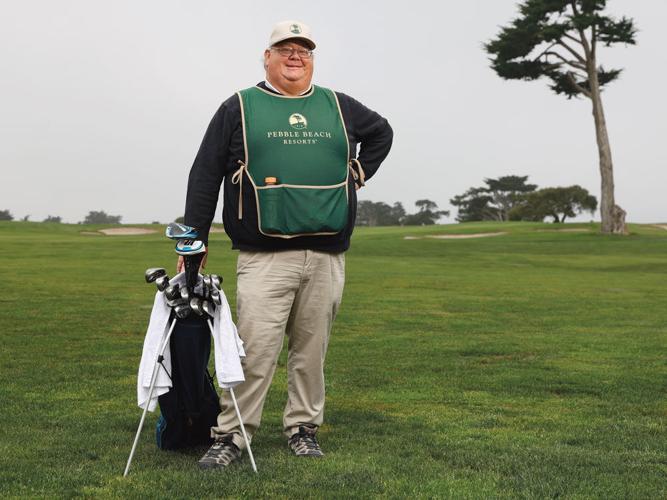
“We felt like they dropped it on us,” says Tony Malokas, a veteran of 26 years at Pebble Beach. “We’ve all built our lives around flexibility.”
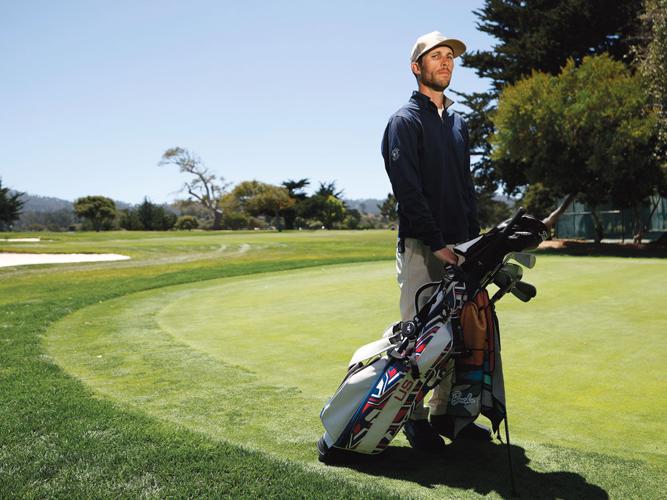
Under the independent contractor format, caddies set their own schedules. Nick Galante, a 27-year Pebble Beach veteran, spent years as a professional race car driver while carrying bags. Benson, who has been on the Peninsula for 13 years after moving from Texas, played in a local band, The El Dorados.
“You could work seven days a week or two days a year,” explains Jack Hoenes, a caddie for 24 years. “That’s the beauty of the job.”
Hourly rates were also an initial concern. As a contractor with seniority, Hoenes made $188 per round, plus tip. The new pay structure is said to range from $16.90 to $24.98 an hour. With rounds – loops in caddying terminology – running four to five-and-a-half hours, caddies point out that it would be difficult to achieve full-time status. One caddie, who wished to remain anonymous due to fear of retribution, claims that based on workloads from 2025, only four of close to 250 caddies would have hit the 35-hours-a-week average necessary for benefits.
“It was a shock,” says Jake Cummings. At 10 years in, he does not qualify for the highest rate: “When they explained about the $22.50, my heart sank.”

Jake Cummings, a caddie for 10 years, says that “we deserve a better hourly rate and to maintain seniority.” But he believes the benefits that come with the employee model make it worth consideration.
IN THE WEEKS LEADING UP TO THEIR FIRST PAYCHECKS as employees rather than contractors, caddies feared reductions in pay of up to 30 percent. At the same time, Caddiemaster insisted that they would be getting a better deal.
Company representatives held a series of meetings with caddies leading up to the transition, discussing benefits, scheduling, workplace expectations and compensation. But those conversations failed to assuage the anxiety.
Caddiemaster CEO Dan Costello claims that with adjustments made to the initial plan, 90 percent of caddies saw gross earnings increase in the pay periods following the transition to employees on May 1.
“It is important to distinguish between gross earnings and take-home pay,” he adds. “Caddies no longer have significant end-of-the-year tax payments they had to manage as independent contractors, since wages and deductions are withheld under the new program.”
Costello also points to other benefits, such as overtime, paid sick leave and a monthly cell phone allowance. And several caddies admit the hit on income was not as bad as anticipated. Working two loops a day as summer approaches, Cummings says he made more this May than in past years.
But many remain skeptical, especially due to the peculiarities of the occupation. Morning rounds tend to go quicker than the more crowded afternoon schedule, for one.
“The pay could be the same if you work in the afternoon,” Benson says. “But there are a lot of hoops you have to jump through to make the same amount.”
Recalling the meetings held before May 1, Hoenes sums up his pessimism.
“After the first, I was cautiously optimistic,” he observes. “After the second, I was just cautious.”
Hoenes admits the pay has been comparable to the contractor model “But we don’t want to get down the road and have it rolled back,” he adds. Unionizing, he notes, “is more for protection.”
COSTELLO EMPHASIZES that the employee model was designed for the loopers’ benefit. In a statement posted to caddiemastercares.com, as caddies who work Pebble Beach Company’s four courses – Spyglass Hill, The Links at Spanish Bay, Del Monte Golf Course and the iconic Pebble Beach Golf Links – began to contest the plan, he acknowledged the frustration.
“We know this transition to employees has created uncertainty and strong opinions. We respect that,” he wrote. “But I want you to understand something clearly. Every decision we make is based on the same goal: strengthening the future of caddying and creating the best environment for all caddies to succeed.”
It is estimated that close to 90 percent of caddies act as independent contractors. Yet according to Golf Digest, only 9 percent of courses in the U.S. offer the service, many of these at destination clubs like Pebble Beach or at private courses. The career data firm Zippia reports there are just under 13,500 caddies, with around 3,000 of them under the Caddiemaster mantle. With no benefits available under this model, it can be a volatile career. But it’s the course they have chosen to walk.
“We like the freedom,” Benson points out.
Costello points to changes made based upon feedback from caddies. In response to concerns about pay, Caddiemaster added a $10 per bag service payment on top of the hourly rate. It amended the dress code to allow shorts and made scheduling concessions. Once the petition was presented, new amendments cannot be implemented by law until the NLRB vote is recorded.
“Prior to the filing of the petition and any knowledge of union activity, Caddiemaster had already implemented multiple adjustments, improvements and accommodations since February,” Costello says.
From the beginning, Caddiemaster promised benefits. The company now pays Social Security and Medicare, once the responsibility of the contractors – a savings of around $3,300 a year to each caddie, according to a Caddiemaster statement. It is also offering 401(k) contributions, worker’s compensation and other benefits.
Such features proved important to some caddies, who warmed to the employee model.
“In the beginning, I was pro-union,” Cummings says. “I don’t have health insurance. I need health insurance. I don’t have a 401(k). A 401(k) would be nice.”
He currently is without health insurance, citing the cost. As one of the newer caddies, Cummings is not entrenched in the independent contractor culture. The taxes he filed quarterly as a contractor in the past added up to between $4,000-$6,000 a year.
“Going from that to getting a W-2 and maybe getting some money back would be nice,” Cummings adds. “The employee model works better for me to get the full benefits.”
Accepting the model has caused some backlash, Cummings notes.
Most caddies predict unionization will win approval – about 90 percent signed the petition. Cummings shares their concern for the unknowns of the hourly employee model. When winter comes and available hours drop, what happens to the average pay? While uncertain as to the full ramifications of the change, Cummings was also hesitant to support unionization.
“I was uncomfortable signing [the petition] just eight days after becoming an employee,” he says. He marks a division between caddies with two-decade tenure and those, like him, with 10 years or less on the bag. It’s not a solid line but, he adds, “There are a lot of caddies who agree with me.
“We want better schedules. But the guys should have had patience. We should have waited three to six months.”
Yet loopers agree they were blindsided by the announcement making them employees. That it was made by text without their involvement made the reaction more intense. Benson points out that such anger is still flickering. He would, he says, vote in favor of a union even if given a 10-percent raise.
If the caddies unionize for collective bargaining, it may be a first in the U.S. for those at public courses. PGA Tour caddies – those who tote bags for professional golfers – organized, but they formed a nonprofit trade association for negotiating purposes rather than joining a union.
Hoenes credits Caddiemaster leadership for making an effort following the initial rollout to soften the rough edges of a transition. But he remains firmly behind a collective voice in bargaining with the company. If the caddies join the union, they will be able to negotiate a new contract.
“The mood is union-positive,” Benson says. “Union is about having a seat at the table.”

“This was a radical change,” says Tony Malokas, a veteran of 26 years on the bag. “There was only one thing we could do.”
WHILE PAY, SCHEDULING AND BENEFITS are important aspects of the discussion leading up to June 18, it was the way the transition was announced and initially presented that sparked outrage. According to several caddies, after they were initially notified by a text message in February, there was a lull in communication before the company began hosting presentations.
Pebble Beach Company CEO David Stivers has been monitoring the situation. At the start, little went smoothly.
“We recognize the rollout of the new program was difficult, and there were several significant issues raised,” he said in a statement. “[Caddiemaster] knows it, takes it seriously and is working to get this right. The goal is to create a caddie program that is better for caddies and better for guests.”
Pebble Beach turned to Caddiemaster 24 years ago. Scheduling up to 300 independent contractors with varied availability is a complex process and was becoming a burden. Caddiemaster – founded by a caddie – had the process down.
More recently, as caddies suggest, Pebble Beach had become concerned with the consistency of the program. There were clothing or behavior problems on a few occasions.
Cummings believes Pebble Beach’s caddie liaison board could have addressed the issues before it came to a new format. The employee model allows Caddiemaster to provide training and set quality standards. Already the caddies have received employee handbooks. The company is also performing random on-course quality checks at Pebble Beach courses.
“We should have set higher standards for ourselves,” Cummings observes.
For Benson, all of this goes against a caddie culture dating back decades. A corporate mindset is antithetical to the nature of the job – one of independence, where quality control is up to those footing the bill.
“I worked for the golfers,” he says.
Noting that a series of private equity firms have held majority shares of Troon Golf, Caddiemaster’s parent company since a 2015 acquisition, raised further suspicions among the caddies.
“When caddying became a business for people other than caddies, that’s when things started going wrong,” adds veteran caddie Mike Lahotta. “Private equity is putting the profession of caddying in jeopardy.”
Caddies are not required when playing Pebble Beach. But over the long walk, they provide golfers with suggestions for which club to use in a particular situation, how a putt will break and other tips. They also might share stories or point to the location where some of the game’s most famous shots were made.
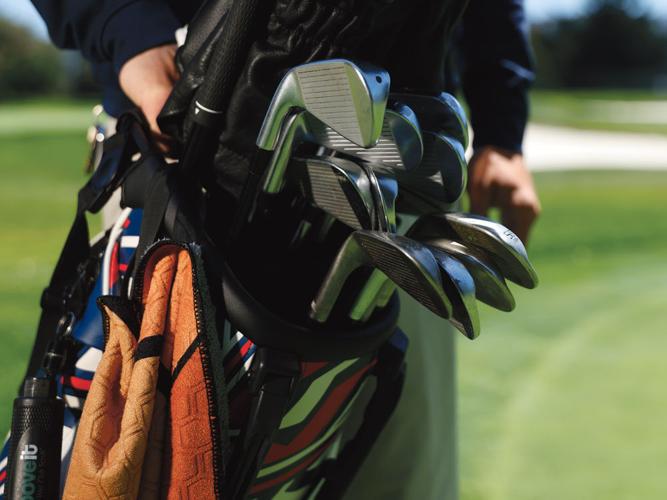
But it can be a strenuous job. Caddies carrying a single bag weighing up to 24 pounds hoist it over their shoulders. Those tasked with two bags can push a cart – now at over 50 pounds. The steep climb to the 6th green at Pebble Beach or the rolling fairways of Spyglass Hill wear on the body.
But their primary task is more mundane: raking sand traps, filling in divots and cleaning golfers’ gear.
“I want to emphasize that we’re not complaining about the job,” Malokas notes. “It’s always been a great job. We want to have a say in it.”
PHIL MICKELSON, then part of the PGA Tour, stood on the 18th green at Pebble Beach Golf Links with a silver dollar in his hand.
He had just won the 2019 AT&T Pebble Beach Pro-Am and his eyes welled with tears, although not because of the accomplishment. As he held out the coin for all to see, Mickelson explained that his grandfather had been a caddie at Pebble Beach.
One-hundred years earlier, that coin had been a tip to his grandfather after a round in the now-famed golf links’ inaugural year, and Mickelson carried it throughout the tournament for good luck.
If the caddies are united in a sentiment, it’s their commitment to their role in the game. Flexible scheduling is just part of the appeal. Over five hours on course, they get to know many of the golfers, who reward them not only with a gratuity, but also drinks at The Tap Room or hats from the pro shop.
“We love the game, we love the exercise, we love the outdoors, we love the networking,” Benson says. “No matter what the vote is, I’m going to work on June 19.”
(0) comments
Welcome to the discussion.
Log In
Keep it Clean. Please avoid obscene, vulgar, lewd, racist or sexually-oriented language.
PLEASE TURN OFF YOUR CAPS LOCK.
Don't Threaten. Threats of harming another person will not be tolerated.
Be Truthful. Don't knowingly lie about anyone or anything.
Be Nice. No racism, sexism or any sort of -ism that is degrading to another person.
Be Proactive. Use the 'Report' link on each comment to let us know of abusive posts.
Share with Us. We'd love to hear eyewitness accounts, the history behind an article.