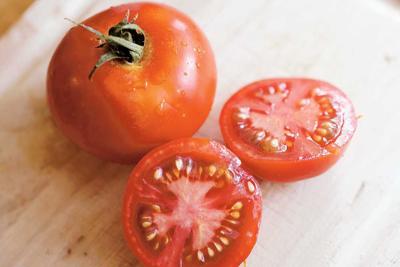
Tomatoes are the locavore’s original talking point. No other fruit or vegetable is as starkly inferior to its local counterpart as a long-distance tomato, most of which are picked green and gassed with ethylene to turn red. Even the most committed industrial agriculture supporter, with his quiver full of calculations about the economics of scale and relative inefficiencies of locally-grown foods, will concede that a tomato picked off the vine will beat the marinara out of a tomato picked way too early in some faraway place and trucked to your local store. This reality was what prompted the creation of the first genetically modified food ever to hit the market, in 1994, in the form of the Flavr Savr tomato. Designed to degrade more slowly after being picked, it could be ripened on the vine, but was discontinued. Meanwhile, with the exposure of the working conditions in Florida’s Immokalee tomato fields, and elsewhere, tomatoes have become poster produce for how the efficiencies of the industrial agriculture system can come at the expense of workers’ rights.
MaMa’s Chili Sauce
This recipe comes from my friend Allen Broach’s in Greensboro, North Carolina. His comes from a 5,000-acre family plantation named Vesuvius that Broach’s great-great-grandfather Madison Smith owned during the Civil War. They grew everything to feed the 70-odd people who lived there. The recipe, used by his great-great-grandmother, Luzetta Mundy Smith, on his mom’s side, “is basically spicy ketchup,” Broach told me. The recipe Broach sent me uses canned tomatoes, but I’ve made it with fresh tomatoes and it works great. If they are extra juicy it might take longer to cook down. I used San Marzano paste tomatoes, without problem.
- 4 quarts canned (drained) or fresh tomatoes, coarsely chopped
- 1 rounded tbsp whole mixed pickling spices, tied in 5x5-inch square of cheesecloth, and crushed with a mallet
- 2 tsp salt
- 1/2 tsp black pepper (Broach admits to using a lot more)
- 1 cup sugar
- 3/4 cup dark vinegar (I used cider)
- 5 medium onions, chopped
- 1 or 2 pods hot pepper (optional, but recommended)
Add everything to a thick-bottomed pot and cook on low/medium for two to three hours, stirring often. Occasionally mash the bag of spices to release flavors.
“Don’t hurry with this sauce,” Broach cautioned. “MaMa was a very patient person and cook.”
Pour into sterilized jars, and process in a hot water bath for 10 minutes for storage.
And here we are in tomato season, when they taste decidedly un-cardboard-like, but even the converted are not on the same page. There has been a long-running divide among foodies over whether it’s a sin to put them in the fridge. Michael Pollan has named “tomatoes that have been refrigerated” on his list of foods he won’t eat.
And here we are in tomato season, when they taste decidedly un-cardboard-like, but even the converted are not on the same page. There has been a long-running divide among foodies over whether it’s a sin to put them in the fridge. Michael Pollan has named “tomatoes that have been refrigerated” on his list of foods he won’t eat.
The debate was put to rest, hopefully, when the nerds at Serious Eats embarked on an investigative series on whether or not it’s true that a tomato should never go in the fridge. (It’s complicated, but the short of it is: Ripe tomatoes can be refrigerated, non-ripe ones, not so much.) Whatever the case, here appear recipes to extend tomato season.
Shakshuka
Shakshuka is a Middle Eastern tomato-and-egg-based dish that is popular throughout the region (and available at the occasional restaurant like Yafa in Carmel). The shakshuka method that follows is my rendition, drawn from several recipes I’ve messed around with over the years.
- 1 tbsp olive oil
- 1 onion, chopped or cut into 8 wedges
- 1 or more cloves garlic, minced or grated
- 1 red bell pepper, chopped coarsely
- 4 cups ripe tomatoes, coarsely chopped
- 2 tbsp tomato paste, or a 1/4 cup tomato passata (blended, strainted tomato)
- 1 tsp chili powder (mild)
- 1 tsp cumin
- 1 tsp paprika
- 2-inch stick of cinnamon
- Pinch of cayenne pepper
- Other peppers, like jalapeños, yellow wax, etc. Diversity of peppers adds depth and complexity
- Salt and pepper to taste
- Eggs, as many as you feel like eating. These quantities can easily accommodate six.
- 1/2 tbsp fresh chopped parsley
- Other options: olives, minced anchovies or a squirt of fish sauce.
Sauté the onions in oil with the cinnamon stick until the onions become translucent. Add garlic and peppers if using. After 10 minutes add the tomatoes and tomato paste/passata to the pan. Bring it to a simmer, add the other spices, and salt/pepper/cayenne to taste. Cover and allow to simmer for about 10 minutes. Then crack your eggs in and continue simmering with the lid off until the eggs are done to your satisfaction. Garnish with parsley and serve.


(0) comments
Welcome to the discussion.
Log In
Keep it Clean. Please avoid obscene, vulgar, lewd, racist or sexually-oriented language.
PLEASE TURN OFF YOUR CAPS LOCK.
Don't Threaten. Threats of harming another person will not be tolerated.
Be Truthful. Don't knowingly lie about anyone or anything.
Be Nice. No racism, sexism or any sort of -ism that is degrading to another person.
Be Proactive. Use the 'Report' link on each comment to let us know of abusive posts.
Share with Us. We'd love to hear eyewitness accounts, the history behind an article.