Two years ago, at the end of the Cooking for Solutions expert panel question-and-answer period, a scientist in the audience raised his hand. Why, he asked, given the sorry state of tuna and other top predator populations, weren’t eco-minded chefs cooking more squid, mackerel and other seafood low on the food chain?
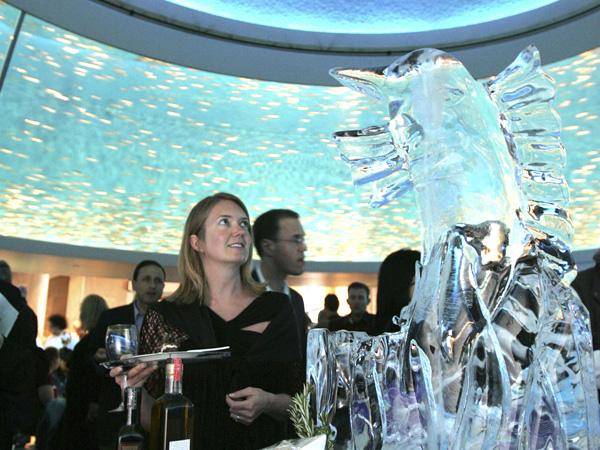
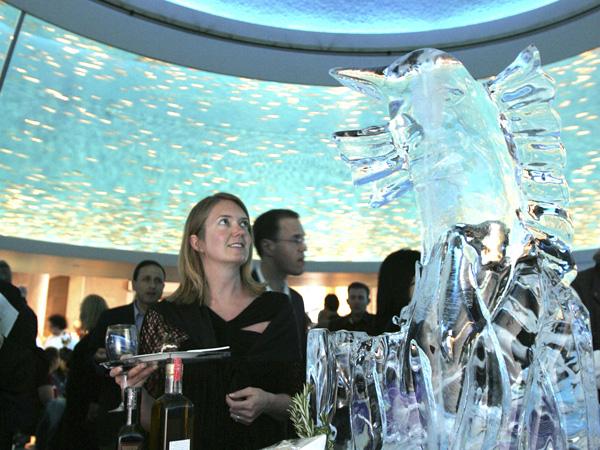
A ripple ran through the Monterey Bay Aquarium’s auditorium. Obvious as it seems in hindsight, the idea generated a buzz that persisted throughout the day. I noticed that two women near the otter exhibit were handing out paper cones filled with a tangy salad of minted calamari salad. It was late, well into the wine hour, and the two chefs were laughing with that near-hysteria that restaurant people get at the end of a long night.
They turned out to be guest chefs Mary Sue Milliken and Susan Feniger of the Border Grill and Ciudad in Santa Monica and Los Angeles (and now Las Vegas). They’re back this year to accept Cooking for Solutions’ top honor, the Conservation Leadership Award. As Milliken tells it, that weekend two years ago was a turning point.
“We’d already been buying seafood that was lower on the food chain and more plentiful,” she says, “but after that conference we came home and took everything off the menu, things I didn’t even know were a problem.”
Out went the tuna and salmon. They passed on Chilean sea bass. They went beyond the Aquarium’s Seafood Watch guidelines, looking at mercury issues and boycotting Canadian-caught fish to counter the seal fur trade. They educated their staff so that they could, in turn, educate customers.
“We’re in a position of leadership where we can make an impact, get people excited,” Milliken says.
“Mary Sue and Susan are amazing,” says Jim Dodge, director of specialty culinary programs at Bon Appetit Management Company and the Aquarium’s point man on locating award-worthy chefs. “Whenever they’re on radio and TV, they talk about it. That’s why they’re getting the award. They’re passionate and enthusiastic.”
Dodge’s work for the Aquarium consists of visiting the restaurants of chefs who’ve been nominated and sizing up their commitment to sustainability. In the seven years he’s been doing this, Dodge has noticed the seafood conservation ethos trickling down from its source in high-end venues to moderately-priced restaurants. And it’s gaining purchase among a new generation of chefs.
“It’s kind of interesting, because high-profile chefs who you’d think would be following the guidelines are sometimes the worst offenders,” he says. “The next generation—chefs in their 40s and 30s—is where we’re seeing a lot of action, people really stepping up.”
Milliken and Feniger belong in that category. So do this year’s Celebrity Chef Ambassadors: Charles Phan of The Slanted Door in San Francisco, Elena Hernandez of Academia de Artes Culinarias in Panama City, Michael Cimarusti of Providence in Los Angeles, Douglas Katz of Fire in Cleveland, Sam Choy of Sam Choy’s Diamond Head Restaurant in Honolulu, Keith Froggett of Scaramouche in Toronto and Chris Douglass of Icarus in Boston.
They’ll all be joined by talented California chefs including Dodge, John Ash of Fetzer Vineyards, Jesse Cool of Cool Eatz in Menlo Park, Philip Dedlow of Chez Panisse, Thom Fox of ACME Chophouse in San Francisco and a host of local chefs. Highlights include Friday night’s gala, with food from 40 restaurants and 40 wineries; six luxurious food- and wine-oriented outings to scenic destinations with celebrity chefs; and Saturday evening’s Iron Chef-inspired Sustainable Seafood Challenge. The Aquarium will also build on its successful Sustainable Seafood Institute, introduced last year, with another day of intensive panel discussions for the media.
It’s hard to tell from year to year what the big issue might be. Last year, Michael Pollan’s The Omnivore’s Dilemma was ringing in everyone’s ears, and it was “food miles.” It could be anything this year, including the portion sizes of meat and fish proteins. Not surprisingly, Milliken has an idea about this, and it involves using smaller pieces of fish to add flavor to a plant-based plate rather than star as its centerpiece.
“Call it ‘almost vegetarian,’ ” she says. “Something that connotes ‘good for the planet and good for your body.’
“You mostly have to educate, educate constantly.”
COOKING FOR SOLUTIONS takes place Friday and Saturday. For a complete schedule of the events call 647-6886 or visit mbayaq.org.


(0) comments
Welcome to the discussion.
Log In
Keep it Clean. Please avoid obscene, vulgar, lewd, racist or sexually-oriented language.
PLEASE TURN OFF YOUR CAPS LOCK.
Don't Threaten. Threats of harming another person will not be tolerated.
Be Truthful. Don't knowingly lie about anyone or anything.
Be Nice. No racism, sexism or any sort of -ism that is degrading to another person.
Be Proactive. Use the 'Report' link on each comment to let us know of abusive posts.
Share with Us. We'd love to hear eyewitness accounts, the history behind an article.