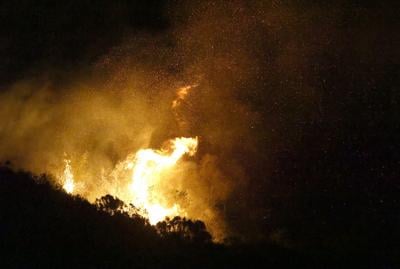

As wildfires blaze across Big Sur and much of the West, it might be surprising to hear news that the insurance market in California is showing early signs of stabilization.
Katie Rodriguez here, sharing with you all a list of takeaways from a statewide insurance market update held on Aug. 19 with California Insurance Commissioner Ricardo Lara, Amy Bach with United Policyholders and Carolyn Kousky with Insurance for Good.
Most are familiar with the FAIR plan, or “insurer of last resort.” FAIR stands for Fair Access to Insurance Requirements, and exists as a state-created insurance pool designed to make sure people are still able to get basic coverage when the regular insurance market won’t insure them. It’s overseen by the California Department of Insurance, but it’s funded and run by participating insurance companies.
The 2017 and 2018 fire seasons really launched the number of homes insured by the FAIR plan—2018 was recorded as the most destructive single wildfire season for property loss, which included the devastating Camp Fire in the town of Paradise that destroyed 18,000 structures.
“Those seasons wiped out more than a quarter century of cumulative underwriting profit twice over for the homeowners insurance industry,” Kousky said in the meeting, adding that it was a major shock to the industry and a wake-up call on the growing volatility of wildfires in California.
A rather shocking statistic: High-risk zip codes representing less than 5 percent of structures account for nearly 70 percent of insured losses. Insurers wrote less policies, hiked premiums with less competition, and the number of homeowners in high wildfire risk areas reliant on the FAIR plan jumped to 40 percent on average, reaching 80 percent in many areas.
But thanks to a major regulatory overhaul called the Sustainable Insurance Strategy (SIS), which equips insurance companies with tools they need to accurately price risk in exchange for writing more policies, 11 insurance groups have formally committed to stay and grow in the state. SIS provides better access to modern catastrophe models, and has a more detailed tracking mechanism for how and where insurers are writing new policies.
More insurers are now entering back into high-risk areas, according to Lara, and FAIR Plan growth over the last four reported quarters has slowed. He said he is confident that California will see the first-ever decline in FAIR Plan policy counts “soon.”
One of the biggest questions is whether home-hardening efforts by people in high-fire-risk areas will now improve their insurability. The answer is yes, but with caveats, of course. State regulations require certain mitigation discounts to be reflected in premiums, but the impact will still depend on the number and combination of measures you take. For example, combining Zone Zero clearance with new vents and a new roof could lead to a more substantial discount. And yes—what your neighbors do still matters.
“Not all the models used by insurers are capturing all the mitigation measures, or might not have the most up-to-date data,” Kousky said. “So we're seeing a lot of efforts to try to solve those particular barriers that still remain.”
The full recording of the presentation has been posted online, which you can watch here.


(0) comments
Welcome to the discussion.
Log In
Keep it Clean. Please avoid obscene, vulgar, lewd, racist or sexually-oriented language.
PLEASE TURN OFF YOUR CAPS LOCK.
Don't Threaten. Threats of harming another person will not be tolerated.
Be Truthful. Don't knowingly lie about anyone or anything.
Be Nice. No racism, sexism or any sort of -ism that is degrading to another person.
Be Proactive. Use the 'Report' link on each comment to let us know of abusive posts.
Share with Us. We'd love to hear eyewitness accounts, the history behind an article.