
Erik Chalhoub here, looking at a map of Fort Ord National Monument. I’ve explored nearly the entirety of the eastern portion of the park by bike, starting from the Creekside entrance just off of Reservation Road near Salinas. I’ve usually ended up overlooking WeatherTech Raceway Laguna Seca before heading back.
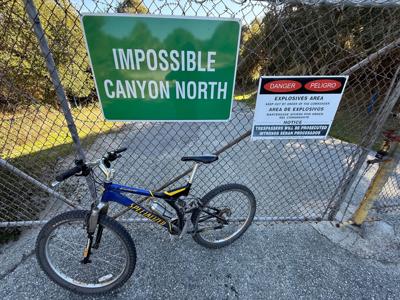
But roughly half of the park is off-limits to the public, a more than 6,200-acre swath of gray on the map labeled an ominous “munitions hazards.” It’s here where cleanup continues more than three decades after the U.S. Army base closed, removing buried explosives and restoring the environment damaged by training activities, among other things.
The cleanup is managed by the Army along with oversight by an alphabet soup of state and federal agencies.
Even as parts of the park have slowly opened over the years, munitions are still being discovered in public areas, some deemed non-hazardous, while others require a bomb squad response for disposal, according to a December 2024 report of the Munitions Response Cleanup BRAC Team. As such, the Army reminds the public to remember the “three R’s:” Recognize (do not approach or touch old munitions), Retreat (leave the area) and Report (call 911).
On Feb. 8, the Army's annual online workshop went live, covering topics such as groundwater cleanup on the Fort Ord property, landfill maintenance and more, through pre-recorded presentations and other materials. It’ll be up through February 2026, and public comment is accepted.
Of note is the habitat restoration efforts within the cleanup zone—the Army estimates 68,732 plants have been installed in the area over the past 11 years, as well as seeding more than 60 acres. Meanwhile, 10 of the 19 restoration sites will be deemed complete by the end of this year after 13 years of monitoring.
As an active trail user, I was still left wondering after reviewing the workshop: when will this massive grayed-out area on the map be turned over to the Bureau of Land Management and be accessible to all?
I asked Joelle Lobo, U.S. Army Fort Ord Base Realignment and Closure environmental coordinator, how much longer cleanup will take.
It’ll likely be another decade, Lobo says. Also, no new areas of the munitions area will open to the public this year—except for a one-day guided nature walk scheduled for May 10.
Planning for the next prescribed burn, possibly for this year, has begun, she adds, after no burns took place in 2024. Burns not only help clear the way for munitions cleanup, but also encourage the recovery of endangered plant species that are dependent on fire, according to the Army.
As we continue waiting, check out the workshop and share your thoughts.


(0) comments
Welcome to the discussion.
Log In
Keep it Clean. Please avoid obscene, vulgar, lewd, racist or sexually-oriented language.
PLEASE TURN OFF YOUR CAPS LOCK.
Don't Threaten. Threats of harming another person will not be tolerated.
Be Truthful. Don't knowingly lie about anyone or anything.
Be Nice. No racism, sexism or any sort of -ism that is degrading to another person.
Be Proactive. Use the 'Report' link on each comment to let us know of abusive posts.
Share with Us. We'd love to hear eyewitness accounts, the history behind an article.