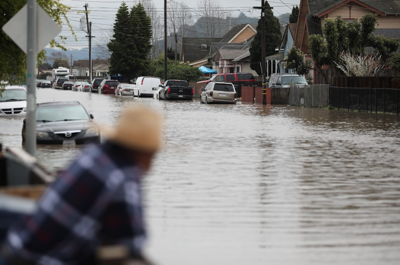

Erik Chalhoub here, thinking back to the 2023 Pajaro flood. Although it was unlikely the flood waters would reach my home, my neighborhood was under an evacuation warning, meaning the next step was an evacuation order if things turned worse.
On a normal day, my options to get out of the neighborhood are limited. During this time in 2023, it was down to one way only. San Juan Road going west was shut down, while a side road that eventually connects to Highway 1 was blocked due to a fallen tree (and for a while, Highway 1 itself was shut down).
My only option was a road where mudslides and falling eucalyptus trees are a common occurrence during winter. Not ideal.
With climate change comes extreme weather. And more extreme weather comes with numerous impacts, especially to our transportation system.
North County faces the full gamut of climate-related problems, from the rising sea level along the coast in Moss Landing to the dangerously high fire hazards of eucalyptus forests in Prunedale.
The Transportation Agency for Monterey County is studying which North County transportation corridors are most vulnerable to the impacts of climate change, and it needs the public’s help to determine what areas should be prioritized for future projects.
Associate Transportation Planner Alissa Guther says what those projects could be is still to be determined. Perhaps it could be a culvert replacement to improve water flow and reduce flooding, or on a larger scale, a new bridge for a road that floods every winter.
The goal now is to identify the areas most in need of attention—Castroville Boulevard floods frequently near North Monterey County High School, for example—to help create a plan of attack in the future. It’s not just about road work, but also about finding ways to boost alternative modes of transportation to help reduce the greenhouse gas emissions that cause the problems in the first place.
“Especially in Monterey County and being on the coast, we are facing sea level rise, more intense storm systems and other things that are increasing as the climate changes,” Guther says.
TAMC hosts an open house on Thursday, Dec. 4 from 5-7pm at the Castroville Library’s meeting room to give the public a chance to share their thoughts and concerns. It’ll be set up similar to a science fair, Guther says, with boards displaying various information and TAMC staffers on hand to answer questions. An online survey is also ongoing.
The “vulnerability assessment” is set to be completed by June, providing a big-picture look of North County’s present and future transportation-related challenges.


(0) comments
Welcome to the discussion.
Log In
Keep it Clean. Please avoid obscene, vulgar, lewd, racist or sexually-oriented language.
PLEASE TURN OFF YOUR CAPS LOCK.
Don't Threaten. Threats of harming another person will not be tolerated.
Be Truthful. Don't knowingly lie about anyone or anything.
Be Nice. No racism, sexism or any sort of -ism that is degrading to another person.
Be Proactive. Use the 'Report' link on each comment to let us know of abusive posts.
Share with Us. We'd love to hear eyewitness accounts, the history behind an article.