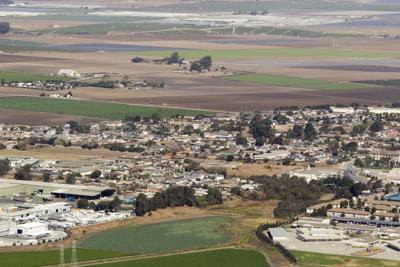

It’s a step in a new direction for the health of Salinas residents now that the Blue Zones Project is officially coming to town.
The project is a national health initiative based on the health habits of people in the world’s “Blue Zones,” those areas where people live longer than average with good quality of life.
It’s based on 2004 research by National Geographic fellow and author Dan Buettner who identified five regions of the world he dubbed as Blue Zones: Loma Linda, California; Nicoya, Costa Rica; Sardinia, Italy; Ikaria, Greece; and Okinawa, Japan.
Since 2009 more than 40 communities across the country have joined the project after going through a selection process by the organization Blue Zones, LLC., headquartered in Minneapolis, Minnesota.
Last year Salinas officials started the process, led by leaders from the Salinas Valley Memorial Healthcare System. The city was visited in August by Blue Zones national officials and recently approved Salinas’ selection as the first city in Northern California to participate.
On Jan. 14, SVMHS and its partners in the project—Taylor Farms, Montage Health, Blue Zones, LLC. and it’s sponsor, Sharecare, Inc.—announced Blue Zones Project Salinas is officially launched. A meeting for stakeholders is scheduled for Wednesday, Jan. 30, in downtown Salinas.
The project will begin its focus in Salinas and then expand into other areas of the county over the next five years, according to a press release.
“While widely known as ‘the Salad Bowl of the World,’ many Salinas residents suffer from food insecurity, and three in seven do not eat enough fruits and vegetables,” the release states.
Seven in 10 residents are overweight or obese, half “struggle with hope and purpose,” and high diabetes and cancer rates are major concerns. (One in eight Monterey County residents has diabetes, compared to one in 11 nationwide.)
During the duration of the project Salinas leaders from a wide array of organizations—governmental, nonprofit, hospitals, schools, social and others—will work toward helping residents lead healthier lives through programs and supportive services. They’ll also look at creating or revamping public policies and infrastructure, like safe routes to schools and parks.
Editor's Note: An earlier version of this story included information about how to attend the Jan. 30 stakeholder event. The event is not open to the public.


(0) comments
Welcome to the discussion.
Log In
Keep it Clean. Please avoid obscene, vulgar, lewd, racist or sexually-oriented language.
PLEASE TURN OFF YOUR CAPS LOCK.
Don't Threaten. Threats of harming another person will not be tolerated.
Be Truthful. Don't knowingly lie about anyone or anything.
Be Nice. No racism, sexism or any sort of -ism that is degrading to another person.
Be Proactive. Use the 'Report' link on each comment to let us know of abusive posts.
Share with Us. We'd love to hear eyewitness accounts, the history behind an article.