
Note: A shorter version of this will appear in tomorrow's print edition.
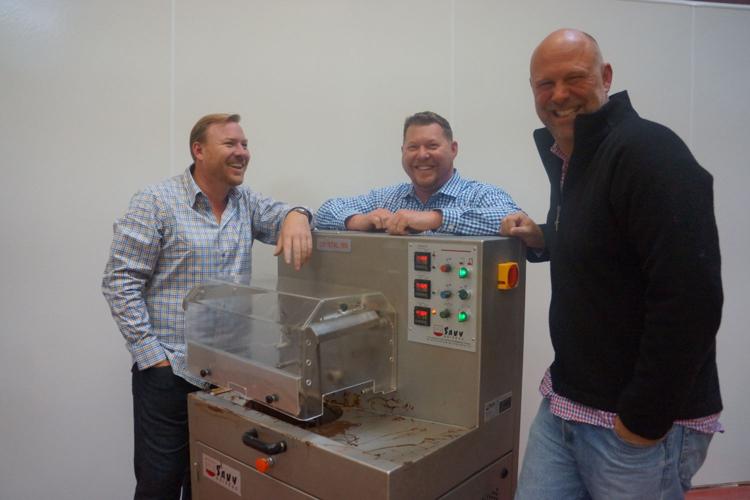
Touring Altai Brands’ yet-unfinished corporate headquarters and production facility can feel like looking around Willy Wonka’s factory before the chocolate river ran deep and the Oompa Loompas started singing.
But around two weeks before Altai starts shipping upscale pot-infused lozenges, bonbons and candy bars to dispensaries across the state, in time to hit shelves July 1, it still brims with intrigue, promise and paradox.
The promise became apparent in March, when public records requests revealed Altai CEO, president and co-founder Rob Weakley, former partner at Pebble Beach Food & Wine parent Coastal Luxury Management, was looking to take a fancy food background to the legal cannabis industry.
Mostly, it’s worked the other way, with pot pros learning to cook rather than chefs studying the science of infused foods, which makes this as much one of the biggest food stories of 2015 as it is one of the biggest medicinal pot and local business stories.
Weakley calls it an opportunity “to affect a whole industry,” and not just any industry, but one growing faster than any other in the world.
Last year estimates are cannabis legal fees alone ran $1.7 billion.
A partnership with marijuana law early adopter and local attorney Gavin Kogan, who enjoys deep knowledge of the market and the contacts to match, helped them ID a big opportunity in gourmet sweets designed to rival those “unmedicated” versions found on nice dessert menus.
“I’ve suddenly gone from advising people to going for it,” he says. “I’m really enjoying the entrepreneurial energy, the chance to step from the background and really do it.”
They can do it within Salinas municipal code because sources send them THC-rich oils and resins that go into their delicacies before they’re shipped to dispensaries.
That means none of the legal exposure or headaches that come with growing or selling.
This tour revealed other sources of promise.
One is intuitive food mind, serial entrepreneur and one-time Pebble Beach Company pastry chef Mark Ainsworth, with the processes and the pedigree to make fancy chocolate happen on a big enough scale to warrant Altai’s predictions of $15 million in revenue year one.
Beyond fine dining duties at places like Ritz Carlton he has spent time building a business called Pastry Smart, an organic and humanely certified bread, pastry and chocolate producer whose facility grew to occupy a whopping 40,000 square feet.
The last few months he’s been furiously developing recipes for things like their peanut cream alt bar and chocolate-covered cinnamon red hots, and working with lab results to figure out how to manage consistency in flavor and potency across various oils and cooking techniques.
“It’s a moving target,” he concedes.
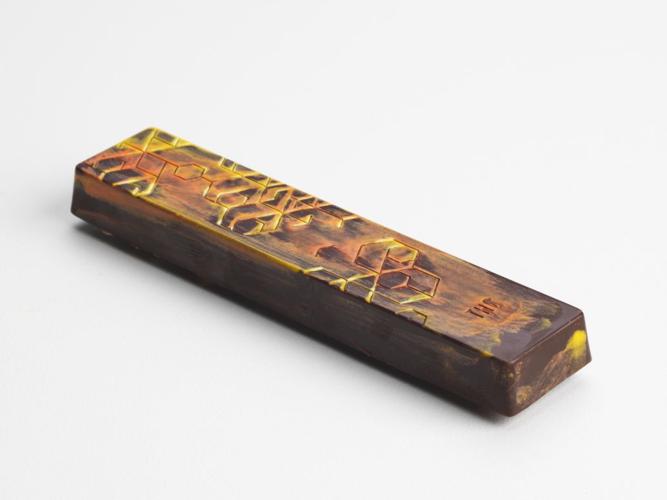
The results are certainly eye-catching—Willy Wonka grade, if you will—and a source of the ample intrigue.
The beautiful sea salt caramels look like they’ve been brushed with paint, while the dulce de leche bonbons enjoy an electric yellow pinwheel top and flavor Ainsworth compares to a creamy tres leches cake thanks to caramelized condensed milk and roasted white chocolate blended with vanilla beans.
“The goal is to have no difference between artisan chocolate and ours,” he says.
A long-ago-forged friendship at a summer restaurant job with Weakley’s wife Michaela helped ultimately bring the team together.
The software platform Ainsworth’s been working on the last few days will help them go far, fast—and track product at similar distance and speed to surpass recall requirements.
He seems to be enjoying the adventure.
“Yes, I was the first pastry chef to jump head first, cannonball, into this thing,” he says, smiling. “Rob told me it would be a fun ride. It has been.”
Weakley elaborates: “For restaurants there are a million manuals you can reference that remind you to put TP in the bathrooms. There is no path for this.”
A licensing deal seeded through Kogan’s connections with one of Colorado’s most accomplished and upscale recreational and medicinal makers also brings promise.
Dixie Elixirs & Edibles can reach a huge new California market for the first time starting July 1—and one set to mushroom if adult legalization passes in 2016—while delegating the production and distribution of their increasingly popular weed-infused sodas, potent Toasted Roosters and “dew drops” to a so-called affiliated manufacturer, technically a second Weakley-Kogan-Ainsworth company called Indus, whose principals live and work in state.
For now Dixie provides valuable guidance, as owner and CEO Tripp Keber explains.
“Over six years we’ve made lots of mistakes,” he says, “but we’ve meticulously documented those, and recipes, formulations, delivery systems. We can pay that forward, under Dixie brand, or under their own Altai, which I think will be incredibly exciting.”
He adds he’s excited about spending more time in Monterey, and at working with a group as focused on profit as the food safety and industry image.
“They’re committed to consumer education and manufacturing responsibly,” he says. “We found people we trusted implicitly could get it done.”
Altai machinery will soon bottle 80 bottles of Dixie elixirs a minute.
Other machinery like candy wrapper crimpers, vast chocolate vats and pill pressing machines impress, but not as much as the surprisingly pretty packaging and the Altai products themselves, around a dozen items all told, with two different potencies (10mg and 25mg) with sativa and indica strains, to calibrate more energizing/mind-stimulating and body relaxation effects, respectively. (Prices scale about $5/dose; a four pack of caramels will likely retail $15/10mg doses and $20/25mg.)
With awareness of long-held pot stigmas in mind, Weakley and Kogan et al stop at every chance to show off proprietary child-safety mechanisms and repeatedly recite an affinity for regulation, in part because they’ve gone well beyond existing requirements in anticipation of raised safety standards, with things like triple dose/quality testing at SC Laboratories (475-1844) in Santa Cruz.
“Viable, safe and sane,” Kogan says.
Which leads to part of the paradox: Altai doesn’t want to trumpet where in Salinas their unmarked warehouse is, even if they are eager to tour lawmakers there.
The low profile is to avoid inspiring those ready to react to the presence of a historically demonized drug.
The visits demonstrate the industry no longer belongs purely to what Weakley calls “dreads and tattoos.”
“We are trying to be the flagship of an industry,” he says. “We’re proud of what we do and what we're building. We wanted to have a place to bring in politicians so they can see what we’re about.”
Kogan claims the reactions surprised at first but are becoming more predictable.
“People uniformly blown out of the water,” he says. “It’s just not what people expect with cannabis. We believe we can be best in class. And if we can do it, why not lead?”
In other words, chocolate river aside, these guys believe they have a golden ticket.


(0) comments
Welcome to the discussion.
Log In
Keep it Clean. Please avoid obscene, vulgar, lewd, racist or sexually-oriented language.
PLEASE TURN OFF YOUR CAPS LOCK.
Don't Threaten. Threats of harming another person will not be tolerated.
Be Truthful. Don't knowingly lie about anyone or anything.
Be Nice. No racism, sexism or any sort of -ism that is degrading to another person.
Be Proactive. Use the 'Report' link on each comment to let us know of abusive posts.
Share with Us. We'd love to hear eyewitness accounts, the history behind an article.