
The scribes of old speak of coffee as if the very elements yielded to its steaming, deep brown liquor.
From Chandler, Murakami, Eliot and others, we learn of a drink “rich, strong, bitter, boiling hot…The life blood of tired men,” so potent “the smell separates night from day.” It’s as if humanity sprung from the percolator: “I have measured out my life with coffee spoons.”
Yet the brew could also be dark and brooding—suspicious, arising as the early Christians of Europe knew from unredeemed lands. The “ruthless, depraved” cup must be of the devil, or so advisors to Pope Clement VIII suggested.
After a few sips, however, the pontiff was converted. Depending upon the source, he uttered something to the effect of “This Satan’s drink is so delicious that it would be a pity to let the infidels have exclusive use of it.”
Yeah, yeah—ancient texts, from a time when one could simply call for a bottomless cup at the diner. Coffee scholars refer to this bygone era as before PSL.
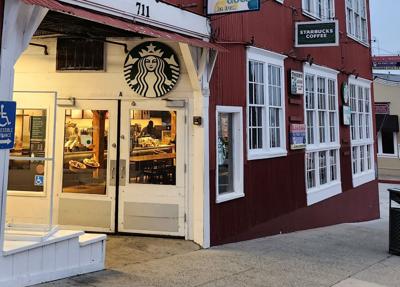
Pumpkin spice latte was introduced by Starbucks in 2003. The company credits a team led by Peter Dukes for its creation, and while it’s hard to imagine that a spice blend dating back to the 1700s never attracted the attention of baristas before that time, few dispute the claim.
So what has Dukes wrought? A popular flavor, certainly. As we have seen, pumpkin spice now infiltrates everything from tortilla chips to Spam to sophisticated cocktails this time of year. And Starbucks has sold something like 500 million PSLs since its introduction.
Yet PSL as served to us recently by Starbucks is far removed from the rudimentary concoction described by Raymond Chandler in The Long Goodbye. Instead of being assertive, it is almost coy and child-like. The sallow earthiness of pumpkin vies with soft spices, lending a nutty calm that fluffs the milk. There is enough sweetness for the holiday sensation to resonate on the palate.
It's pleasant and easy, but it hardly seems like the latte that stirred a revolution.
Lost in this is the churlish presence of coffee—which is odd for a brand known for its bold roasts. The pumpkin spice latte yearns for a bitter ballast, a smoke-curled edge. Alas, there is nothing more than a strained astringent note, almost smothered by the cushy pumpkin milk.
Colleen Kelly, the venerable mixologist at Lucia Restaurant and Bar in Carmel Valley, warns that it's easy to go overboard with the spices involved, which can include cinnamon, nutmeg, allspice, clove and ginger. "Pumpkin spice latte—that's the perfect version of overkill," she observes.
Meanwhile, Ron Mendoza of Ad Astra Bread Co., in Monterey, ditched pumpkin in favor of roasted yams in his seasonal coffee—which is firmly grounded in a rich, dark roast. There is, he points out, too much pumpkin spice out there.
It seems that the original has made its mark and is being passed by, although it's not without staying power. Starbucks brought PSL to the market even before the calendar turned to October.
Maybe it's still relevant, after all?
Pumpkin spice latte caused a sensation when launched by Starbucks. It created an entire season devoted to the spice that spans culinary offerings (and it is sad that we didn’t get to report on Pumpkin Spice Teeny Tiny Pretzels from Trader Joe’s, but they melted into a clump in the Weekly’s plush, but unair-conditioned office one warm afternoon).
But really, what would T.S. Eliot say about the ubiquitous latte? I’ve sprinkled out my life with spice shakers? Pumpkin spice speaks fondly of the season. But in this case, the modern classic could use a good old jolt of Joe.


(0) comments
Welcome to the discussion.
Log In
Keep it Clean. Please avoid obscene, vulgar, lewd, racist or sexually-oriented language.
PLEASE TURN OFF YOUR CAPS LOCK.
Don't Threaten. Threats of harming another person will not be tolerated.
Be Truthful. Don't knowingly lie about anyone or anything.
Be Nice. No racism, sexism or any sort of -ism that is degrading to another person.
Be Proactive. Use the 'Report' link on each comment to let us know of abusive posts.
Share with Us. We'd love to hear eyewitness accounts, the history behind an article.