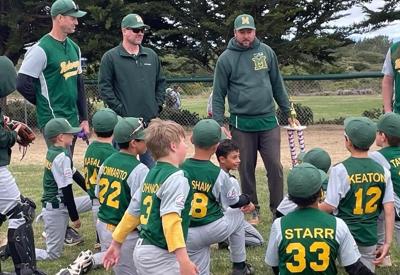

Dave Faries here, noting I did not expect to learn something new from a story about the value of playing and coaching youth baseball. After all, I’ve done both—admittedly many, many decades ago.
Coaching is perhaps the more rewarding of the two, at least when it comes to anecdotes for sharing later in life. For instance, one time I gave the steal sign to a PONY leaguer named Kenton who was on first. He didn’t move. I tried again, and again he didn’t budge. After a third effort, I called time and trotted over to find out why not.
“Kenton, did you see the sign?” I asked. “Yes,” he replied. My follow-up: “Do you know what the sign was?” His: “Steal sign.” Well, that didn’t help. So I said, “Why didn’t you steal?” The logic to his reason was difficult to challenge. “I didn’t want to be thrown out,” he explained.
What I did not know until reading Jesse Herwitz’s story on youth baseball in our annual Family Guide is that PONY is actually an acronym, although few use it as such. According to the article, it stands for “Protect Our Neighborhood Youth”—presumably by giving them something to do under adult supervision.
The Family Guide is one of several free magazines the Weekly publishes each year. It began simply as a listing of summer camps. We soon realized, however, that there are stories to tell about the types of camps available and the people involved, as well as the benefits of participating—and that these don’t just apply to young people.
So in this year’s edition, which is included with this week’s copy of the paper, you will learn about groups that bring mothers together and what motivates camp counselors to return, year after year. Herwitz’s story tells about the scope of PONY and its related leagues. (Colt, which I also played in many, many decades ago, is not an acronym.) He also explores the values of youth sports, where the emphasis should be on teaching rather than winning.
“Ironically, ‘de-emphasizing winning’ led the Monterey teams to win more games, including multiple tournament wins,” Herwitz writes. You can read more here.
The Family Guide still includes listings of summer and year-round camps. And there are a lot of options—a useful tool for parents and kids. But as Herwitz’s story shows, even older adults can learn something from what’s inside the guide’s pages.


(0) comments
Welcome to the discussion.
Log In
Keep it Clean. Please avoid obscene, vulgar, lewd, racist or sexually-oriented language.
PLEASE TURN OFF YOUR CAPS LOCK.
Don't Threaten. Threats of harming another person will not be tolerated.
Be Truthful. Don't knowingly lie about anyone or anything.
Be Nice. No racism, sexism or any sort of -ism that is degrading to another person.
Be Proactive. Use the 'Report' link on each comment to let us know of abusive posts.
Share with Us. We'd love to hear eyewitness accounts, the history behind an article.