
David Schmalz here. For as long as I can remember, I’ve been putting my fingers in the dirt. Digging underground, seeing what kind of homes insects or animals have built, or digging holes to plant something and watch it grow—or not—over a course of weeks, months or years.
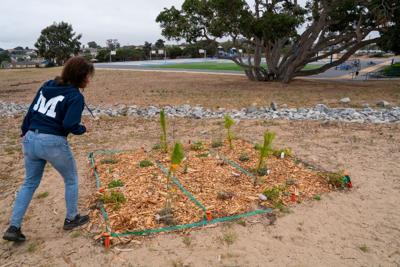
Perhaps that’s why I was drawn to a story in this week’s issue about a fascinating new project at Del Rey Woods Elementary school in Seaside.
The story, by my colleague Katie Rodriguez, is about a project sponsored by nonprofit Communities for Sustainable Monterey County to plant a small Miyawaki Forest, a special kind of forest developed by Japanese botanist Akira Miyawaki that has shown to create incredibly rich biodiversity compared to a normal forest—by multiples of 10s or 100s.
The project is just now getting started and will take some years to mature, and as it does, the forest will be worked into the school’s curriculum. By that time, the Fort Ord Regional Trail and Greenway segment that connects Del Rey Woods to the Frog Pond Wetland Preserve will be in play too, so the outdoor classroom will be even bigger. I’m excited for the kids just thinking about it.


(0) comments
Welcome to the discussion.
Log In
Keep it Clean. Please avoid obscene, vulgar, lewd, racist or sexually-oriented language.
PLEASE TURN OFF YOUR CAPS LOCK.
Don't Threaten. Threats of harming another person will not be tolerated.
Be Truthful. Don't knowingly lie about anyone or anything.
Be Nice. No racism, sexism or any sort of -ism that is degrading to another person.
Be Proactive. Use the 'Report' link on each comment to let us know of abusive posts.
Share with Us. We'd love to hear eyewitness accounts, the history behind an article.