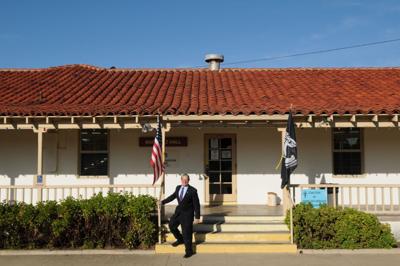

An Initial Study and Environmental Assessment was released today for Phase 1 of the California Central Coast Veterans Cemetery Project, and the public has through July 12 to submit comments on the report. Based on the findings in the study, the California Department of Veterans Affairs (CalVet) proposes to adopt a Mitigated Negative Declaration for the project.
The proposed cemetery is to be built on 17 acres of an 85-acre parcel owned in Fort Ord by CalVet, and is being funded by contributions of almost $7 million from the federal government, $2 million from the state and $600,000 from the local community.
For state Sen. Bill Monning, D-Carmel, who authored a bill to secure state funds for the project, the study is an important step forward in a project he’s worked on for six years.
“It’s been a dream of the local veterans’ community for 20 years, and we’re very proud of the progress we’ve made, and the significant progress in the last two years,” Monning says.
Phase 1 of the proposed LEED-certified project will include a ceremonial entrance, an administration and maintenance complex, a 5,000-niche columbarium and a flag and assembly area, among other things.
While funding for remaining phases of the cemetery is uncertain, Phase 1 will be able to accommodate burials for 10 years, and is designed to have stand-alone utility.
In accordance with standards established by the Fort Ord Reuse Authority, the project’s landscape will include the planting of over 150 trees, mostly native oaks. There will also be no grass on the site, which will instead favor California coastal native plants, and adapted shrubs and groundcovers that require no irrigation once established.
Monning emphasizes the plan is still subject to change, pending input from the community.
“CalVet reviews any comments submitted, and they can adapt the environmental study based on those comments. It’s a dynamic process,” he says. "We hope that as people look at the work that’s been done, that any input will be constructive and supportive of moving the project forward.”
And while there have been calls in the past for a full environmental impact report for the project, Monning feels confident the draft study is extensive. “I think people are somewhat tied up in the rhetoric. There is a full environmental study,” he says. “This has not been a rushed job.”
After CalVet reviews public comments, there will still be a window open for legal challenges, and project must still win final federal approval.
The Initial Study and Environmental Assessment can be found here, as well as at the Seaside and Marina public libraries.
Comments on the report can be submitted to Environmental@dgs.ca.gov.


(1) comment
Keep The Promise to our veterans and honor them with this cemetery. We cannot trust the politicians to handle this important task. Let Monterey Downs ensure that our vets get the respect they deserve.
Welcome to the discussion.
Log In
Keep it Clean. Please avoid obscene, vulgar, lewd, racist or sexually-oriented language.
PLEASE TURN OFF YOUR CAPS LOCK.
Don't Threaten. Threats of harming another person will not be tolerated.
Be Truthful. Don't knowingly lie about anyone or anything.
Be Nice. No racism, sexism or any sort of -ism that is degrading to another person.
Be Proactive. Use the 'Report' link on each comment to let us know of abusive posts.
Share with Us. We'd love to hear eyewitness accounts, the history behind an article.