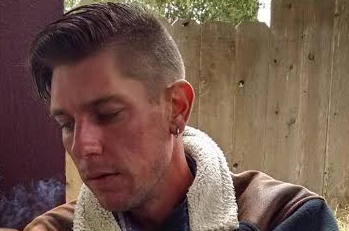

Matthew Bachelder asked police to take the gun away.
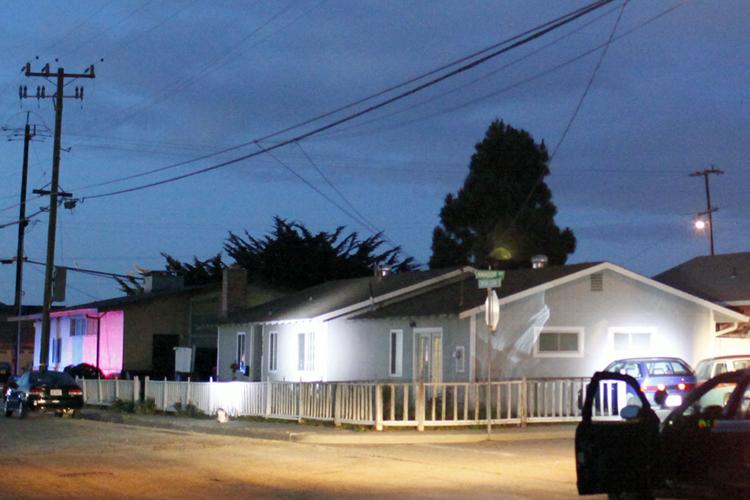
He called 911 and told the dispatcher he had a handgun pointed at his head and he wanted to kill himself. Moments later, as three Seaside police officers arrived to the corner of Contra Costa Street and Amador Avenue, a single shot rang out.
Officers shut down nearby streets, then repeatedly called Bachelder’s cell phone. It rang unanswered and each time went to voicemail. Officers then surrounded the house with their weapons drawn.
Three hours later, around 10pm on Tuesday, April 7, as a crowd gathered behind bright yellow crime scene tape, a heavily armored vehicle slowly rolled up to the front of the blue duplex, crushing a white picket fence. Members of the Monterey Peninsula Regional Special Response Unit used foam baton rounds to shatter the front windows of the house, aiming to get a better view of the potentially injured man inside.
The police radio traffic crackled through the night. Seaside Police Sgt. Nick Borges was working as SRU team leader. He spoke over the radio: “There’s a man slumped on the bed, face down. There’s blood near his head. There is what looks to be a handgun magazine on the bed.”
A few moments passed as the officers tried to get a better view through the windows they had shot out. The radio crackled again.
“There is movement coming from the bed.”
Heavy spotlights illuminated SRU team members’ shadows on the front of the house. A loudspeaker on the SRU’s armored vehicle echoed through the neighborhood. They asked Bachelder to crawl to the front door if possible so he could get medical attention.
It was three hours before anyone got to Bachelder.
Seaside Police Cmdr. Chris Veloz was one of the first three officers to arrive to the dispatch call. He is also the commander for SRU and managed officers as events unfolded last Tuesday.
“When we respond to a call and a shot is fired and there no view into a house of a possible situation, our number-one priority is to protect ourselves at that point,” Veloz says. “We don’t know if they’re shooting at us or just shooting the gun into the house randomly. We can’t see through walls, so we don’t fully know what is going. We have no information as to what’s going on.”
Around 10:30pm, officers agreed they had gotten enough visual confirmation that the scene was safe and they could enter the house.
They found Bachelder face down on the bed, still breathing. A handgun was on the floor next to him. He was transported to Natividad Medical Center in Salinas where he was put on life support.
Bachelder was pronounced dead on Thursday morning.
Veloz says it took hours to reach Bachelder because he had to ensure the scene was secure before sending officers into the house. He refers to the March 24 shooting death of San Jose Police Officer Michael Johnson, who responded to a similar dispatch of a suicide threat.
“You never know what their intentions are, so we plan for the worst,” he says. “When we arrive on a scene and it is a static situation—meaning there are no shots actively being fired—we have a set of tactical guidelines that we use. We don’t know what is going on in there. There might be other people in the house. Often, it is hard for people to grasp the unknown part of a situation.”
Amy Bachelder-Jeynes, Matthew’s second cousin, was one of the last people to speak with Bachelder. He had called her at 5:24pm, just an hour and a half before the 911 call. She says Bachelder did not sound upset.
“He was telling me about a romantic disappointment that was bothering him. If he was distraught (that night), he hid it very well,” she says. “We had this perfectly good conversation about it. He was talking about ordinary stuff.”
She says the call lasted 25 minutes and was similar to countless other talks they had over the phone at all hours of the day.
“He said, ‘I love you, Amy. I don’t know what I would do without you,’ but that wasn’t unusual,” Bachelder-Jeynes says. “I feel certain he knew what he was going to do and was certain not to let me know. He was trying to say goodbye and took pains not to let me know.”
Despite how close she was with Bachelder—daily texts and deep conversations about everything from romance to depression—the second cousins had never actually met in person. They only learned of each other’s existence last July.
Bachelder-Jeynes had posted an old news clipping on Facebook last July about common ancestry, and it popped up in Matthew Bachelder’s feed. He sent his second cousin a Facebook message, and they connected right away.
“I knew instantly I would like him. It was the most amazing note,” says Bachelder-Jeynes. “The whole business of wanting to learn more about his family really meant a whole lot to him. He became a brother to me really fast.”
The cousins talked in great length about everything. Bachelder would often talk out his bouts of depression with her, even mentioning past suicide attempts.
“He was frank about it with friends and would talk about it,” she says. “It’s sad to admit, because even though he talked about it, he still couldn’t avoid it. He asked me for help on many occasions.”
Bachelder’s uncle, who asked not to be named, says he was more than willing to offer his nephew help. They had grown closer as adults since his brother—Bachelder’s father—killed himself in July 2012.
“It was a lot of listening on my part. Matthew talked about his struggles with depression,” his uncle says.
The week since his death has been extremely hard on Bachelder-Jeynes.
“Part of my mind keeps thinking a text message (notification) might be from him,” she says. “He was just one of the top people I’ll ever know in my life.”


(0) comments
Welcome to the discussion.
Log In
Keep it Clean. Please avoid obscene, vulgar, lewd, racist or sexually-oriented language.
PLEASE TURN OFF YOUR CAPS LOCK.
Don't Threaten. Threats of harming another person will not be tolerated.
Be Truthful. Don't knowingly lie about anyone or anything.
Be Nice. No racism, sexism or any sort of -ism that is degrading to another person.
Be Proactive. Use the 'Report' link on each comment to let us know of abusive posts.
Share with Us. We'd love to hear eyewitness accounts, the history behind an article.