
It’s another speed bump in Carmel for a process that a judge ordered should be “expeditiously” addressed.
Monterey County Superior Court Judge Robert O’Farrell ruled on Sept. 14 that records relating to the work resume of City Attorney Glen Mozingo are public and should be handed over to Voices of Monterey Bay columnist Royal Calkins, who sued the city for access.
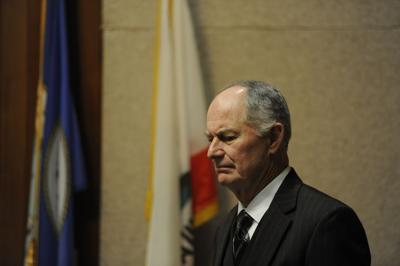
Several days after that ruling, Mozingo announced that he didn’t agree with O’Farrell’s ruling and that he would confer with the Carmel City Council in closed session at 3pm, Wednesday, Sept. 26 to consider filing an appeal.
In the week following that announcement, it appeared a showdown was shaping up after some residents said they would speak before the closed session to urge the council members to not spend any more of the city’s money pursuing an appeal.
The showdown looks like it’s getting moved to Monday, Oct. 1. A little more than five hours before the start of the meeting on Wednesday, City Clerk Tom Graves announced it was cancelled. No reason given, and a call to Mozingo’s office was not immediately returned.
A little later the agenda for the Monday, Oct. 1 meeting was posted to the city’s website, which lists the discussion on the agenda.
Calkins’ attorney, Neil Shapiro, says he may wait to see how Monday’s meeting plays out, but there are limits to his patience.
“I have no qualms asking the court to hold them in contempt,” he says.
Shapiro believes Carmel’s chances of prevailing on an appeal are “very small.”
“I'd be very shocked to see the court of appeal change this,” Shapiro adds.
Mozingo said last week that he was conferring with an appellate court lawyer and that he had talked to the League of California Cities for input about whether or not to appeal.
However, the League’s general counsel, Patrick Whitnell, says they “generally do not advise cities on legal matters.”
Whitnell says he spoke with Carmel Assistant City Attorney Jon Giffen and explained the process for applying to the League’s legal advocacy program, which is geared toward cases at the appellate level where the League believes there is a statewide concern.
Once a city council has decided to appeal a legal decision, it can apply to the League, which, if it decides to become involved, will file an amicus curiae, or “friend of the court” brief in support.
Whitnell calls the case “very interesting,” as it involves an intersection between the state’s open meeting law, the Brown Act, and the Public Records Act. He sees a possible question in whether the records, which were disclosed in a closed-session meeting, are protected by a confidentiality exemption under the Brown Act.
“There may be some interesting intersection from an academic standpoint, but this isn’t the case that’s going to establish it,” Shapiro says.


(0) comments
Welcome to the discussion.
Log In
Keep it Clean. Please avoid obscene, vulgar, lewd, racist or sexually-oriented language.
PLEASE TURN OFF YOUR CAPS LOCK.
Don't Threaten. Threats of harming another person will not be tolerated.
Be Truthful. Don't knowingly lie about anyone or anything.
Be Nice. No racism, sexism or any sort of -ism that is degrading to another person.
Be Proactive. Use the 'Report' link on each comment to let us know of abusive posts.
Share with Us. We'd love to hear eyewitness accounts, the history behind an article.