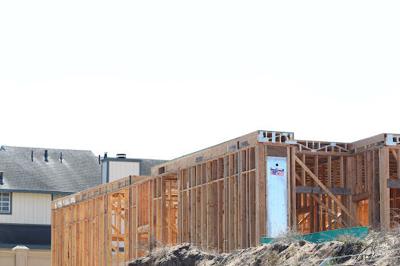

The ongoing housing crisis has the state of California getting serious about cities and counties zoning for more housing units, after years of failing at creating more desperately needed homes. It's now creating discomfort for many local officials who need to add in more units to housing plans—even if it feels like an impossible task—or else face consequences from the state.
For the region of Monterey, Santa Cruz and San Benito counties, the state is requiring 33,274 housing units to be added to plans in the next state housing cycle, 2023-2031, distributed among all of the cities and counties.
In April, tiny Sand City was faced with a Regional Housing Needs Allocation (RHNA) requirement of 260 units for the next cycle, a 141-percent increase over the city's existing housing stock. The 347-acre city is hemmed in by the Coastal Zone and sensitive habitats. City leaders cried foul, appealing their RHNA number to the Association of Monterey Bay Area Governments.
Wednesday night, Aug. 10, Sand City officials laid out their case to the AMBAG Board of Directors, made up of elected officials from each of the cities and counties in AMBAG, including Monterey, Santa Cruz and San Benito Counties.
Some AMBAG board members (comprising city and county officials) were sympathetic to Sand City's plight, others had less patience. All of them are facing stiff required housing numbers. In addition, if Sand City were to win its appeal to lower its RHNA number, the units taken out would be redistributed among all the other jurisdictions, sending their required numbers upward.
Those less sympathetic pointed out to Sand City officials that they could rezone the city's two large shopping centers for mixed-use buildings, meaning shops on the ground floor and housing on top.
AMBAG staff and others also pointed out that Sand City's representative, Mayor Mary Ann Carbone, voted in favor of the process that determined everyone's numbers, as well as in favor of the final numbers.
The AMBAG board voted 11-8 to deny Sand City's appeal.
The second appeal hearing during last night's meeting focused on Greenfield's complaint that it had done so well in the last RHNA cycle ending this year, it was unfair to expect the city to add 730 more units into its housing plan.
In the last cycle, Greenfield zoned for, and oversaw the building of, 96 percent of the state-required number of very-low-income units, 170 percent of low-income homes and 100 percent of the required number of moderate-income homes.
Greenfield Community Development Director Paul Mugan argued, among other things, that the city's utilities are being stretched beyond capacity. Adding more housing would be detrimental to residents, he said.
AMBAG staff replied that the Mugan's arguments did not conform to the narrow set of requirements for an appeal and that Greenfield's conflict was with the state department of Housing and Community Development, not AMBAG.
That vote split AMBAG's board of directors even further. A motion to grant Greenfield's appeal failed 8-9. A subsequent motion to deny the appeal won, 9-8.
Cities and counties have until December 2023 to submit updated housing plans to HCD. If they do not update their plans reflecting the required number of RHNA units they could face fines, lose out on state grants or even lose the authority to make housing decisions.


(0) comments
Welcome to the discussion.
Log In
Keep it Clean. Please avoid obscene, vulgar, lewd, racist or sexually-oriented language.
PLEASE TURN OFF YOUR CAPS LOCK.
Don't Threaten. Threats of harming another person will not be tolerated.
Be Truthful. Don't knowingly lie about anyone or anything.
Be Nice. No racism, sexism or any sort of -ism that is degrading to another person.
Be Proactive. Use the 'Report' link on each comment to let us know of abusive posts.
Share with Us. We'd love to hear eyewitness accounts, the history behind an article.