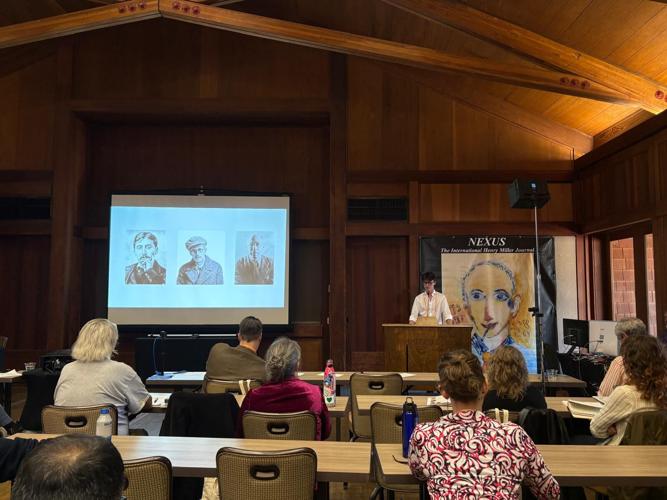




The four-day-long "Henry Miller in the 21st Century" symposium wrapped up on Sunday, Oct. 19. It was an intense ride—days were packed with as many as five sessions, each containing three presentations, not to mention films being shown, a field trip, a play, an exhibit and an informal gathering over drinks. One thing is certain—the Miller community got stronger.
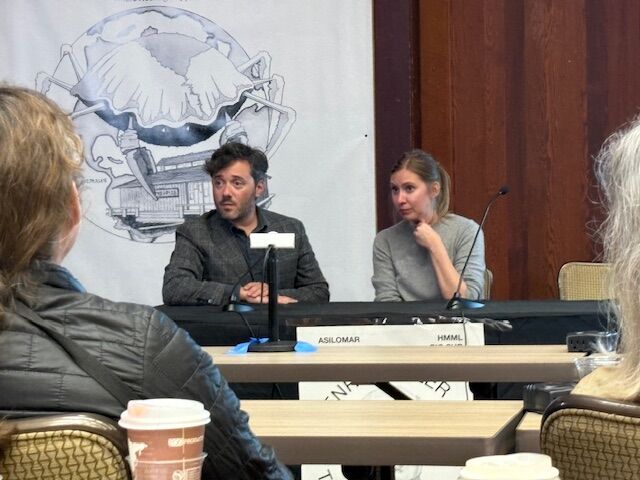
It was Henry Miller Memorial Library Director Magnus Torén who opened the conference, next to James Decker of Nexus: The International Henry Miller Journal and Miller collector and fan William Ashley, the main event planner.
Miller “was not embraced by everyone in Big Sur when he arrived,” Torén said. “For some when he left was a good day,” he continued, referring to Miller’s fame as a provocateur or even a pornographer.
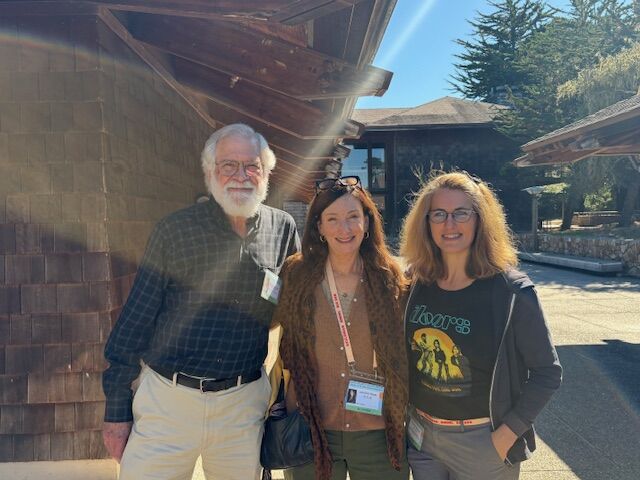
But over the years Torén experienced firsthand how many people were inspired by Miller’s books and his thoughts because people from all over the world kept coming to visit the library and pay homage.
Among them, for example, was Mexican-American Victor Villaseñor, who years after visiting the library became the New York Times-bestselling novelist, but also countless others whose adoration proves that Miller was—and still is—important.

The presentations were impressive, also in terms of the variety of disciplines that were brought to the table, from biographical (under the leadership of Miller’s iconic biographer Mary Dearborn who shared, among other things, what else she would have added to her book on Miller, if she had a chance) to purely philological studies on text (Jakub Kloza on epiphany structures in Miller’s The Colossus of Maroussi).
“It was one of the most exciting and rewarding times of my life,” Dearborn said about her time researching The Happiest Man Alive: A Biography of Henry Miller, 1992. She marveled over the circle of Miller’s friends, acquaintances and publishers, all interesting and original as individuals, which suggests that certain people—individualists—responded to Miller’s work, and humorously insisted that gossip is a biographer’s best friend.

Writer Katy Masuga answered an often asked question: How can one be a feminist and still adore Henry Miller? Scholar Kevin Wolke and writer James Reich confronted Miller with existentialism. His significance in the far East was discussed at length—India, Japan and Vietnam.
Miller was also discussed as a painter—he painted all his life, as it turns out, and paid his bills, medical and dental, with his paintings, which some considered childish and primitive, others smart, playful and clever, as academic Sarah Garland pointed out.
The symposium was the place where Henry Miller’s Paris documentary premiered, a film as much about Miller’s time in Paris, as about the 2014 trip the Henry Miller Memorial Library took to Paris, after taking one to Brooklyn where Miller was raised.
But it was so much more than a scholarly gathering. The audience—some of them Miller lovers who came just to listen—was active the whole time, deliberating along with the presenters on details, recalling anecdotes.
The whole room speculated about gossip that Miller at one point wanted to fake his own death so that he could publish Tropic of Cancer in the United States without legal consequences, or who currently lives at Miller’s old address on Villa Seurat.
After the event, William Ashley marveled over how conducive Asilomar is to a conference. "In the cafeteria, each circle table has 10 seats. It led to many people sitting together that maybe wouldn't have if the tables had been for four or six people," he said. "That led to great conversations."
Henry Miller filled my head to the brim, the many aspects of it. Last night I was falling asleep listening to an audiobook. I was almost on the other side, when an unexpected quote from Miller woke me up and made me sit up in bed.
It was Mark Seem’s introduction to the American edition of Anti-Oedipus: Capitalism and Schizophrenia by Gilles Deleuze and Félix Guattari, who opened his words with a quote from Sexus by Henry Miller: “We must die as egos and be born again in the swarm, not separate and self-hypnotized, but individual and related.”
I guess there is no escape from Miller, the great philosopher of Big Sur, I decided, before I went back to sleep.


(0) comments
Welcome to the discussion.
Log In
Keep it Clean. Please avoid obscene, vulgar, lewd, racist or sexually-oriented language.
PLEASE TURN OFF YOUR CAPS LOCK.
Don't Threaten. Threats of harming another person will not be tolerated.
Be Truthful. Don't knowingly lie about anyone or anything.
Be Nice. No racism, sexism or any sort of -ism that is degrading to another person.
Be Proactive. Use the 'Report' link on each comment to let us know of abusive posts.
Share with Us. We'd love to hear eyewitness accounts, the history behind an article.