
This week intrepid Weekly food contributor Ari LeVaux bravely unravels one of the most sinister myths of Thanksgiving eating: that pie is a requirement.
I know, I know.
He might as well be advocating potato salad and paprika instead of mashed potatoes and gravy.
Or swapping out turkey for tofu.
But there is some sense to his sacrilege, and charisma to his controversial call.
Pudding, as he writes in "Debunking Thanksgiving myths like pie, and proving pudding is boss," is the best part of pie.
Plus it's easier.
And it's actually closer to the soul of the original feast.
In that spirit, here appear two additional pudding recipes to go with the one that ran in print (tapioca coconut pumpkin pudding), from a historic native formula to a modern Thai-inspired fusion treat.
•• Indian Pudding with Apples ••
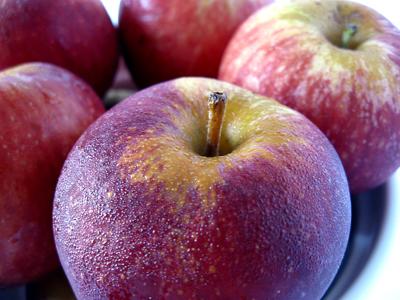
The next recipe comes from an old recipe booklet, Apple Talk, that was published by the Northern Pacific Railroad in the early 1900s, apparently in an attempt to boost its apple shipping business by giving people more ideas for how to eat apples. My copy of Apple Talk was found in an old homestead in Missoula, Montana, beneath a dusty stack of recipes. Apples, like squash, are in season during Thanksgiving.
The recipe for Indian Pudding with Apples has an indigenous sound to it, but there’s nothing Indian about Indian pudding. Still, it’s old, and it’s authentic to the settlers, and it’s cool that this recipe was unearthed in a homestead.
When finished, the pudding will bear a black hue on top, as if you burnt it.
Don’t worry, it’s just the molasses.
“Scald two quarts of sweet milk [also known as whole milk]. Stir in one cup of cornmeal until the mixture thickens. Remove from the fire. Add one and one-sixth cups of molasses, one teaspoonful of salt, one-half teaspoonful each of nutmeg and cinnamon and two cups of sweet apples, pared, cored and quartered. Pour into a deep pudding dish and bake for four hours. [A temperature recommendation here would be nice. I went with 275, and it was perfect.] When the pudding has baked for one and one-half hours, add without stirring one pint of cold milk. Serve with cream and sugar and syrup.”
I’ve played around with variations like doubling the apples or corn meal, which makes it sweeter and thicker, respectively. It’s a forgiving recipe. Maybe not as decadent as your average serving of tiramisu, but it’s better for you, and closer to what may have been served in the original feast, for whatever that’s worth. Like the squash pudding recipe above, this black pudding, as I call it, is exponentially better the next day, so plan ahead.
•• Custard-filled Squash ••
The next recipe comes from the streets of Bangkok, where I noticed, and became enamored with, a treat of winter squash stuffed with coconut custard. It’s not pie, or pie filling, and it comes from the other side of the world. But hey, it’s your Thanksgiving. Do it up.
Ingredients1 medium-sized squash (about 2 1/2 pounds)
1 cup full-fat coconut milk
½ cup sugar. Palm sugar is most authentic, if you can get it, but regular sugar or brown sugar will work.
5 eggs
1 tsp vanilla extract or a handful of pandan leaf (see below)
Instructions
Wash the outside of the squash and cut a ring around the stem, as if you're carving a jack-o-lantern. Remove the top and scoop out the seeds and inner goop.
Heat the coconut milk and sugar on low, stirring until the sugar has dissolved, and allow the mixture to cool to room temperature. Beat the eggs and stir them into the coconut milk. Add a pinch of salt and 1 teaspoon of vanilla extract. (Vanilla is the easy, and perfectly acceptable substitute for pandan leaf, which is what’s traditionally used. Pandan leaf, also called screwpine, has a subtle, exotic flavor and a sweet, comforting aroma. If you can get it fresh, mince, blend or crush it with a mortar and pestle, and squeeze 1 tablespoon of its green juice into the mixing bowl instead of vanilla.)
Pour this mixture into your hollowed-out squash, leaving about 1/2 an inch of space below the cut-out rim. Don't put the top back on. Steam it for 45 minutes to 1 hour in a basket steamer. You might want to set the squash in a bowl for extra support as it steams, so it doesn't collapse when it gets soft.
After 45 minutes, check on it. The custard should have expanded into the top opening. Insert a butter knife deep into the custard. Using the point of insertion as a pivot point, wag the tip of the knife back and forth, like a paddle. If the custard is set, you won't be able to paddle. If the custard is still soupy, there will be little or no resistance against the moving knife blade, which will have a layer of slime on it when removed. Keep steaming, checking every 10 minutes until the custard is set. Better to obsessively check than overcook. Then turn off the heat, and don't disturb the delicate squash until it cools to room temperature.
When cool, gently cut the squash into wedges like a pie, and serve. The juxtaposition of bright orange flesh and white custard is striking. While you appreciate your handiwork, give thanks. And be glad you’re neither a Pilgrim nor a Wampanoag.


(0) comments
Welcome to the discussion.
Log In
Keep it Clean. Please avoid obscene, vulgar, lewd, racist or sexually-oriented language.
PLEASE TURN OFF YOUR CAPS LOCK.
Don't Threaten. Threats of harming another person will not be tolerated.
Be Truthful. Don't knowingly lie about anyone or anything.
Be Nice. No racism, sexism or any sort of -ism that is degrading to another person.
Be Proactive. Use the 'Report' link on each comment to let us know of abusive posts.
Share with Us. We'd love to hear eyewitness accounts, the history behind an article.