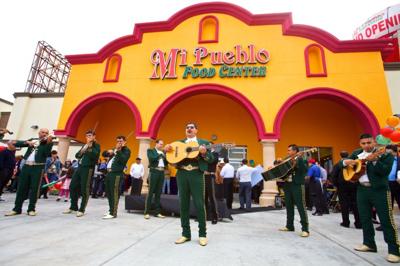
The tangerine and yellow color scheme at Mexican grocery chain Mi Pueblo imply bright and cheery festiveness, but paint can’t cover up the financial reality: This week Mi Pueblo filed for Chapter 11 bankruptcy.
It would be understandable if its customers thought the San Jose-based supermarket chain—which added an outpost in Seaside two summers ago—went bankrupt because of deals like its superb roast chicken dinner (with a whole bird, two tubs of fresh salsas, 16 tortillas and plenty of rice and beans deal for $15). Or the Centenario Añejo tequila for well under $30.
But the company—which some locals feared would bankrupt other Latino-centric stores on the Peninsula—is spinning the bankruptcy as the only way out of a battle with its single secured creditor, Wells Fargo.
And as a positive.
“Filing for bankruptcy gives our company a unique opportunity to reorganize ourselves in a manner that will make us stronger and more competitive,” founder and CEO Juvenal Chávez said in a statement. “I want to assure our loyal customers and team members that Mi Pueblo will continue being open for business.”
Mi Pueblo hasn’t defaulted on payments, according to its case, filed in the San Jose Division of federal bankruptcy court. But Chapter 11 would allow the grocer to lock in utility contracts that allegedly could get suddenly canceled, leaving unrefrigerated food to spoil.
Some creditors quickly reacted to the Chapter 11 filing by submitting letters to bankruptcy court and asking for all of their merchandise in stock to be immediately returned.
The chain estimates both its assets and liabilities are worth somewhere between $10 million and $50 million, according to bankruptcy filings. Sales last year exceed $350 million.
Mi Pueblo’s local debts include $550,000 to La Rosa Tortilla Factory in Watsonville (its single largest unsecured claim) and $210,000 to Pacific Meat Company in Castroville.
“Our long-term goal is to be in every community across the country where there is a large concentration of Latinos,” founder Chavez said when the Seaside spot (well, more than a “spot” at 20,000 square feet) debuted.
Mi Pueblo, founded more than 20 years ago, operates 21 stores with 3,200 employees in Northern and Central California, and in the past four years has distributed more than $750,000 in scholarships to students pursuing higher education, but don’t have legal immigration status. Local stores are in Salinas, Seaside and Watsonville.


(0) comments
Welcome to the discussion.
Log In
Keep it Clean. Please avoid obscene, vulgar, lewd, racist or sexually-oriented language.
PLEASE TURN OFF YOUR CAPS LOCK.
Don't Threaten. Threats of harming another person will not be tolerated.
Be Truthful. Don't knowingly lie about anyone or anything.
Be Nice. No racism, sexism or any sort of -ism that is degrading to another person.
Be Proactive. Use the 'Report' link on each comment to let us know of abusive posts.
Share with Us. We'd love to hear eyewitness accounts, the history behind an article.