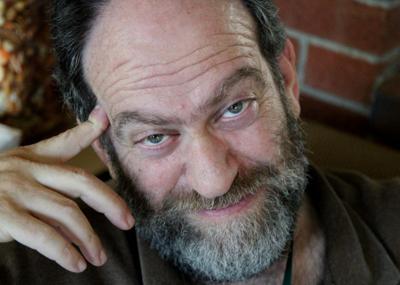

Skepticism is not just a critical eye and a doubtful countenance. It's also a movement of people who greet pseudoscience and the paranormal with, in their words, "scientific evidence rather than faith."
The most famous adherents include Richard Dawkins, Penn & Teller and James Randi. But semi-formal branches have sprung up around the world.
This Saturday, from 10am-4pm, the Monterey County Skeptics are putting on their third annual SkeptiCamp Monterey, day-long presentations and talks about science and critical thinking. Last year it all went down at the Monterey Peace and Justice Center in Seaside, which was a logical pairing of like minds. But the Saturday proceedings are moving to a bigger venue this year—Monterey College of Law's Community Justice Center.
SkeptiCamp will be emceed by Susan Gerbic, a Salinas resident billed as the head of Guerrilla Skeptics on Wikipedia, a debunker of psychics and the paranormal, and a technical consultant for the Committee for Skeptical Inquiry. It's keynoted by Benjamin Radford, author of the book Bad Clowns, in which he investigates the "urban myth" of evil clowns in popular culture.
All of this free exchange of ideas is also, literally, free to attend. And attendees can keep their brain cells charged by purchasing lunch at the event or bringing their own food for thought.
It starts off on a casual note, with a get-together at the Embassy Suites restaurant in Seaside 6:30-9:30pm Friday. Nothing too serious. The next day comes the intellectual expo of reason, from climate change to the paranormal. Here is a preview of three of Saturday's speakers, addressing, via email, one question each related to their field of inquiry.
At 2:40pm, Monterey attorney Robin Welch reviews Supreme Court decisions regarding the separation of church and state.
Question: What should we be paying attention to in the realm of church and state?
Welch: I'm going to be discussing some of the Supreme Court cases regarding separation of church and state and is meant to illuminate the difference between establishment and free exercise. The religious right has been waging war on the wall of separation for a long time. The primary way that they do this is by attempting to confuse the public about the two different first amendment concepts of free exercise and establishment. I'll illustrate this with examples from the so-called "War on Christmas". Free exercise means you can have a nativity scene on your lawn. Macy's can set up a nativity scene in its stores if it so chooses. Establishment means that my children's public school should not have a nativity scene on the premises, unless it is presented alongside a selection of symbols from other religions, because the government would be giving the appearance of favoring or endorsing a particular religion. The religious right takes these establishment issues and reframes them as free exercise issues on purpose. Take a look at the Christmas decorations in your town. Free exercise is in no danger whatsoever, at least not for Christmas. Unfortunately, I expect that the war against the establishment clause will only increase under a Trump administration.
At 10:45am, Gary Griggs, a distinguished professor of earth sciences, director of the Institute of Marine Sciences at UC Santa Cruz and bi-weekly columnist of Our Ocean Backyard for the Santa Cruz Sentinel, will address climate change on the Monterey Bay Area.
Question: It seems like science is going to be under major attack. Again. Why isn't science more compelling and authoritative to so many? What are scientists doing or not doing that's allowing so many to disbelieve their findings even if they don't understand them?
Griggs: There are clearly some large disconnects between science, scientists and the general public, yet scientists in general are held in relatively high regard by most citizens. In a recent survey, 87% of Americans say scientists are of very great or considerable prestige, the highest of any profession, with journalists at 46%. In a survey conducted in mid-2016 by the Pew Research Center, 76% of U.S. adults say they have a great deal or a fair amount of confidence in scientists to act in the best interests of the public. This drops to 52% for religious leaders, 38% for the news leaders, and 27% for elected officials.
It’s important to understand where the general public or the average citizen gets their news or information. Using one good example, American’s perceptions about anthropogenic global warming differ in the extreme from that of scientists: 97% of climate scientists are in agreement that humans are the primary cause of the global warming and climate change we are experiencing - and rarely do 97% of scientists agree on anything- yet 55% of the public think that the science is unsettled or don't know (including the two people we just elected as President and Vice-President).
The news media quite often presents global warming or climate change as a debate among scientists, a controversy or open question among experts, when in reality the disagreement is being generated by a few vocal and sometimes unqualified outsiders, giving one denier who may or may not be a credible climate scientist the same weight as thousands of scientists. It is perhaps not surprising that there is a disconnect between scientists and the public.
There are three quotes from three very different but equally respected people that are appropriate here:
Neil De Grasse Tyson- Astrophysicist and Science Communicator- “The good thing about science is that its true, whether or not you believe it”.
Daniel Patrick Moynihan – four term New York Senator- “Everyone is entitled to their own opinion, but not their own facts”.
Sir Winston Churchill- former Prime Minister of the United Kingdom- “The best argument against Democracy is a five-minute conversation with the average voter”.
Science, whether gravity, photosynthesis, human evolution or climate change is not an option, we don’t get to vote on it, its true whether or not we believe in it.
Several other factors I believe add to the disconnect between science and society include:
1. Scientists tend to speak to their colleagues or when they communicate to the public, which for most scientists is rare, they think intellectually, or about facts and use rational arguments, when in fact the public more often responds to emotional issues, that hit at the heart or the gut.
2. Most scientists are uncomfortable with explaining their science to the public. They don’t get rewarded for this, and in fact may feel that this somehow lower or diminishing their stature as a scientist- this is most unfortunate.
3. Scientists look at their work in depth and focus on details and see journalists as superficial, sensationalists, focused on controversy and tension, insufficiently concerned with accuracy. On the other hand, many journalists view scientists as boring, hair-splitting, overly interested in process, caveating things to death, unable to separate the forest from the trees, and users of unintelligible jargon.
At 11:40am, North Monterey County resident Glenn Church, who blogs on www.politicalskeptic.com, will talk about the recent presidential election and the role of fake news in it.
Question: There are a many people trying to analyze how Donald Trump won the election. What is your theory? And what theories would you dismiss?
Church: Donald’s Trump election was an aberration, a perfect storm of events occurred that enabled him to be elected despite receiving fewer votes than Hillary Clinton. Trump did bring out new voters. However, many of these voters did not support Trump, but voted to oppose him. Some states, such as California and Texas, had a significantly higher number of votes for Clinton in 2016 over what Obama received in 2012. The extra votes did not change anything because these were not swing states. Clinton won California by a larger margin than Obama and lost Texas by a smaller one. In places like Michigan, Ohio and Wisconsin voter turnout was lower or far below the average voter turnout for the rest of the nation. (Voters turned out at a 6% higher clip than in 2012). The voters who didn’t vote were generally Democratic voters in these states. This led to Clinton’s defeat in the Electoral College. She lost the Presidency by 77,000 votes in the states of Wisconsin, Michigan and Pennsylvania. It was not that Trump was an extraordinary campaigner or had the pulse of the country. His favorability ratings prior to the election was only 38%. Voters were not looking for massive change or repudiating Democrats and the Obama administration. The Republicans lost seats in the Senate and House. Again, Trump didn’t even get a plurality. Trump simply had one of the greatest runs of luck ever by a Presidential candidate, plus a few fortunate events and quirks that I will discuss further during my talk.
What does it say about our country? It does not say as much as many would like to read into it. I emphasize the aberration, and that Trump won only because of the archaic peculiarities of the Electoral College.
SkeptiCamp runs 10am-4pm Saturday, Jan. 7, at Monterey College of Law, 2620 Colonel Durham St., Seaside. Free; prices for lunch vary. 214-9466, MCSkeptics@gmail.com.


(0) comments
Welcome to the discussion.
Log In
Keep it Clean. Please avoid obscene, vulgar, lewd, racist or sexually-oriented language.
PLEASE TURN OFF YOUR CAPS LOCK.
Don't Threaten. Threats of harming another person will not be tolerated.
Be Truthful. Don't knowingly lie about anyone or anything.
Be Nice. No racism, sexism or any sort of -ism that is degrading to another person.
Be Proactive. Use the 'Report' link on each comment to let us know of abusive posts.
Share with Us. We'd love to hear eyewitness accounts, the history behind an article.