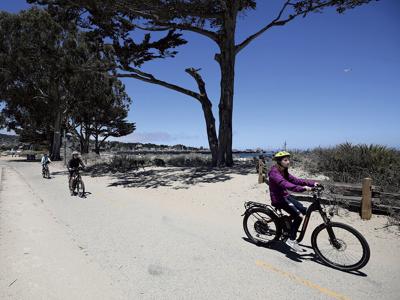
When e-bikes came on the scene about 10 years ago, there was a mixed response. Some bicycle loyalists scoffed, claiming e-bikes weren’t true bikes, and governments didn’t quite know how to handle them, at first banning the motor-assisted bikes from trails. Some embraced the bikes, especially people with physical limitations who had given up on traditional cycling. The motorized assist was just what they needed to get back on a bike. Sales slowly climbed until the pandemic when they exploded: Sales between 2019 and 2020 shot up 145 percent. Using e-bikes for basic transportation in addition to recreation suddenly made sense to a wide array of people. And thanks to the surge in interest, manufacturers are building e-bikes at multiple price points starting at around $600 – plus rebates of up to $1,000 are available through Central Coast Community Energy. An additional $100 is available if you purchase from a local bike shop. Visit 3cenergy.org/electrifyyourride for details. There are three classes of e-bikes: Class I, Class II and Class III. The average top speed of e-bikes is 20 miles per hour, but Class III bikes are the zippiest, at up to 28 mph and as such are not legal on bike trails, including the Rec Trail. Whatever your speed, make sure to wear a helmet. [PM]


(0) comments
Welcome to the discussion.
Log In
Keep it Clean. Please avoid obscene, vulgar, lewd, racist or sexually-oriented language.
PLEASE TURN OFF YOUR CAPS LOCK.
Don't Threaten. Threats of harming another person will not be tolerated.
Be Truthful. Don't knowingly lie about anyone or anything.
Be Nice. No racism, sexism or any sort of -ism that is degrading to another person.
Be Proactive. Use the 'Report' link on each comment to let us know of abusive posts.
Share with Us. We'd love to hear eyewitness accounts, the history behind an article.