
It isn’t uncommon to see parents and their children at Mexican markets walking down the aisles speaking Mixteco, Triqui, Chatino or any of the other indigenous languages of Mexico.
Many of them moved here seeking a better life for themselves and their families. For generations they have cultivated the land, and they continue to do so. But other tasks, such as getting a driver’s license, seeking medical care and interacting with a child’s teachers are not as routine for those who don’t also speak English or Spanish.
Three decades ago, leaders from Frente Indígena de Organizaciones Binacionales, a binational organization based in California, founded El Centro Binacional Para El Desarrollo Indígena Oaxaqueño – or The Binational Center for Oaxacan Indigenous Development – with a broad goal of supporting and empowering such communities.
“They saw a lot of injustices around the health system,” explains Sarait Martinez, CBDIO’s executive director. “We have stories of people who were sent to jail because who didn’t speak the language, who suffered discrimination, that were not treated right.”
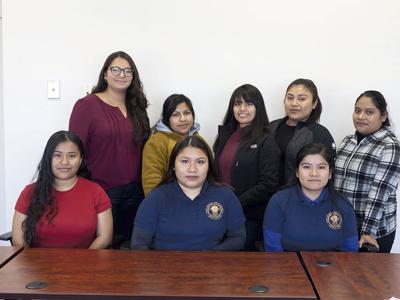
The organization offers a range of services, including translation, as well as the interpretation of documents on topics such as immigration, legal services, labor rights and health care. Volunteers work with local facilities like Santa Rita Unified School District and Natividad Hospital to aid understanding. They also organize civic participation groups and cultural workshops. CBDIO accomplishes this through some 30 people working in four offices in three counties – Monterey, Madera and Fresno. Combined, the team is fluent in six indigenous languages and 13 unique variants of Mixtec, Zapotec, Tlapaneco, Amuzgo, Chatino and Triqui.
During the pandemic, CBDIO’s services stood out. They created videos to inform the community about Covid-19, available resources and vaccination programs. During this time, the organization distributed $4.5 million in aid and opened a location in Salinas.
Since then, the group has been active in Salinas. CBDIO has encouraged parents to speak at City Council and SRUSD meetings. Concerned parents demanded better signage and lights outside of Santa Rita Elementary School. Parents also voiced concerns about bullying and discrimination, resulting in the creation of a Mixteco after-school program run by CBDIO.
Carlos De la Cruz, a Mixteco farmworker, was one parent who spoke up at the meetings. De la Cruz says his 7-year-old daughter, Ana Lucia, faced bullying and that he feels more comfortable that the school will have trilingual workers to help the kids and the parents. Martinez says the goal of the Mixteco after-school program is to create a sense of belonging and pride.
“I arrived here, and I didn’t have enough resources,” says Maricela Ramirez Rivera, a CBDIO Mixteco interpreter, adding that when she moved to the U.S., she wished for the same level of support. “I didn’t know where to go and when you go [ask for help] people look down on you.” Ramirez Rivera says she now feels proud whenever she helps someone or when people get involved in the community. “It’s a significant achievement because you don’t see a lot of indigenous people going to the council.”
When the organization started, most workers were bilingual. Now they also have trilingual staff. Having English speakers on board has extended CBDIO’s scope. They have added training on labor and human rights, but they have also organized cultural events like la Gueleguetza, an annual celebration of tradition and cultural diversity.
In December, CBDIO celebrated its 30th anniversary in Fresno and over 500 people attended the festivities. A second celebration is planned on Thursday, Jan. 11 in Salinas at the CSU Monterey Bay @ Salinas City Center.
Translators Maricela Ramirez Rivera and Teresa Merino Ruiz contributed to this report.


(1) comment
"Indigenous languages of Mexico"
Welcome to the discussion.
Log In
Keep it Clean. Please avoid obscene, vulgar, lewd, racist or sexually-oriented language.
PLEASE TURN OFF YOUR CAPS LOCK.
Don't Threaten. Threats of harming another person will not be tolerated.
Be Truthful. Don't knowingly lie about anyone or anything.
Be Nice. No racism, sexism or any sort of -ism that is degrading to another person.
Be Proactive. Use the 'Report' link on each comment to let us know of abusive posts.
Share with Us. We'd love to hear eyewitness accounts, the history behind an article.