It’s easy to take ketchup for granted. To just assume it will always be there. But once our all-American burger and fries arrive, if we don’t have ketchup we have a problem.
Of course there are other uses for ketchup, many of which are in the form of hacks and secret family recipes, where a little ketchup here or there goes a long way, and nobody notices it – in the beef stew, borscht, Bloody Mary or beyond. Ultimately, ketchup is a low-fuss steak sauce for the common people who take their meat in burger and dog form. That same thick, tangy sweetness makes it a great dipping sauce for the people’s preferred deep-fried potatoes. The Reagan Administration once called ketchup a vegetable during a food fight over school lunch programs. Thankfully that did not fly, although they may have had a point. My homemade ketchup is absolutely a vegetable.
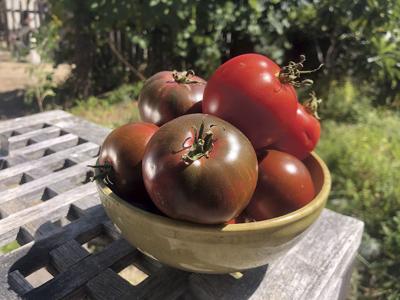
Homemade ketchup is as much better than Heinz as Heinz is better than all the other commercial brands. And this time of year, when tomatoes are overflowing in Monterey County gardens and markets, a batch of ketchup is a good allocation of this resource. A modest batch can last a year.
I first made ketchup by following a recipe in the classic Stocking Up food preservation manual. Until then, I’d never thought about the delicate layers of flavor it delivers. Sweet and sour are the dominant flavors, but the condiment has many more. A touch of spice. A touch of umami from the tomatoes, a hint of bitterness from the garlic and paprika, and aromatic spices like clove and cinnamon. Since then I have made the recipe my own. The concept is flexible. Taste and tweak as you go. If you follow my recipe, you’ll end up with a sauce so thick and meaty you won’t even need a burger.
Every fall when I do my big tomato processing push, I make sure to do a batch of ketchup alongside my pizza and pasta sauces. If I have the time, I’ll start by halving the tomatoes and broiling them cut-side down on cookie sheets until the skins blacken. I let them cool and then pluck off the stiff skins before whizzing the broiled tomatoes in the blender.
You don’t need to go that far, but you do have to get the seeds out. I use a mesh strainer and a rubber spatula to smear it through. My kids, impressed with the smoothness, now demand that all of my red sauces be equally smooth. But none are as quietly complex as my humble pot of ketchup.


(0) comments
Welcome to the discussion.
Log In
Keep it Clean. Please avoid obscene, vulgar, lewd, racist or sexually-oriented language.
PLEASE TURN OFF YOUR CAPS LOCK.
Don't Threaten. Threats of harming another person will not be tolerated.
Be Truthful. Don't knowingly lie about anyone or anything.
Be Nice. No racism, sexism or any sort of -ism that is degrading to another person.
Be Proactive. Use the 'Report' link on each comment to let us know of abusive posts.
Share with Us. We'd love to hear eyewitness accounts, the history behind an article.