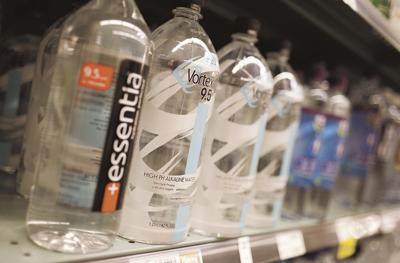
We live in the heyday of designer bottled waters. Whether the water is filtered to maximum purity or flavored, sweetened, electrolyte-infused and vitamin-enriched into a “sports drink,” the consumer has never enjoyed more options. A rising star in this field, in terms of sales growth, is alkaline water. With various bottled brands available in stores, alkaline water is also on tap in trendy water bars, and can be made at home with special machines. Alkaline water is intended to make the body less acidic, in hopes that this will help ward off a range of maladies, from annoyances such as heartburn or indigestion to serious issues like osteoporosis, muscle loss and heart disease.
The human body’s pH is should be slightly alkaline (it varies from organ to organ), but many life circumstances can push the pH to the acidic side of neutral. Medical conditions, like diabetes or kidney problems, as well as lifestyle choices, such as diet and exercise (or lack thereof) can impact the body’s pH level. If you’re constantly acidic, a condition known as chronic acidosis, this can be a cause or symptom of any number of serious conditions, including those named above.
Alkaline bottled water can indeed make your pH less acidic, according to research at Montana State University. The water being tested, Akali brand alkaline spring water, raised the blood and urine pH of the subjects, making them less acidic than the control group, which drank Aquafina. The same lab ran another study that determined Akali rehydrated subjects more effectively, after a grueling bike workout, than a control group that drank Aquafina.
Aquafina was the perfect control against which to compare the spring water, according to Dan Heil, who authored both studies: “It’s just tap water that goes through a process to strip absolutely all minerals and electrolytes.”
Akali brand water comes from a spring in Washington’s Cascade Mountains. The company that produces it had hired Heil and his lab to test the impact of Akali on body pH and hydration status. The results were compelling enough to Heil that he published them, but with that being said, he’s cautious about the idea of attempting to manage one’s pH with water, he says. “In order for the body to realize meaningful impact, it’s got to be a lot of water.”
And unless you’re exercising regularly, drinking too much water can be a bad thing. If a non-exercising adult living in a moderate climate (as opposed to hot and humid climate that causes them to sweat a lot) starts drinking 6 liters of water a day, Heil says, “That’s going to have a negative impact on the body. People who hyper-hydrate, who drink too much water, end up flushing minerals and electrolytes out of the body, because the body can’t do anything with all of that water.”
There’s no doubt that having a lower-than-normal pH in one’s body – being more acidic, that is – is problematic. And staying on top of one’s pH, Heil says, is worth doing, as it can tell you a lot. The best way to mind your pH is to test your urine with pH test strips, which are available at any pharmacy. The reading can vary noticeably throughout the day, depending on what you’ve recently eaten and done. Heavy exercise will cause a short-term acidification because your blood absorbs carbon dioxide, but that will quickly normalize. Meanwhile, exercise stimulates the appetite, Heil says, and what we eat offers a better opportunity to manage one’s pH.
“Food is going to have a far, far greater impact on the body than water,” he said. “A diet high in fruits and vegetables is well known to have an alkaline impact on the body. A diet high in meat is going to have a clear acidic influence.”
This isn’t to say that meat is necessarily bad, he said, but rather, it creates acidity as a result of how it is digested. As long as the vegetables outweigh the meat and fat, and processed carbohydrates and sugars are kept to a minimum, the body’s pH should take care of itself.
Meanwhile, drinking bottled alkaline water can get expensive, and that cash could buy a lot of veggies. But if you’re determined to medicate with alkaline water, make sure that the water you’re drinking is, in fact, alkaline.
“Alkalinity in water can have the tendency to dissipate very quickly after it’s alkalized,” Heil warned. “So unless it’s a stable pH you don’t know if you’re drinking alkalized water. It may have been alkalized when it came out of the machine, or when it was bottled, but it may not be alkalized when you drink it.”
This brings up an important distinction between two basic types of alkaline water. Some is machine-manufactured, often by passing through an electric current. And some alkaline water on the market comes out of the ground that way and is bottled. Alkaline spring water is rich in minerals, which keep the water at a stable pH.
If you really care about your pH level – and you should – you might want to invest in pH test strips. Perfectly Pressed Juice in Salinas and Seaside even offers them as a complimentary opportunity to investigate (along with alkaline water, of course).
In addition to testing yourself, the strips could also be used to check the pH of whatever water you drink. But whatever the numbers say, odds are you should eat more vegetables anyway.


(0) comments
Welcome to the discussion.
Log In
Keep it Clean. Please avoid obscene, vulgar, lewd, racist or sexually-oriented language.
PLEASE TURN OFF YOUR CAPS LOCK.
Don't Threaten. Threats of harming another person will not be tolerated.
Be Truthful. Don't knowingly lie about anyone or anything.
Be Nice. No racism, sexism or any sort of -ism that is degrading to another person.
Be Proactive. Use the 'Report' link on each comment to let us know of abusive posts.
Share with Us. We'd love to hear eyewitness accounts, the history behind an article.