
Everybody poops, as a popular kids book opines, and as it turns out, poop is a key to understanding just how healthy we are – or not.
A large-scale study published in 2019 called “The British & American Gut Project” analyzed over 10,000 samples of people’s poop and found that fiber is important, as has been long known. But the variety of fiber is perhaps even more important. The larger variety of plants people eat – fruits, vegetables, beans, legumes, herbs and spices – the healthier their guts, which leads to better health overall.
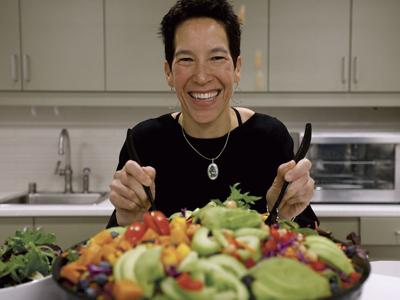
Queue the rush to popularize a scientific conclusion and turn it into a wealth of articles, books and eating plans. Search “eat 30 plants a week” and up pops a long list of articles like “Supercharge Your Gut! The Eat 30 Plant Food Challenge,” and “Plant Points: How to Eat 30 a Week and Why.” It’s been called one of the biggest health trends of 2024, and it sounds daunting at first.
“My god, I can’t get my patients to eat five plants a day,” Dr. Joanna Oppenheim, medical director of the Lifestyle and Metabolic Program at Salinas Valley Health, remembers thinking.
Eating a wide variety of plants helps feed the trillions of bacteria in the gut, which aids digestion and strengthens the immune system. “We call it the microbiota, which is slang for everything in your large intestine,” Oppenheim says. “The healthier the microbiota, the healthier the person is.” Not just physically, but mentally as well.
Eating more plants means consuming more fiber, Oppenheim says, and she’s a big fan. “Fiber is the fuel for your microbiota. If your microbiota is more fed, that in turn will improve your immunity, your hunger balance and your overall health.”
Unfortunately, fiber is what most adults and children lack. The goal is consuming 30 grams of fiber a day, but according to the American Heart Association, the average American only consumes half that. If everyone in the country consumed 30 grams a day, “100 percent of the population would be healthier,” Oppenheim says.
Another reason Oppenheim is a big fan of fiber is because it requires a lot of work to digest by the gastrointestinal tract. The result is the food stays in your gut longer, which makes you feel fuller longer. That in turn could lead to weight loss or maintaining a healthy weight.
In addition, because fiber isn’t fully digested, it helps clean things out. “It’s like a Brillo Pad, it’s scrubbing your intestines,” Oppenheim says. “It will keep the inside linings of your intestines really, really clean.” Studies have shown that consuming an adequate amount of fiber can prevent colon cancer and other ailments. “Fiber is completely underrated in my opinion,” she says.
Getting more fiber can be done easily by eating high-fiber plant foods like beans and legumes, Oppenheim says. “They are a big bang for your buck,” she says. A cup of cooked lentils contain 15 grams of fiber, half of the daily requirement. Putting lentils on a salad can instantly boost how much fiber you’re eating.
A cup of homemade, cooked oatmeal with a cup of berries can yield around 10 grams of fiber – add nuts or seeds for more fiber and protein. A handful (say, 23) of almonds as a snack equals around 6 grams of fiber.
“It’s not that hard if you’re thoughtful about it,” Oppenheim says.
To increase the variety of fiber – achieving those 30 plants a week – the doctor suggests tallying the number of plants you’re already eating and then aim for adding one to two new plants a week. For more ideas of different plants to eat, take a look at frozen foods and vegetables. They’re frozen at their peak, won’t spoil quickly like fresh produce and are relatively inexpensive. It’s a good way to try new foods, Oppenheim says.
People already eating a plant-based diet may have an advantage, but remember, not all plant-based foods are equal. “An Oreo is plant-based,” Oppenheim points out. The cookie has zero fiber, and is loaded with sugar and additives.
“It’s really important to understand that a fundamental part of health is actually very easy,” Oppenheim says. “Eat real food, food that hasn’t been created in a factory.”


(0) comments
Welcome to the discussion.
Log In
Keep it Clean. Please avoid obscene, vulgar, lewd, racist or sexually-oriented language.
PLEASE TURN OFF YOUR CAPS LOCK.
Don't Threaten. Threats of harming another person will not be tolerated.
Be Truthful. Don't knowingly lie about anyone or anything.
Be Nice. No racism, sexism or any sort of -ism that is degrading to another person.
Be Proactive. Use the 'Report' link on each comment to let us know of abusive posts.
Share with Us. We'd love to hear eyewitness accounts, the history behind an article.