Celia Jiménez here, thinking that speaking the same language isn’t always enough to communicate effectively. There are also nuances that include showing respect, cultural awareness and empathy.
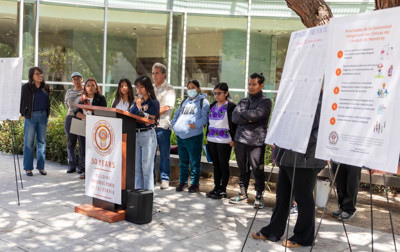
This morning, July 8, El Centro Binacional para el Desarrollo Indígena Oaxaqueño held a press conference outside the Monterey County Board of Supervisors chambers demanding changes in the local health system for the well-being of Mexican indigenous communities.
“We have over 500 signatures of support from indigenous farmworkers that couldn't be here, but wanted to make sure that they were represented today,” said Sarait Martínez, CBDIO's executive director.
The organizers shared stories about indigenous patients suffering discrimination, including the lack of access to interpretation services or being retaliated against by having their appointments changed or canceled if they complain.
In a statement, the Monterey County Health Department said it is committed to delivering high-quality care for all, including at the Alisal Health Center, a clinic that provides primary care for low-income individuals.
“To ensure meaningful access for our indigenous-speaking community members, we maintain a longstanding partnership with Natividad to provide indigenous language interpretation services. We also look forward to deepening our collaboration with CBDIO to strengthen culturally and linguistically appropriate services, ensuring that our indigenous-speaking patients feel heard, respected and well-supported while receiving care,” the statement said.
The press conference took place a few hours before the supervisors were set to receive a preliminary report on a pilot program at the Alisal Health Center in East Salinas to improve health care access for indigenous-speaking patients.
“Staff recognize the urgent need to improve language access and delivery of culturally appropriate services for our indigenous communities,” the report said.
According to the Alisal Health Center, in 2024 it served 11,062 people and only 29 reported speaking either Mixteco or Chatino.
For about a year, CBDIO and members from the Chatino and Mixteco communities have worked hand in hand to develop a list of priorities to improve their experience while receiving health care.
Those include hiring community workers who are proficient in indigenous languages, providing cultural awareness training for staff, providing informational documents and paperwork in indigenous languages and creating an indigenous community committee to oversee provided services. (Some of their demands are similar to the actions outlined in the pilot’s preliminary report, which was requested by Supervisor Luis Alejo.)
The pilot program is in its early stages of development. This afternoon, the supervisors provided direction to staff, and further details are expected to be discussed in September.


(0) comments
Welcome to the discussion.
Log In
Keep it Clean. Please avoid obscene, vulgar, lewd, racist or sexually-oriented language.
PLEASE TURN OFF YOUR CAPS LOCK.
Don't Threaten. Threats of harming another person will not be tolerated.
Be Truthful. Don't knowingly lie about anyone or anything.
Be Nice. No racism, sexism or any sort of -ism that is degrading to another person.
Be Proactive. Use the 'Report' link on each comment to let us know of abusive posts.
Share with Us. We'd love to hear eyewitness accounts, the history behind an article.