
Who knew legal wrangling over what a judge meant or didn't mean could create such a he-said he-said drama.
There was a private meeting scheduled for March 3 between attorneys and officials representing the Monterey County Water Resources Agency (MCWRA) and officials from the Central Coast Regional Water Quality Control Board, at the water board's HQ in SLO.
Then in a court hearing on Feb. 17, Downey Brand attorney Nicole Granquist, repping MCWRA, said everyone could join in.
"This is a meeting that's open to the public," she told Monterey County Superior Court Judge Tom Wills.
That persnickety psuedo-invitation was responsible for derailing the meeting altogether.
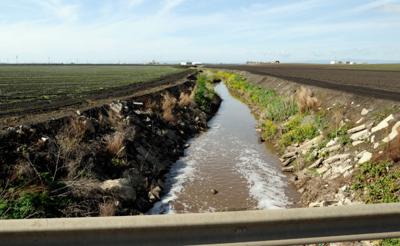
Here's the chronology, going back to 2010: Nonprofit Monterey Coastkeeper sued MCWRA, arguing the agency should be considered a waste discharger, required to clean up pollution flowing into the Monterey Bay through the Blanco Drain and the Reclamation Ditch.
MCWRA has steadfastly maintained a position that nope, they're just responsible for doing maintenance, but the actual pollution in the water—not theirs.
Finally, after four years of failed settlement talks and tedious court proceedings, Regional Water Board Executive Officer Ken Harris wrote Judge Wills a letter that seemed to decide the matter:
"[We have] determined that MCWRA is a waste discharger and must file a report of waste discharge…for its activities in and around the Reclamation Ditch and Blanco Drain watersheds," Harris wrote in a Jan. 7 letter to Wills.
That brings us to the Feb. 17 meeting where Granquist asked Wills to hold off on ruling. MCWRA had one more shot at pleading its case to Harris and the Regional Board, she said, with the planned March 3 meeting.
Wills was pretty clear on one point: If that meeting yielded no changes, Harris' letter meant the court ruling would be in favor of Monterey Coastkeeper.
"There's a good chance that if nothing concrete has occurred by the date we next convene, the court will grant some form of preliminary relief [to the plaintiff]," Wills said.
The next court date is March 19, making MCWRA's plea for face time with Harris particularly urgent.
But here's where everything started to break down.
Granquist said plainly the meeting was open to the public, so members of the public—namely, this reporter and Coastkeeper Director Steve Shimerk—started asking to attend.
Water Board Executive Officer Ken Harris delivered a resounding no to the Weekly:
"We are still in the process of clarifying the court's ruling regarding next week's meeting, and you're still not invited," he said.
The Weekly wasn't the only one feeling left out. A series of letters and emails exchanged between Shimek, Granquist, Harris and Wills over the past week show a lot of effort went into deciphering what, exactly, Wills meant in court, and whether Coastkeeper should really be allowed to attend.
The Weekly obtained copies of the exchanges to piece together the bizarre timeline that led to canceling the private March 3 meeting.
It started with the aforementioned call from the Weekly, asking to attend the meeting, and letter from Shimek to the Water Board asking to attend.
Then Feb. 27, Water Board Senior Staff Counsel Tamarin Austin wrote to Wills seeking clarification, and basically begged him to disinvite Shimek.
“The Central Coast Water Board has a transparent decision-making process, but that does not mean all interested persons participate in all formative, informal meetings with staff," Austin wrote.
"As background, it is the Central Coast Water Board’s standard approach for staff to begin the permitting process by meeting with a discharger in person and not in a public forum. This encourages candid conversations and a collaborative approach.
“Water board staff view next week’s meeting as a brainstorming session, intended to discuss a variety of regulatory and voluntary options for the Agency to consider.”
Shimek wasn't having the "voluntary" part, nor was he satisfied with being left out, after the open court conversation.
While Wills never said explicitly that the notorious March 3 meeting was to be open to the public, he asked about the location and time of the meeting.
The lack of clarity led to the he-said he-said differences of opinion. Shimek's interpretation: He should attend the meeting.
Granquist's interpretation: MCWRA was required only to keep Coastkeeper posted on progress and copied on documents, but not to invite them to the private meeting.
Besides, the Water Board wasn't having it anyway—their regulatory process includes these private, closed-door meetings.
The debate continued over whether Shimek could attend. He wrote to Harris March 1, "The March 3 meeting is being held at MCWRA's request and MCWRA has said the meeting is public.
"The [Regional Water Board] has clearly indicated that Coastkeeper is not invited. Judge Wills has just as clearly indicated, based on MCWRA's statements, we should attend and participate.
"Coastkeeper is in an awkward position."
No kidding.
Harris wrote back to Shimek Monday March 2, at 1:19pm: "Regional Water Board staff are concerned that having an 'open' or 'public' meeting at this juncture is simply not a productive use of time," he wrote.
The clock was ticking.
MCWRA and Coastkeeper decided Judge Wills himself should be the tiebreaker. So they scheduled a conference call for the afternoon of March 2 with Wills, requesting he clarify his order: Who was actually invited to the super-secret meeting?
The opposing teams called in. But the judge never did.
Harris emailed MCWRA and Coastkeeper at 5:01pm March 2, the day before the scheduled meeting: "By my watch is is 5:00pm PST. Regional board staff will not attend Tuesday’s meeting."
And thus, the meeting did not happen.
Missing it is a big deal: It effectively seals MCWRA's fate in court at the next scheduled appearance, March 19, when Wills is likely to rule that yes, they are a polluter and required to clean up Salinas Valley waters.
But even that might stay as murky as the Rec Ditch.
At the February hearing, Wills presented this crystal-ball insight:
"Nobody has said they're going to appeal a decision of the Regional Board to the State Board. But I have a feeling that as surely as night follows day, that's going to happen."


(0) comments
Welcome to the discussion.
Log In
Keep it Clean. Please avoid obscene, vulgar, lewd, racist or sexually-oriented language.
PLEASE TURN OFF YOUR CAPS LOCK.
Don't Threaten. Threats of harming another person will not be tolerated.
Be Truthful. Don't knowingly lie about anyone or anything.
Be Nice. No racism, sexism or any sort of -ism that is degrading to another person.
Be Proactive. Use the 'Report' link on each comment to let us know of abusive posts.
Share with Us. We'd love to hear eyewitness accounts, the history behind an article.