
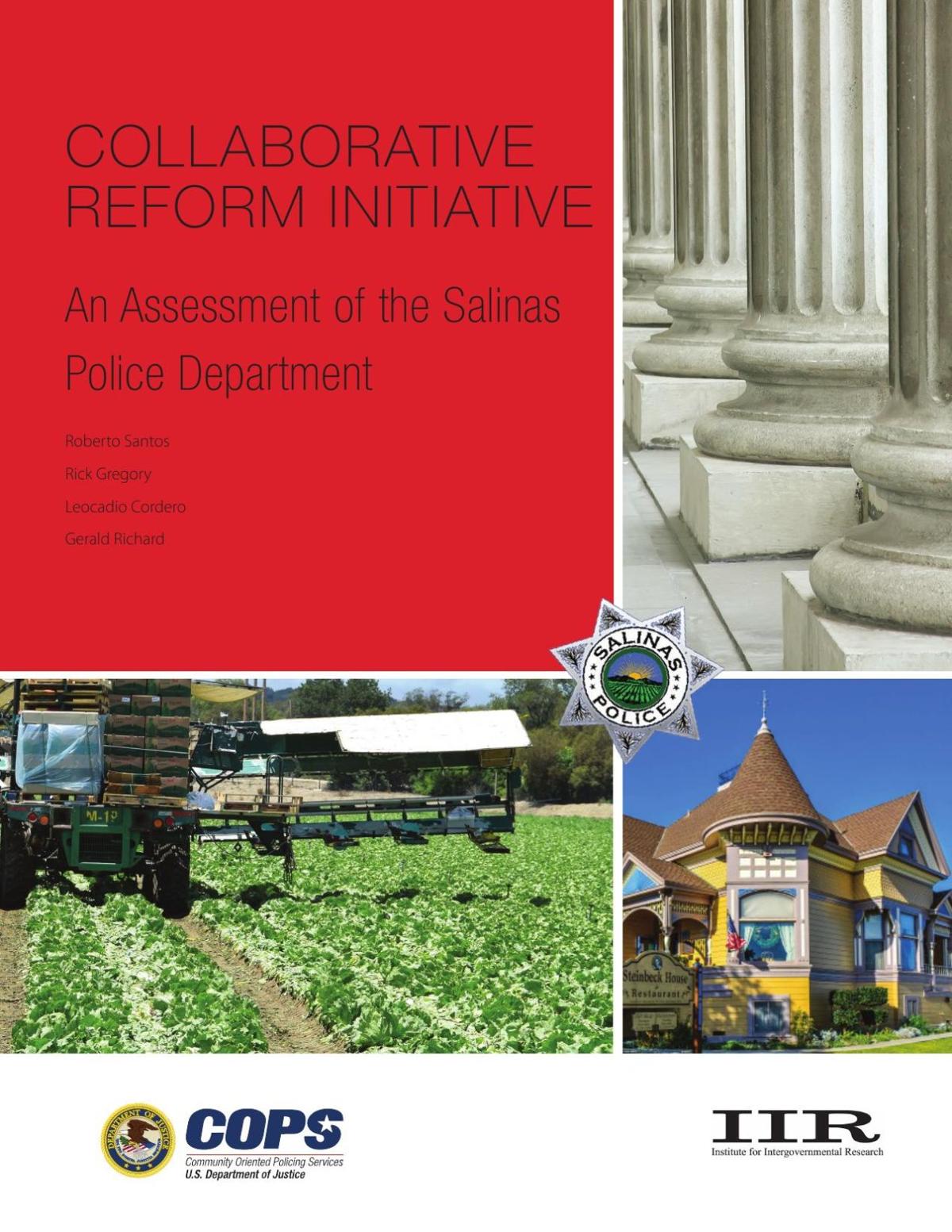
You don't need to read the U.S. Department of Justice's 192-page report to know that the relationship between Salinas residents and Salinas cops has been frayed to a point of breaking.
But the report, released Tuesday, provides a far greater level of scrutiny and detail than has been part of community dialogue, as well as 110 specific recommendation for how Salinas PD can improve.
In the midst of some of Salinas PD's darkest days, Chief Kelly McMillin asked the U.S. Department of Justice to come in and take a look around and recommend what SPD could do better.
That DOJ review, through the DOJ's Office of Community Oriented Policing Services (COPS), began a year ago when COPS Director Ronald Davis came to Salinas to begin meetings with police officers and the public at a community forum.
At that forum, on March 12, 2015 at Sherwood Hall, Davis said, "How you can see whether or not I’m for real? Eight months from now, see if the assessment was objective and independent."
That assessment was released today, with findings and 110 recommendations, some small and some bigger. The DOJ will revisit those recommendations—and the progress toward meeting them—in six months, and again in a year.
"Our report provides Chief McMillin, his department, and the community they serve hard truths about deficiencies that exist within the police department," Davis wrote in the introduction.
For some context: From March to July of 2014, Salinas police shot and killed four men—Carlos Mejia, Frank Alvarado Jr., Osmar Hernandez and Angel Ruiz—all Latino. These shootings coincided with the rise of the Black Lives Matter movement and growing national discussion about how policing practices affect people of color. In Salinas, that dialogue happened in front of City Hall and in marches all across town and at vigils on street corners where the men had been shot.
In one protest, an onlooker was fatally shot; as a police officer administered CPR, a protester threw a bottle and struck him in the head.
In all of the four cases, investigations led to no criminal charges against the police officers involved.
But rather than re-investigate those cases, the COPS initiative looked deeper at the fabric of SPD and how it operates.
In the past year, DOJ officials interviewed more than 100 SPD members, including civilian staff, more than 175 community members through forums, over coffee and at nonprofit offices, and participated in 17 ride-alongs with police.
They reviewed many pages of internal department policies and investigation findings, creating numerous data tables and charts.
The DOJ examined data on use-of-force incidents involving 554 people from 2010-15, and then closely examined a randomly selected stack of 47 investigation files for more detail.
They found that noncompliance is the most common reason given for use of force, accounting for 23.6 percent of occasions from 2010-15. Physical force, like kneeing, pushing and kicking suspects down, was the most common method, at 47.6 percent; Tasers are the next most common method , accounting for 34 percent.
As far as race and ethnicity, DOJ found no disparity: "The percent breakdown of race for subjects closely matches the city’s demographics and that no one race is disproportionately involved in use of force," according to the report.
But investigators also found that de-escalation was noted in only 27.7 percent of those use-of-force cases.
More glaringly, zero of those 47 case files included written or recorded statements from victims and/or suspects; and in just 40 percent of cases did a supervisor report interviewing all of the officers at the scene about what they saw.
"SPD supervisors should interview all officers who were involved or at the scene," according to the report, "or indicate why officers were not interviewed."
The DOJ also recommends utilizing audio recordings to capture what suspects and witnesses say about these instances, whether it involves a gun, a baton or a Taser.
To read the full report, click here; more highlights continue below.
Among the findings and recommendations:
- SPD's use-of-force policy is too vague, and should be revised to be more specific.
- All officers should receive regular (at least annual) training on de-escalating situations, focusing on encounters with people who are mentally ill. More than 70 percent of SPD officers have received crisis-intervention training (CIT)—part of a cross-functional team with behavioral health professionals, designed to identify mental illness and/or substance abuse and provide help rather than harm. "However, there was no evidence of ongoing recurring training in CIT," according to the report.
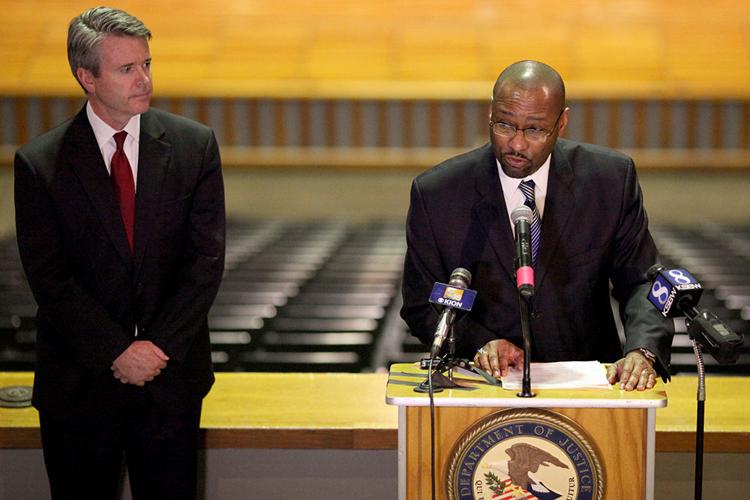
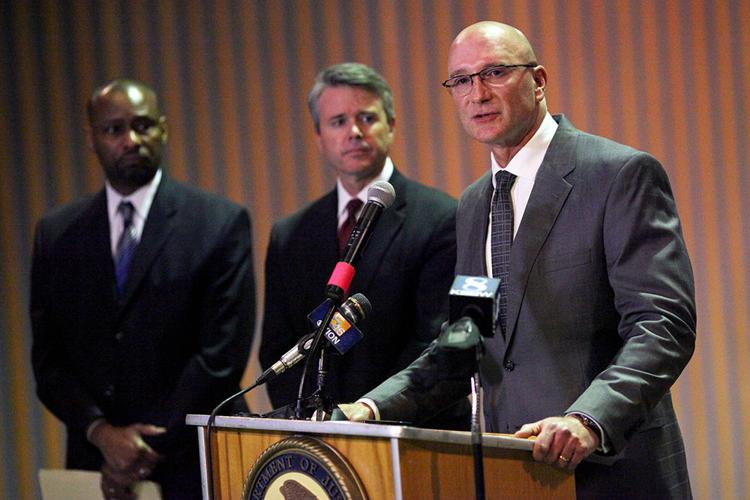
- SPD should switch its policy of investigating officer-involved shootings to having an outside third-party agency investigate. That's not because their investigations were inadequate—in fact, the DOJ review details the investigations and evidence collection from each crime scene and reports the investigations were conducted well—but because of checks and balances. In a press conference Tuesday morning, COPS Policing Practices and Accountability Initiative Chief Noble Wray said, "It’s how the community perceives what the department does…it may be an issue of trust."
- SPD was too slow to complete its internal affairs investigations following officer-involved shootings; they should take no more than 30 days after the District Attorney has made a determination on whether to file charges. In the four officer-involved shootings in 2014, internal affairs investigations lasted anywhere from three months to eight months. "Based on our review of SPD’s documentation and interviews with SPD personnel, the four internal affairs investigations were not being actively worked on until we inquired about the whereabouts of the completed internal affairs investigations," the report states.
- The DOJ recommends SPD should train and outfit all sergeants with less lethal shotguns than are currently used.
- "Internal communication is inconsistent and, in some cases, nonexistent," the report states. The recommendation is for SPD to develop a more effective internal communication protocol, which the report identifies largely as regular meetings. (However, Chief McMillin said the DOJ team seemed to have ignored regular weekly command staff meetings and civilian manager meetings.)
- "Another area that needs improvement is external communication," the report states. "Although the SPD appears to be involved with and has had communication with external stakeholders, it does not have a systematic process for properly facilitating effective and timely communication with a large number of external stakeholders. The SPD relies heavily on a private company [Boots Road Group] to oversee its social media presence on a part-time basis and handle all information communicated to the community and the media."
- One recommendation to improve external communication: better utilize the Police Community Advisory Committee (PCAC) to communicate with the community.
- SPD's ability to do crime analysis is inadequate, and they should hire at least one full-time crime analyst.
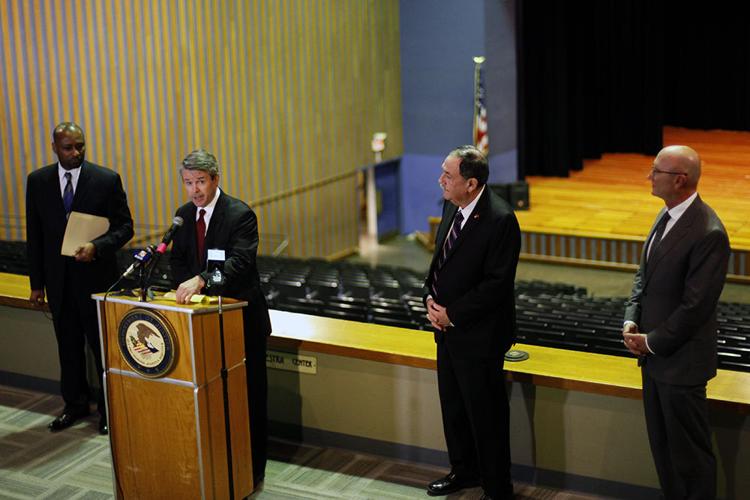
At a press conference Tuesday morning, McMillin said he and SPD welcomed the DOJ report, though he didn't agree with all of the findings, or even find them revelatory.
"Some of what is in this report is new. Some of it, frankly, we disagree with," McMillin said.
"But much of it we could have written ourselves. There are no surprises here. It matches what we have been saying for years."
Part of that, he said, was under-funding and under-staffing; a bigger budget, he argued, would help get more cops on the streets and alleviate a crisis-response style of policing, and instead allow more community policing, where officers are stationed in a neighborhood and have an opportunity to get to know residents—they're not just zooming to calls when urgent calls come in.
McMillin made a similar plea to the public in 2014, and voters approved Measure G, a 1-cent sales tax generating an estimated $20 million annually to help the cash-strapped city.
Nearly a year ago, even after Measure G had passed, McMillin did a major restructuring of SPD, dismantling all special units and cutting any function that wasn't part of essential day-to-day operations.
That meant no more gang unit, no more Police Activities League assignments, no more K-9 unit. Everyone went back on patrol and crime scene investigation work.
McMillin said Tuesday he hopes to use the DOJ report as a blueprint to rebuild:
"We tore the Salinas Police Department back to foundation of patrol and investigations," he said. "A lot of our anticipation of the report has been to use it as a roadmap to rebuild the department."
Editor's note: This story has been updated to reflect the following correction. The longest internal affairs investigation lasted eight months, not 19; the DOJ report states 19 months, but in a table that included incorrect dates.


(0) comments
Welcome to the discussion.
Log In
Keep it Clean. Please avoid obscene, vulgar, lewd, racist or sexually-oriented language.
PLEASE TURN OFF YOUR CAPS LOCK.
Don't Threaten. Threats of harming another person will not be tolerated.
Be Truthful. Don't knowingly lie about anyone or anything.
Be Nice. No racism, sexism or any sort of -ism that is degrading to another person.
Be Proactive. Use the 'Report' link on each comment to let us know of abusive posts.
Share with Us. We'd love to hear eyewitness accounts, the history behind an article.