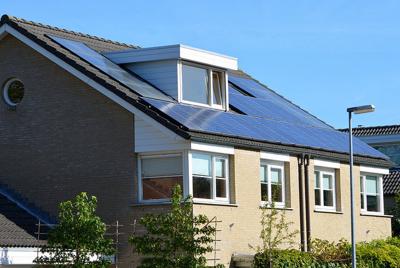

The city of Seaside has joined the lineup of local jurisdictions making it much easier for residents to afford energy- and water-efficiency upgrades to their homes.
On July 2, the Seaside City Council signed on to the California HERO program, which lets property owners finance eco-friendly home upgrades that won't go with them when they move—like solar panels, graywater systems and electric vehicle charging stations.
Those costs are financed through bonds issued by the Western Riverside Council of Governments, a joint-powers authority. The bill shows up on the homeowner's property tax bill.
The HERO program, which Seasiders can start applying to this fall, is a spinoff of Property Assessed Clean Energy, or PACE. As a 2010 cover story describes it:
The clean energy financing model is designed to cut greenhouse gas emissions, create green jobs and lower household utility bills at virtually no up-front cost to property owners. If it were applied to 15 percent of U.S. homes, a 2009 UC Berkeley study found, PACE could finance more than $280 billion in energy retrofits and cut a gigaton of greenhouse gas emissions.
It’s often described as a low-interest local government loan, backed by bonds. The money can be used for renewable energy, water conservation or energy efficiency upgrades. The property owner pays it back over 20 years or less in annual installments – ideally close to the property’s annual utility savings – that show up as a line item on the property tax bill. If the home sells, the new owner takes over the payments.
PACE programs are now happening in 31 states, and 324 California jurisdictions have adopted the HERO program, according to a HERO press release. HERO is already in effect in the cities of Monterey, Carmel-by-the-Sea, Del Rey Oaks and Pacific Grove, and the unincorporated county.
Among the job-boosting improvements HERO can finance: solar panels, heating and cooling systems, energy-efficient windows and roofs, insulation, high-efficiency toilets and fixtures, drip irrigation, rainwater catchment, graywater systems and drought-tolerant landscaping.
Most of these improvements reduce water and electricity bills, helping offset the annual HERO payments.


(0) comments
Welcome to the discussion.
Log In
Keep it Clean. Please avoid obscene, vulgar, lewd, racist or sexually-oriented language.
PLEASE TURN OFF YOUR CAPS LOCK.
Don't Threaten. Threats of harming another person will not be tolerated.
Be Truthful. Don't knowingly lie about anyone or anything.
Be Nice. No racism, sexism or any sort of -ism that is degrading to another person.
Be Proactive. Use the 'Report' link on each comment to let us know of abusive posts.
Share with Us. We'd love to hear eyewitness accounts, the history behind an article.