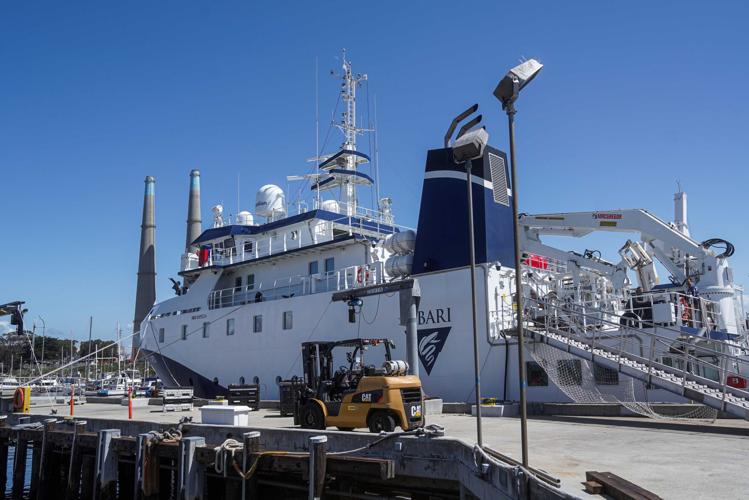

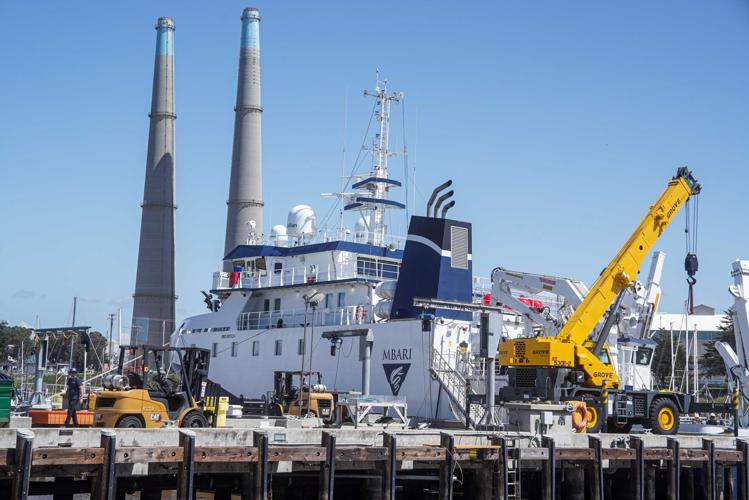

After spending 59 days at sea, traveling from Spain to Barbados, through the Panama Canal and up the coast of California, the Monterey Bay Aquarium Research Institute’s (MBARI) newest research vessel has arrived in Moss Landing.
On Monday, March 31, the David Packard—a custom-built, 164-foot-long, 42-foot-wide, first-of-its-kind oceanographic research vessel—became a part of the MBARI family. It joins two other research vessels, the Rachel Carson and the Paragon to expand expeditions across the Northeastern Pacific Ocean.

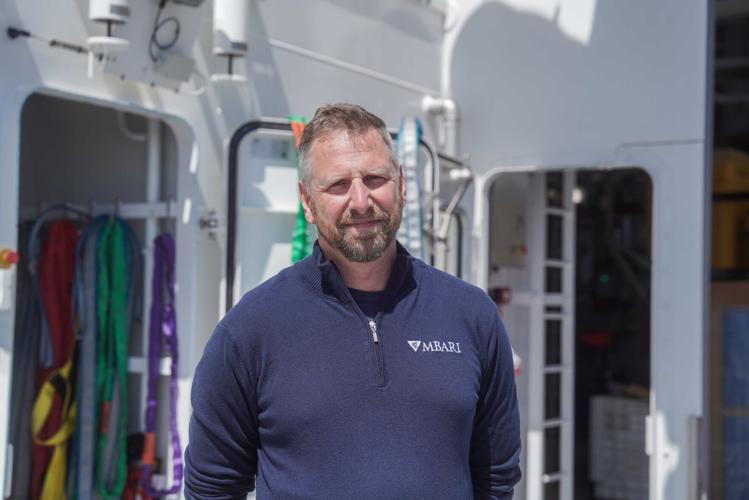
"The ship will not only support advanced technology developed by the MBARI team but also promote collaboration across the marine science and technology community,” said Director of Marine Operations Kaya Johnson.
The $50 million prototype was named after MBARI’s founder, the late Silicon Valley innovator and ocean philanthropist, and replaces their previous flagship vessel the Western Flyer.
“We evaluated our scientific and engineering needs and really helped fit that into this boat,” says Kaya Johnson, Director of Marine Operations, “and came up with a concept that could accommodate as much as possible. It is purpose-built for our ROV, Doc Ricketts, but it can also accommodate many other disciplines of oceanography.”
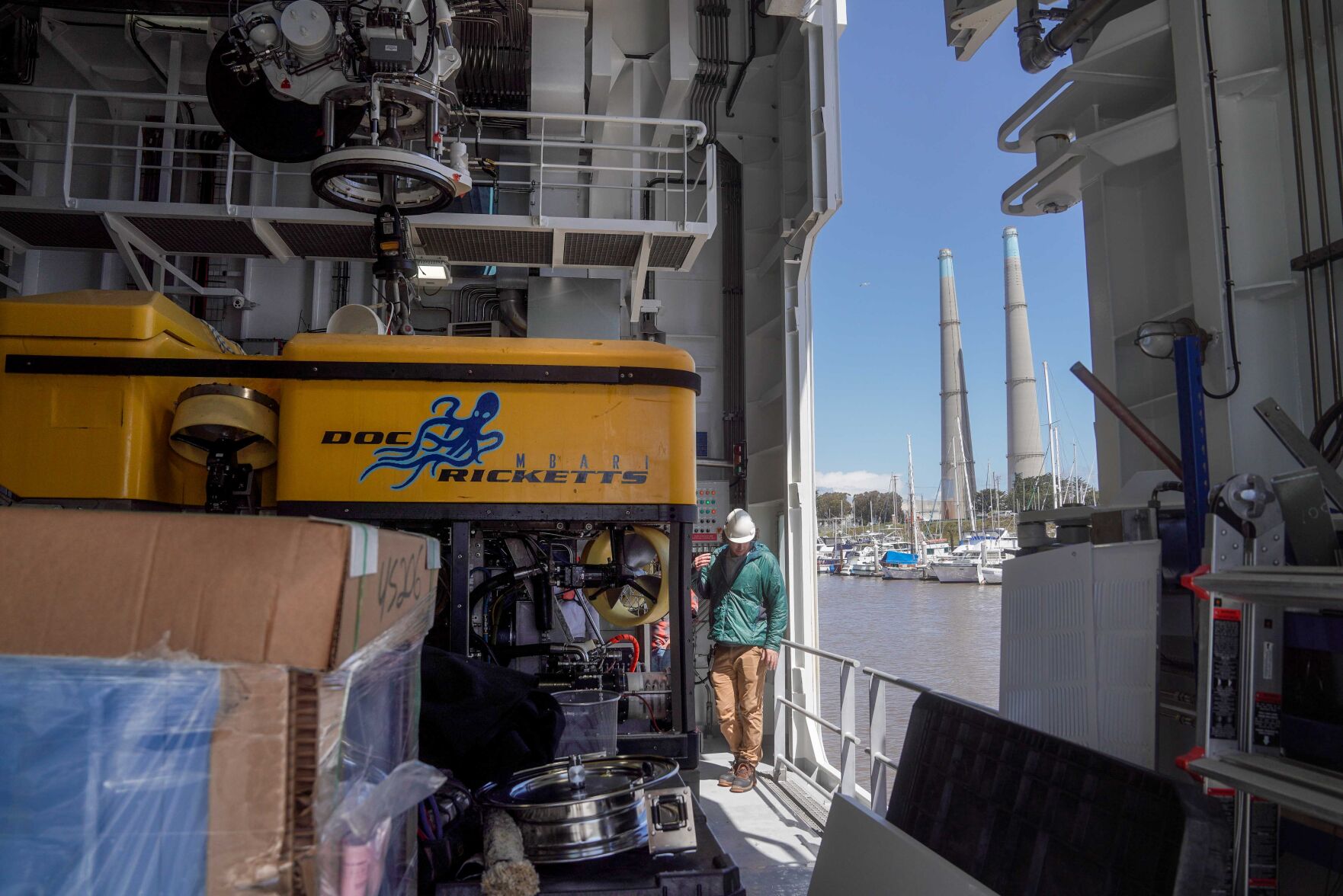
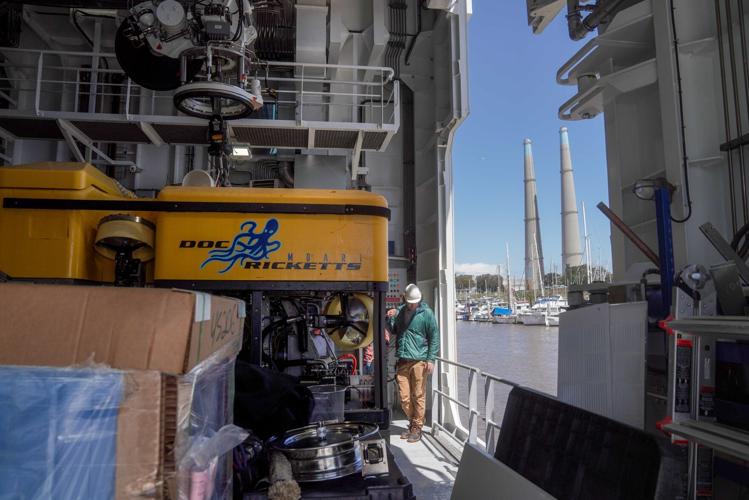
MBARI engineers and crew members remove the Doc Ricketts, a remotely operated vehicle (ROV), from the water and place it on new research vessel, the David Packard, for the first time at Moss Landing Harbor.
The new ship will serve as the main home for MBARI’s remotely operated vehicle (ROV) known as the Doc Ricketts, a robotic submersible that can dive up to 2.5 miles underwater and is used to collect information about marine life and ecosystems deep beneath the ocean’s surface. To date, MBARI has discovered roughly 250 new species over the past 37 years using its state-of-the-art technology—like the mystery mollusc found in November of last year.
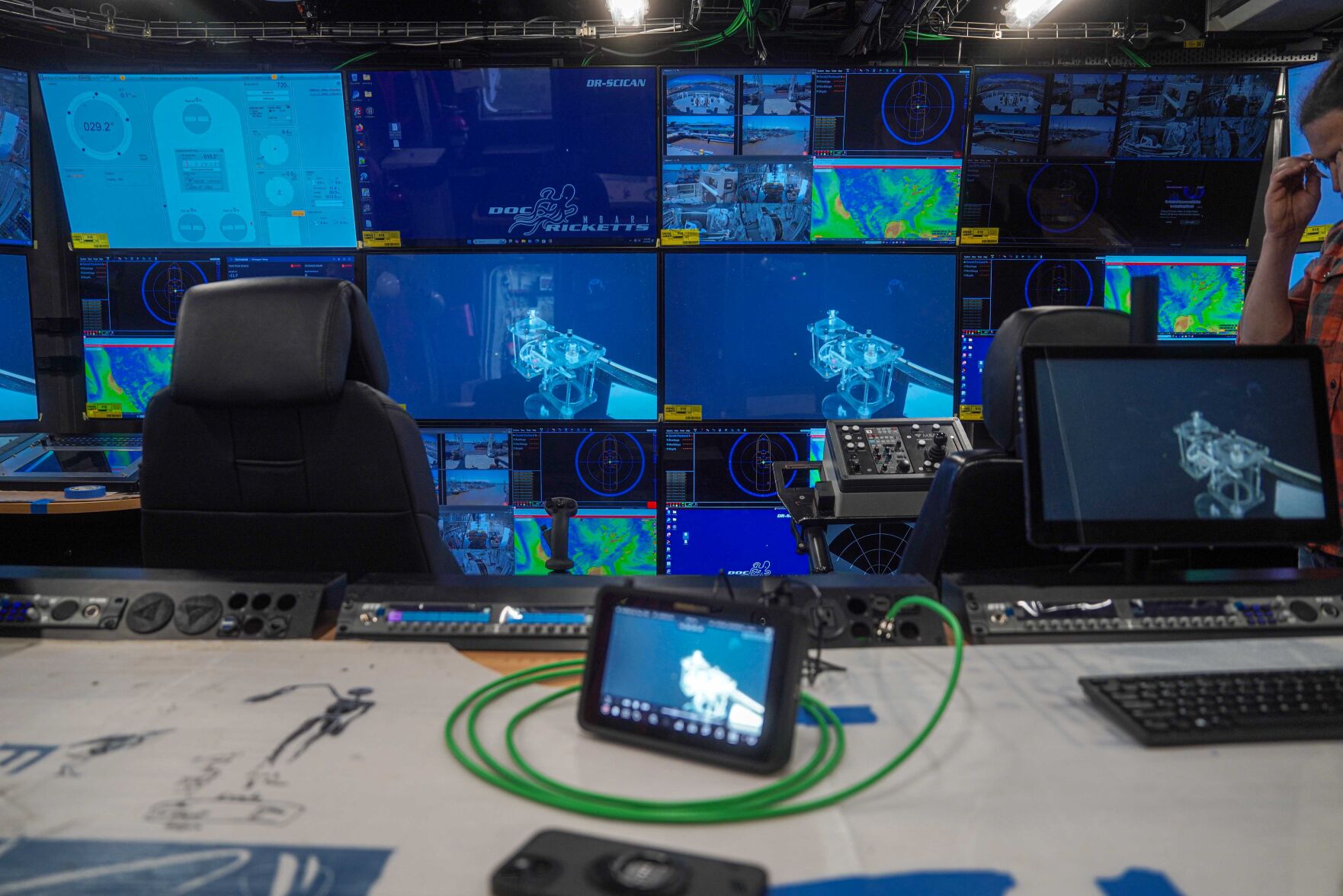
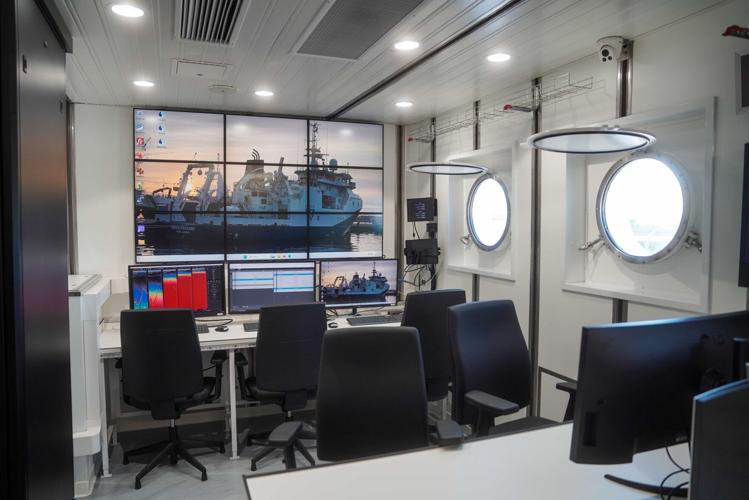
The David Packard research vessel's control room to manage and view video footage captured by the Doc Ricketts submersible.
The David Packard is 62 percent bigger than their previous research vessel, and houses wet and dry labs (as well as a dark lab, for studying light-sensitive marine life), ample deck space for launching and retrieving equipment, and bunk rooms that can house up to 30 people—crew members and scientists.
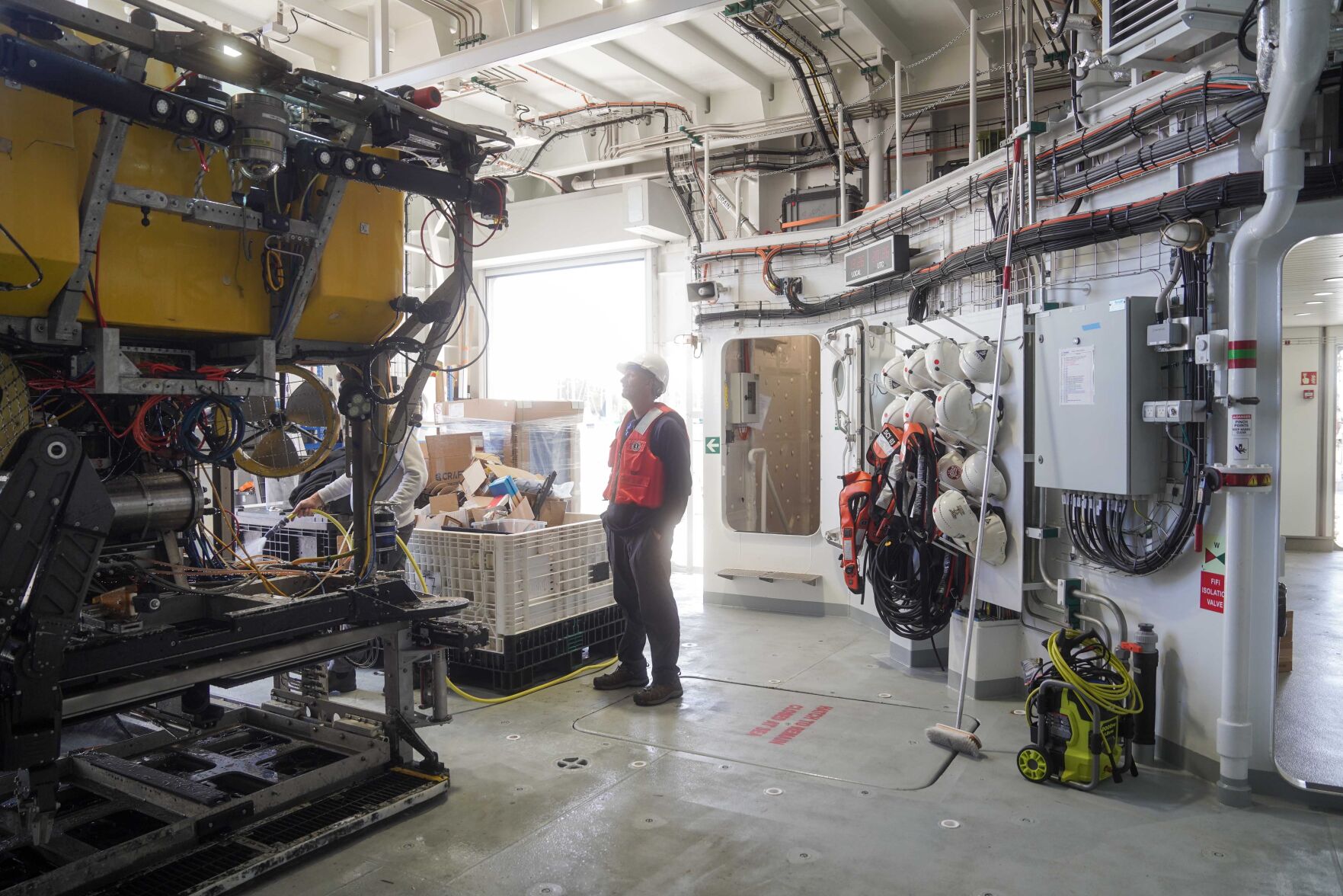
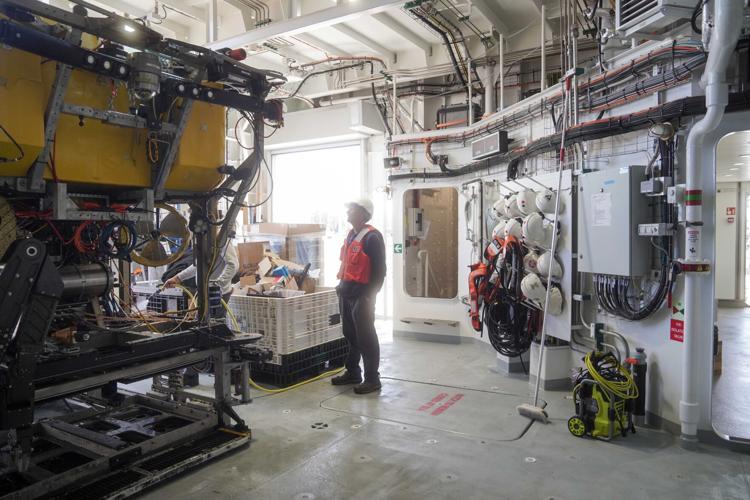
MBARI engineers assess the remotely operated vehicle, the Doc Ricketts, after removing it from the water and into the new research vessel, named the David Packard.
“There's a lot that we haven't studied,” Johnson says. “The limitation before was the endurance wasn't as long (time-wise) and it didn’t have as many capabilities.”
On a sunny Thursday afternoon on April 3, MBARI technicians and engineers are busy getting everything set up. For the first time, they used the David Packard to pull the Doc Ricketts out of the water. They’re also testing drones and configuring their dedicated control room, where they can direct underwater submersibles and monitor species appearing on camera.
MBARI has worked extensively with Freire Shipyard, a Spanish shipbuilder specializing in complex and more technical oceanographic and fishing vessels, to customize the David Packard.

The dry lab on MBARI's newest research vessel, the David Packard.
“Everyone here has spent months, if not years, in Vigo, Spain,” Johnson says. “It's a big team effort from crews to managing shipyards to engineers, naval architects. It took a lot of people.”
After more than a decade of planning, construction began on the David Packard in 2021 with a budget of $50 million. Despite delays from the pandemic and supply chain issues, and being roughly a year behind schedule, they remained on budget.
After the vessel visits San Francisco for maintenance and regulatory inspections—scheduled to take place sometime next week—MBARI’s staff plans to continue fine-tuning the ship’s systems to support a range of research missions.
The first trip is scheduled for late June or early July.
“We really pushed the limit with a lot of tech, to have really low emissions,” says Johnson, explaining the ship has special engines and treatment systems which help reduce air pollutants. “A lot of the industry hasn't built some of the stuff that we have, so we're kind of teaching them as we build this.”
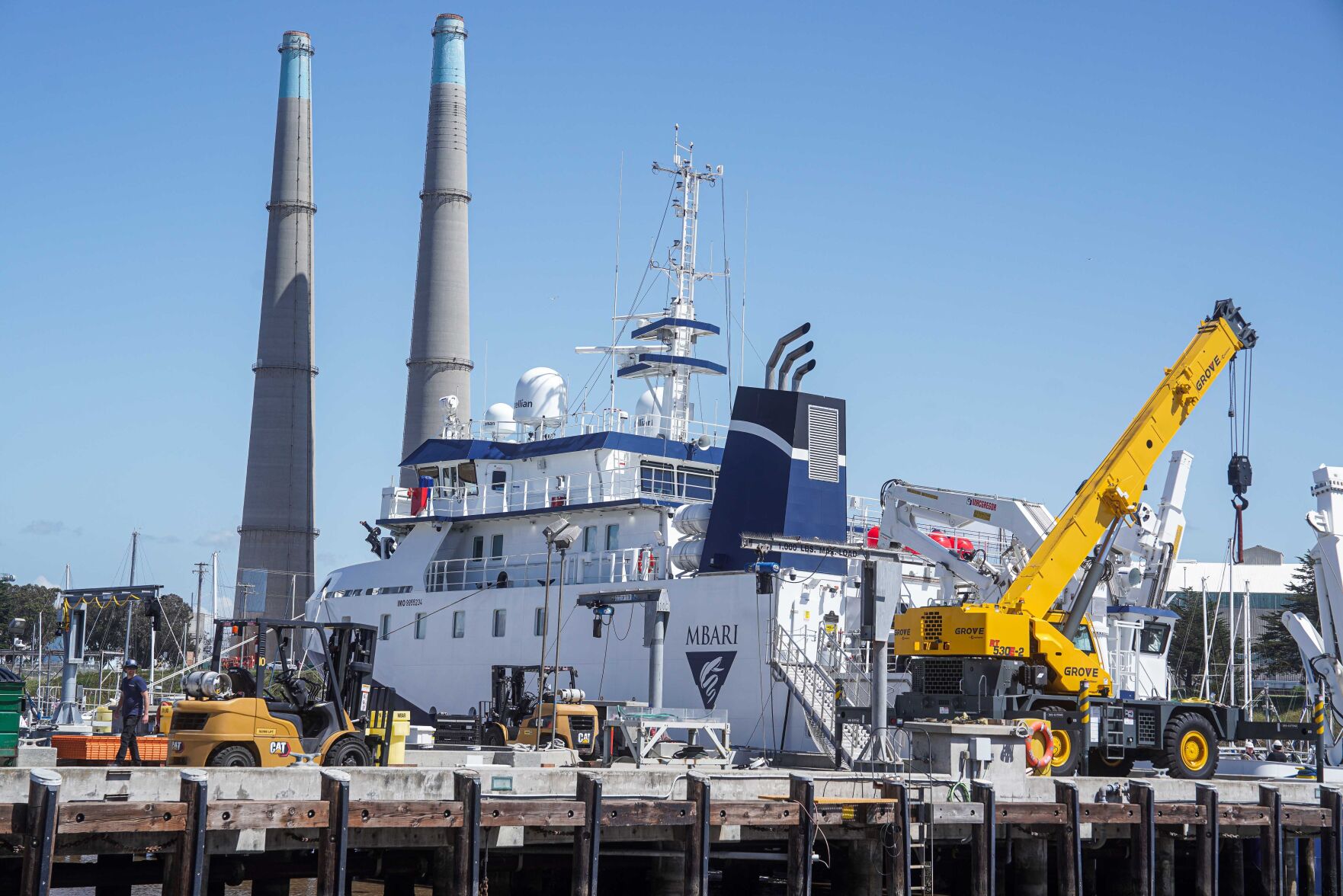
MBARI's newest research vessel, the David Packard, traveled from Spain and reached Moss Landing Harbor on Monday, March 31, 2025.


(0) comments
Welcome to the discussion.
Log In
Keep it Clean. Please avoid obscene, vulgar, lewd, racist or sexually-oriented language.
PLEASE TURN OFF YOUR CAPS LOCK.
Don't Threaten. Threats of harming another person will not be tolerated.
Be Truthful. Don't knowingly lie about anyone or anything.
Be Nice. No racism, sexism or any sort of -ism that is degrading to another person.
Be Proactive. Use the 'Report' link on each comment to let us know of abusive posts.
Share with Us. We'd love to hear eyewitness accounts, the history behind an article.