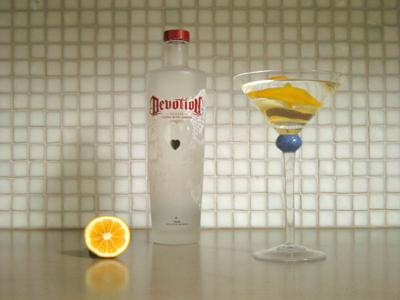

A few years ago, Anthony Vitacca introduced a cocktail menu leaning on gin, tequila and all manner of whiskey. The drinks were intriguing and clever—and struck a nerve.
“There was such a backlash to my menu,” he recalls. Guests kept shrieking in my ear, ‘What do you mean you have no vodka cocktails on your menu?’”
The head bartender—nay, the head Spiritsmith—at Montrio Bistro in downtown Monterey learned a hard lesson. Vodka may be relatively odorless, colorless and tasteless; it may bring nothing to the cocktail table other than a little alcoholic burn, but this is the spirit that toppled gin from the martini podium and forced HBO to renew Sex and the City year after year until sanity eventually prevailed.
It remains a very popular and powerful spirit.
So Vitacca caved to the will of the mob, crafting something from pear vodka, Lillet Blanc, lavender bitters and fresh fruit and giving it an appropriate name, considering the circumstances. Hell Hath No Fury became the restaurant’s best selling cocktail.
Wow—the story has everything, even a happy ending! Cast Tom Cruise as the bartender and...oh, yeah. Never mind.
Not only is vodka still popular, accounting for 29 percent of all spirits sold last year, the name on the label also matters. Ignore the cheap stuff in pint bottles. But Stolichnaya, Absolut, Grey Goose—the selection perplexes many bartenders.
“Sometimes people say ‘I want it with’ and call their brand.” observes Jaime Rosales at Hog’s Breath Inn in Carmel. “How can you taste the difference?”
Indeed.
Tito’s Handmade Vodka now ranks as America’s number one spirit, according to Ad Age. Rosales sells more of the Texas brand at Hog’s Breath than other labels. At The Beach House in Pacific Grove, bartender Regina Morrison can recite the most called vodkas in order: “Tito’s, Ketel One, Grey Goose.”
But could anyone tell the difference in a blind tasting?
Well, there are variables that come into play. Sure, vodka is largely odorless, colorless and tasteless—or what the experts refer to as a “neutral grain spirit,” which pretty much amounts to the same thing—it can be distilled from almost any plant. Monopolowa is a potato vodka. Ciroc starts with grapes (which should make it a Grappa, but no matter). Some brands rely on rye or beets or sweet potatoes.
Grey Goose starts with wheat. OK, not just any wheat from any field, but “single-origin soft winter wheat from Picardie.” Tito’s? Well, it’s a corn-based vodka, which allows the company to boast that it is also gluten free—though how well gluten can stand up to the process of bashing the corn, boiling it beyond recognition and forcing it through a filter is not explained.
But does it taste different?
Hang on—there are other factors. You see, most high-end vodkas go through the distillation process several times, with the still master sieving off liquid at the top and bottom where impurities might reside. (Or, as the experts put it, the spirit is “rectified.”) New Amsterdam is distilled five times. Russian Standard’s most expensive version hits the still eight times. Purity believes in overkill, hammering theirs up to 51 times.
Yet even they ask “what’s in a number?” right on the Purity website.
Vitacca just shakes his head. “The only spirit in the world that is considered better the more flavor you extract,” he says. “But the more it is distilled, the more cogeners—flavors, some good, some bad—are removed.”
For the most part, three distillations is enough. Additional rounds lend a smoother vodka in terms of mouthfeel, but leaner in terms of character. Eight or more just seems like a marketing ploy, such as mentioning batch number, provenance, the lack of gluten or the organic certification.
“Organic?” Rosales says, also shaking his head. “I don’t know.”
But can people tell the difference?
Well, it’s tricky. Morrison claims she can pick out her favorite brand, Stolichnaya. But she admits she has not really challenged her palate. “We’ve done taste tests, and most people can’t tell,” Morrison says. “And if I did one, I may be in the same boat. But I know what I like.”
Bartenders I’ve spoken with in the past have pushed the matter, with similar results. One told me when customers said he poured the wrong brand, he would refill from the very same bottle. Each time, the person accepted the drink and never noticed the ruse.
Vitacca refers to vodka as “a bartender’s tofu.” He also likens it to chicken, but let’s go with tofu. One thoroughly versed in bean curd may note subtle variations in flavor and texture, just as a one who sips vodka on a regular basis—call them problem drinkers, ne’er-do-wells or journalists—could tell a potato version from wheat or corn.
Identifying the brand? Well, that’s a tougher call.
Hence Vitacca’s ambivalence. “I struggle more than any other spirit with vodka,” he admits. “Once you start mixing it with fruit, purees, syrups, bitters, other spirits, it really doesn't matter what brand you are using. It mixes with anything, which is both a blessing and a curse when designing cocktails.”
OK, so explain the chicken or tofu thing.
“Chicken brings protein to a menu but no flavor,” he says. “Our chef, Tony Baker, says you can tell the quality of a chef by his chicken dish. I think the same can be said of a bartender.”
Um...to sum up, rotgut vodkas should be avoided. Most people cannot recognize a brand in a blind tasting. To call for one of the most expensive labels in a cocktail or mixed drink makes little sense. But like bland meat or tofu to a chef, vodka is a blank canvas for a bartender.
Sounds about right.


(0) comments
Welcome to the discussion.
Log In
Keep it Clean. Please avoid obscene, vulgar, lewd, racist or sexually-oriented language.
PLEASE TURN OFF YOUR CAPS LOCK.
Don't Threaten. Threats of harming another person will not be tolerated.
Be Truthful. Don't knowingly lie about anyone or anything.
Be Nice. No racism, sexism or any sort of -ism that is degrading to another person.
Be Proactive. Use the 'Report' link on each comment to let us know of abusive posts.
Share with Us. We'd love to hear eyewitness accounts, the history behind an article.