Sometimes a conversation with Jack Bauer can get intense.
Like the one Bauer—the iconic anti-terrorism agent played by actor Kiefer Sutherland—had on the first season of the hit TV show 24 (and about every seven seconds for at least seven seasons):
“You probably don't think I could force this towel down your throat, but trust me, I can,” Bauer says. “All the way. Except that I'd hold onto this little bit at the end.
"When your stomach starts to digest the towel, I pull it out.
"Taking your stomach lining with it. Most people probably take about a week to die. It's very painful.”
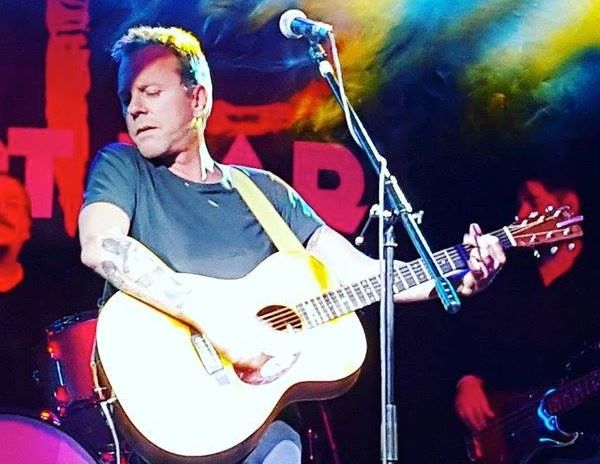
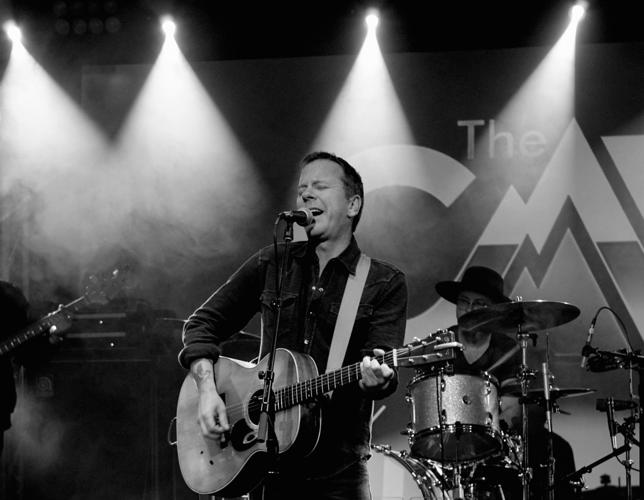
A recent interview with Sutherland, on the eve of his band’s appearance at Fox Theatre in Salinas this Saturday, Jan. 23, doesn’t involve as much intimidation.
(Check out a preview of the show with "Ahead of Salinas show, Kiefer Sutherland gets personal.")
But it turns out to be intense in its own way, what with the allusions to dark times, lost friends and David Bowie, just a couple of days before the English rock legend died.
What’s the set list for the show?
I made a record that comes out around March. The set list will be that record and a couple tunes that reflect my American influences and why they've important to me.
Who’s on that list?
Tom Petty always had such incredibly simple lyrics that manage to drive a narrative of a song home to your heart. It reminds me of Hank Williams—albeit a different generation and genre—but both knew how to tell a story.
With Petty I’ve never listened to a song, whether nonsensical as “Honey Bee” or as meaningful as “Louisiana Rain,” that doesn't take my breath away.
Petty felt that way about Bob Dylan. There’s an anecdote I have about Bob Dylan that goes with a song I play in concert.
Growing up in Canada, [internationally touring singer-songwriter] Gordon Lightfoot did lyrics that drove home to me too.
The record I made, and the songs I made that I was proud of, they're all story-oriented, all very personal.
In the oddest way, if there’s an extension from actor to musician, it’s something about music I’ve always loved: the ability to tell story.
I loved that about acting. It wasn't the action, the fighting, the girl: I loved the idea of a story that affected me.
From “Can't Walk Away” to “Down in a Hole” to "I'm Going Home"—themes of loneliness, loss and resilience aren't subtle in your music. Why is that such a clear and present part of your songs?
“Can't Stay Away” I find ironic. A couple of friends heard an early version, and told me how much they liked it.
They asked “Who's the girl?” I told them it wasn’t a woman [I dated]. It was my older daughter.
When I asked her about the song, she said, “That's not about a girl, that's about a bar up the street.”
I talk about that in the set. It’s not about a person, it’s about the time in my life when the bar felt like my girlfriend, which is not always a good thing. The song is me trying to explain that to myself.
What else can you tell me about the inspiration for your songs?
I’m looking at the set list now.
“Calling Out Your Name” is a song about first real love of my life. It didn't work out, for a variety of circumstances, and it was a very public thing.
I wrote the song a long time ago. I hope at least the lyrics are linear and make some kind of sense.
“Down in a Hole”?
I had friends who got into a lifestyle and paid a real price—the ultimate—and I don't know how to express that tragedy. I’ve had moments in my own life when I felt closer to that place than I do now.
Writing a song helped me deal with it.
It kept memories of those situations and people I lost alive.
There's a weird comfort in that for me.
“My Best Friend”?
There’s a moment you realize, to you get yourself out of ditch, you're the one shot you got at it. You can't expect someone else to always be there for you.
I think they're really clear narrative songs, and certainly not complicated songs. I like the lyrics, and I hope the audience likes them too.
How do you describe your style of music?
I’m not good with the labels. The label I hear a lot is Americana. We can be more country western to some, more rock to others.
It’s in between genres, more singer-songwriter stuff than anything.
[Friend/business partner] Jude Cole has amazing parts on the record, and gives it dynamic life.
How did early LA punk—Black Flag, The Germs—affect you? Does that express itself in what you do?
Probably not.
The wonderful thing about punk rock music to me—why I went and watched those shows but didn't play in a punk band—is that it's music is driven by such a sense of alienation and desire to create a brand new community.
I never felt that alienated, but I was always interested by people that have the courage to stand on their own.
I was more interested in pop culture, films like [The] Godfather and French Connection and bands like Boston.
I dug all that. So I was mostly a voyeur into the punk world. I found it so earnest and interesting.
What can you do with songwriting and performance that you can't with other avenues of expression?
In poetry you can tell a narrative, and you can in painting too. Brilliant artists like Picasso—who has a famous line that goes, “as a young man I painted like an old man”—told the narrative of a whole life of incredible skill as a young painter.
I don't have that talent.
With words I have a talent to express emotion in the context of telling a story.
I feel competent in my ability as actor to do that and I'm excited because music, while it isn't a new thing for me, putting anything out there is a very new thing.
Performing in front of people is very new. I've found it to be very exciting, to express sentiment of lyrics of a song and do it well, and I’m trying to learn to do better.
I heard you say you’re a guy who likes to work and that’s something that runs in the family. How do observe that in yourself and other relatives?
It does run in our family.
My dad approaches his work in a different way than the way I do.
I always liked it more when I was doing something. I always liked it more when I was doing something I really care about.
It’s nice coming home and having something to say about your day. Hanging out by the pool wasn't what I wanted to talk about.
It didn't have to be acting. I’ve raised cattle, competed in team roping and rodeos, had a music label and helped different artists get record deals. It doesn't have to be work you're actually getting paid for, but something you care about.
I’ve found it very helpful to have something to do. Otherwise I’d be up in Montana at that bar, or dead.
People throw around words like “I’m constantly reinventing myself” a lot, but—after you’ve rolled from blockbuster movie guy to rodeo maverick to 24 megastar—you seem uniquely, maybe supremely, qualified to talk about the art of reinvention.
I think if I take a look at someone like David Bowie, he totally did it in the context of being an artist.
He was very aware of what he was doing and why he was doing it. Not me. My reinventing came out of necessity.
When my film career went to shit I decided to do something else. When 24 did really well, I had extra cash and music was a passion, and I was seeing great artists not getting signed because the record industry was getting this colossal shift, and I realized there was an opportunity to help.
I’d love to say it was part of larger plan or an artistic concept like David Bowie.
It's not.
For me, reinvention is solely born out of interest in those things.
It’s more ADD—“Hey, that looks interesting.” It kept me alive in a way that, as I look back on my life, if something horrific happens to me on the way home, in the last second I'd go, "This has been awesome."
A lot of people would not say that. They'd say something else.
There’s not going be a lot should'ves in my last moments.
You get a year to spend living the lives of your characters. You only need a few days to get all the Jack Bauer you probably need. How do you divide up the rest of the time?
I like to think more in the context of story than characters.
Dark City was one of first films I did, and something I really admired for what Alex Proyas did with that piece.
Lost Boys was just too much fun to ignore.
I’d avoid a couple of the most difficult things I had to do, when I had to play pure evil—I’d avoid all of those, including Eye for an Eye, the hardest thing for me ever to do, and playing a KKK clan leader in A Time to Kill, though I felt very strongly that a movie about racism needed to have component to fight against.
Not a nice thing to do.
And even the bully in Stand by Me. Not the one part I would've love to play in that film, but a film I was honored to be a part of.
A real innocent character I played in Promised Land way back in my career, and ended up dying, I would've liked to give him a few more days.
And Jack Bauer: I have real love affair with that character, I would like to see what his life would be like without all that crap.
Most ridiculous fan interaction?
I couldn't tell you that.
Fans and then people that are just odd for whatever reason, not playing with a full deck.
Oddest that happened—that I can talk about—was in Montana. They found a man halfway down my chimney.
I wasn't in town, so I got this call from the fire department saying they might have to knock down the chimney.
Not as cool as Kris Kristofferson taking a helicopter to Johnny Cash's house, but, for the most part, as much as I joke about that, there’s not a single place, whether it’s a bar, a restaurant or on the subway in L.A. that I can't go without a hassle, for whatever reason—maybe because they don't give a shit about me—but people just come up and say hello. It’s a great relationship with people, no problem.
What's your favorite Kiefer Sutherland myth?
People think that i'm faller and a lot tougher. Those things always make me smile.
What’s soul of your songwriting process?
I try to find a melody or a title or a line that I really like and shape a melody around that. As soon as I have that—and in many cases working with Jude Cole, a great writer and brilliant musician—we go from there.
First thing that comes to mind when you think Lost Boys and Santa Cruz?
We played Santa Cruz not too long ago. I said, “This town has potential to be craziest darkest place you've every been." I mean that as a compliment.
As we were dressed for the movie, the directors asked extras to bring their own wardrobe and bring other stuff from their closets. They didn’t have to dress a single extra. That's exactly Santa Cruz, and kinda awesome.
Favorite Jack Bauer moment?
“I’m gonna need a hacksaw.” Jack shoots a guy at the very beginning of season two and has to send his head to [bad guys] to prove he did it. I had to say it 10 times to say it without laughing.
What was working with Monterey native Bob Cochran like?
To work with Joel Surnow and Bob, it was one of those magical moments that completely changed my life in every facet. Ultimately 24 gave me more confidence as an actor than any experience I’ve had. It was one of those rare gifts I'll be grateful for until the day I die.
Favorite movie project?
Hope I haven't made it yet.


(0) comments
Welcome to the discussion.
Log In
Keep it Clean. Please avoid obscene, vulgar, lewd, racist or sexually-oriented language.
PLEASE TURN OFF YOUR CAPS LOCK.
Don't Threaten. Threats of harming another person will not be tolerated.
Be Truthful. Don't knowingly lie about anyone or anything.
Be Nice. No racism, sexism or any sort of -ism that is degrading to another person.
Be Proactive. Use the 'Report' link on each comment to let us know of abusive posts.
Share with Us. We'd love to hear eyewitness accounts, the history behind an article.