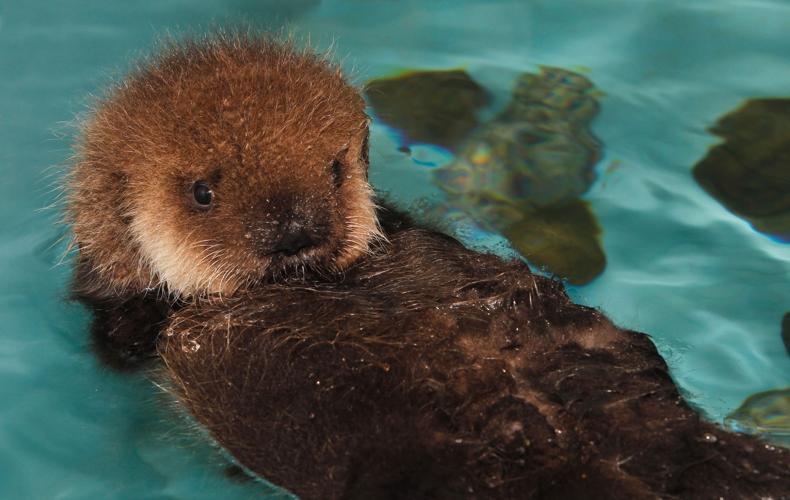
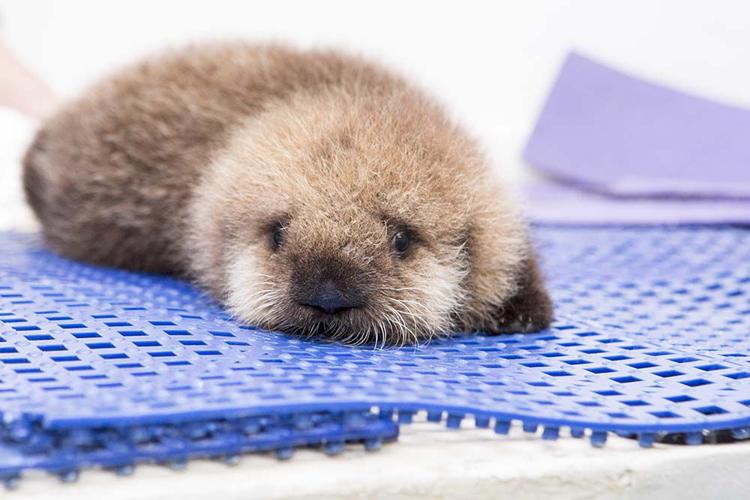

Rearing stranded otter pups to be returned to the wild: It would seem like one of those jobs where the sheer amount of whisker, cute and fuzz would render depression impossible.
But here was Monterey Bay Aquarium's Sea Otter Program team, feeling sad.
They'd raise the little adorable marine mammals for months.
But then the little fluff balls simply wouldn't do well in the wild, struggling to hunt and eat successfully, boarding kayaks and demonstrating other dangerous behavior because they were too comfortable with humans.
Enter Toola.
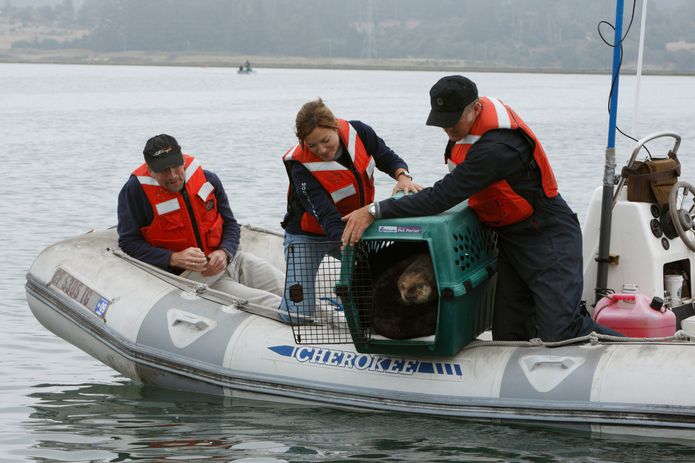
One of the most famous residents at the Aquarium took on a rescued pup in 2001, teaching it to dive, groom and survive.
Animal Care Coordinator Karl Mayer was among those stoked on the results, as the Conservation & Science arm of the Aquarium reports on its blog.
“We realized, ‘Wow, he’s really making it out there,’” Mayer says. “He was raised in tanks behind the scenes at the Aquarium, but he was doing it—he was making the transition to life in the wild.”
A paradigm shift had successfully splashed down.
Fifteen years later, surrogate otter moms have adopted dozens of rescues.
Better yet, those rehabbed otters, upon reentry, have flourished.
Otter 501, in fact—once separated from her mother at all of three days old—is about to wean her fifth pup in the wild.
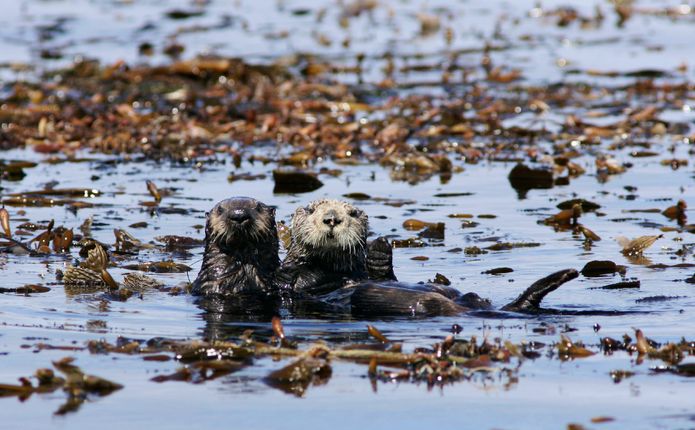
One dramatic result: Elkhorn Slough in Moss Landing, the largest estuary in the state besides San Francisco and the spot where surrogate-reared otters are reintroduced, is thriving.
A major reason: The otters eat the crabs that eat the big seahare slugs, who in turn eat the algae off the eelgrass.
So, the result is more seahares, less algae, clearer waters, more seagrass, and more habitat for fish, snails and other native species.
The proudest news for the Aquarium team is the fact just-completed research reveals 60 percent of the Elkhorn Slough otter population patrols the tidal salt marsh are there as a result of the Aquarium’s sea otter surrogacy program.
That's the thrust of a dynamic multimedia blog post, "Our surrogate-raised sea otters are helping restore a wetland," which went live yesterday.
That came at the same time a 2016 otter census reported record numbers of the threatened southern sea otter.
It's enough to make Monday the best day for otter updates in…just about ever.
It's also well-timed. Sea Otter Awareness Week starts Friday, running Sept. 23-29.
For more on otters in the Elkhorn estuary, check out David Schmalz's March 31 cover piece "Otter Eden: How two volunteers changed our understanding of sea otters."


(0) comments
Welcome to the discussion.
Log In
Keep it Clean. Please avoid obscene, vulgar, lewd, racist or sexually-oriented language.
PLEASE TURN OFF YOUR CAPS LOCK.
Don't Threaten. Threats of harming another person will not be tolerated.
Be Truthful. Don't knowingly lie about anyone or anything.
Be Nice. No racism, sexism or any sort of -ism that is degrading to another person.
Be Proactive. Use the 'Report' link on each comment to let us know of abusive posts.
Share with Us. We'd love to hear eyewitness accounts, the history behind an article.