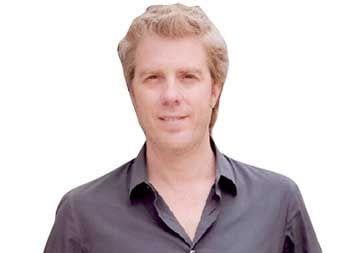
There are few drawbacks to being an Eastwood, except maybe that people think they know all about 47-year-old Kyle Eastwood’s interests and artistic accomplishments before they’ve met him. But the jazz musician has carved out his own successful career in the arts, including some partnerships with his dad, Clint. Being raised by a famous dad also came with its perks, like getting backstage access at the Monterey Jazz Festival and being exposed to great music early in life.
Eastwood studied film at the University of Southern California with aspirations to be a director. He changed plans to pursue music, though film is still part of his life. (The eight film scores he created for his father are a testament to that.)
As Eastwood makes his own legacy as a film composer and jazz bassist, he attributes his early love of music to his family. He started on the piano, like his father, then transitioned to bass, his instrument of choice.
Eastwood expresses his passions on several fronts, performing at this year’s Monterey Jazz Festival and taking on film score projects like his sister Alison Eastwood’s Battlecreek and Thomas Writhensohn’s documentary Homme Less. These days he’s on tour for his album, Time Pieces, released in the U.S. in March.
The Weekly caught up with Eastwood between the West Coast and Western Europe legs of his tour, while he was on a break visiting family in his hometown of Carmel.
Now based in Paris, Eastwood confesses he misses the foggy charms of the Central Coast, but wasted no time in debriefing, on what inspired his new album, jazz snobs and his current playlist.
Weekly: Time Pieces draws from ’50s – and ’60s-era jazz. What other influences did you draw from?
Eastwood: Predominately it’s original material, but there’s definitely influence from the ’50s and ’60s. Some of my favorite albums are from that period. I like different kinds of music, so there are always different influences I’m drawing from. I went through times experimenting with electronic music. I’m really by no means a jazz snob.
What’s a “jazz snob”?
Someone who considers jazz as music that’s supposed to be played in a certain place and a certain way.
I’m all about respecting tradition and having studied the tradition, but I think jazz has always borrowed from other places.
Performance jazz relies heavily on improv. How much do you improvise?
I appreciate “free jazz” that’s all improvised, but I’m on the side of having a nice balance of strong melodies and enough space for improv. We play a little differently every night to keep it fresh for ourselves. We’re changing things all the time.
When writing a film score, what elements do you think about? Describe your process.
I don’t ever really think about the audience. Part of the process is looking at the film all the way through. I’m looking for the things that need the most music, or need a specific kind of theme.
I’ll sit down at the piano and try to come up with something. It’s a lot different from making jazz music. Jazz is all about the freedom to do whatever you want and interact with other musicians; in film there are more rules to follow and it’s more of a supporting role.
You’ve created a lot of your dad’s film scores in the last 10 or so years. What’s your working relationship like?
Sometimes he has very distinct ideas and he’ll write the melodies on the piano himself. Then we collaborate on it. There are other times he says, “Come up with something for this.”
There’s a nice balance of direction and creative freedom, so it’s fun to work with him in that respect. I’ve been pretty proud to work on his projects.
If you had to listen to one record for the rest of your life, what would it be?
Marvin Gaye’s What’s Going On is something I could definitely listen to over and over again, which I have. Every song on Charles Mingus’ Ah Um is great. Miles Davis’ Kind of Blue, as well.
What’s on your playlist right now?
I rediscovered “Natural Man” by Lou Rawls the other day and I listen to a lot of Marvin Gaye. My iPod has everything from Benny Goodman to Björk and Radiohead to Led Zeppelin. For me, there are only two kinds of music – bad music or good music. If it’s good and it moves me, I’ll like it.


(0) comments
Welcome to the discussion.
Log In
Keep it Clean. Please avoid obscene, vulgar, lewd, racist or sexually-oriented language.
PLEASE TURN OFF YOUR CAPS LOCK.
Don't Threaten. Threats of harming another person will not be tolerated.
Be Truthful. Don't knowingly lie about anyone or anything.
Be Nice. No racism, sexism or any sort of -ism that is degrading to another person.
Be Proactive. Use the 'Report' link on each comment to let us know of abusive posts.
Share with Us. We'd love to hear eyewitness accounts, the history behind an article.