
Celia Jiménez here, thinking about one of the most fiercely debated topics worldwide: immigration.
Locally, it has been in the spotlight even more so in recent weeks for two reasons: the proposed federal detention facility near Gilroy, and the Truth Act report by the Monterey County Sheriff’s Office. (The Truth Act is a mandatory annual update in which local law enforcement agencies in California share data on inmates released to U.S. Immigration and Customs Enforcement.)
The Board of Supervisors opposed the proposed ICE detention center, and it has long shown its support for immigrant communities, which are the backbone of the county's two largest industries: agriculture and tourism. That support includes spearheading a regional effort to reassure the immigrant community, regardless of their status, that they are welcome here, to joining litigation to protect right-to-work citizenship and increasing the Public Defender’s budget by $125,000 for legal services for undocumented inmates at the county jail.
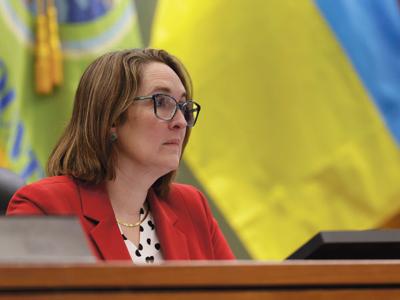
Tomorrow, Supervisor Wendy Root Askew is bringing forward an ambitious series of items that seeks to change the way county staff collaborate with ICE and, more broadly, how the county government relates to the sheriff. It includes discussing and considering a sheriff oversight committee, whether to terminate the State Criminal Alien Assistance Program (SCAAP) funding, and amending the county’s outside employment and conflict-of-interest policies with an eye toward employees moonlighting for ICE.
Points of contention from public comment during the Truth Act presentation in January and the follow-up in April include the “blurred lines” the Sheriff’s Office has in its relationship with ICE and releasing undocumented individuals without a conviction (in 2025, eight of the 21 hadn’t been convicted).
“How does transferring someone not convicted of a crime promote safety and due process? Victims have no closure, police waste time and money investigating, the District Attorney charges, prepares and files, and the case is never resolved. How does this help anyone?” Alex Mares, immigration specialist for the Public Defender’s Office, told the board in April.
Many people, including Adriana Melgoza, executive director of the Watsonville Law Center, said that these actions violate these individuals' civil rights. "When we violate the rights of one individual, we are all at risk of our rights being violated, regardless if we’re a citizen or non-citizen," she told me.
Laws are open to interpretation, and while using state resources for immigration purposes is prohibited, there is a narrow exception where sheriff’s offices can share information with ICE, and this includes inmates with felonies or violent crimes.
The board will discuss all of this at the Board of Supervisors Chambers in Salinas tomorrow, July 7 at 1:30pm.


(0) comments
Welcome to the discussion.
Log In
Keep it Clean. Please avoid obscene, vulgar, lewd, racist or sexually-oriented language.
PLEASE TURN OFF YOUR CAPS LOCK.
Don't Threaten. Threats of harming another person will not be tolerated.
Be Truthful. Don't knowingly lie about anyone or anything.
Be Nice. No racism, sexism or any sort of -ism that is degrading to another person.
Be Proactive. Use the 'Report' link on each comment to let us know of abusive posts.
Share with Us. We'd love to hear eyewitness accounts, the history behind an article.