
Celia Jiménez here, thinking about my educational path and wondering if I would have chosen a different one had there been other options while I was in high school in Mexico.
I don’t think I have a clear answer, but I’m glad students now have an array of options they can choose from and learn about different fields early in high school.
The spark to explore more of the world of Career Technical Education, which I dived into in this week’s cover story, began in January. That’s when I visited Mission Trails ROP, a campus where Salinas Union High School District students take CTE classes, and Soledad High School, both during an Inside Education tour (a program of the Monterey County Office of Education that gives residents the opportunity to learn more about the K-12 educational system). I was impressed as I watched teenagers practicing patient care with dummies and fixing parts from a car motor.
That day I also learned about the educational pathways that help students learn how they can continue with their education at either a vocational or higher education program.
Thanks to the K-16 Education Collaboratives, a program that brings together school districts, colleges, universities and regional employers, students can look at clear pathways they can follow regionally to continue their education if they choose to.
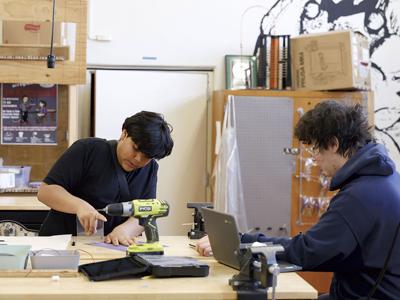
The K-16 collaborative targets districts and schools with high numbers of low-income students with the goal to move them quickly into high-demand and high-paying jobs. Each year the program focuses on a different industry. The first year was nursing, so Soledad High School, for example, added a patient care pathway. For the second round, the focus is on robotics and engineering, and Soledad High will develop robotics CTE classes.
To move the mechatronics ag tech pathway forward, school districts worked with two- and four-year institutions, including Hartnell College and CSU Monterey Bay (which both offer mechatronics programs) and industry partners such as Ramsay Highlander, an agricultural machinery manufacturer based in Gonzales, and Joby Aviation, an aircraft company based in Marina. They developed an application so local high schools could get funding from the K-16 collaborative. This included providing data about labor and potential careers students could pursue, such as electrical and mechanical engineers.
“The greatest benefit of the collaborative is really the collaborative nature of it,” says Ashley Selck, northern regional coordinator for the Central Coast Regional K-16 Collaborative. “Relationships are being formed. We've had some retreats where people come together and do some networking that leads to building dual enrollment opportunities for our students.”
I like how educational institutions and industry leaders are working together to develop and streamline local educational pathways, hopefully helping students find a job locally in an industry that has high demand.


(0) comments
Welcome to the discussion.
Log In
Keep it Clean. Please avoid obscene, vulgar, lewd, racist or sexually-oriented language.
PLEASE TURN OFF YOUR CAPS LOCK.
Don't Threaten. Threats of harming another person will not be tolerated.
Be Truthful. Don't knowingly lie about anyone or anything.
Be Nice. No racism, sexism or any sort of -ism that is degrading to another person.
Be Proactive. Use the 'Report' link on each comment to let us know of abusive posts.
Share with Us. We'd love to hear eyewitness accounts, the history behind an article.